Home › Adelaide › How many days
How many days in Adelaide? 4 days, city in the morning and wine country after lunch
By Tony Panopoulos · travel-agency planner in Greece · Updated
Adelaide is a square mile of grid streets wrapped in parkland, with beaches 25 minutes west by tram and some of Australia's best wine regions within an hour's drive. That shape decides the trip: four days, two in the city and two in the country around it. The city itself is compact and calm, so mornings go to the market and the free museums on North Terrace, and the long light of the afternoon goes to the vineyards or the sea.
Short answer
Two days covers the city, the market and an afternoon at Glenelg. Four days adds the Adelaide Hills with its wildlife park and German village, and a full day in the Barossa or McLaren Vale with a driver.
The 4-day plan, day by day
Day 1: Central Market, North Terrace and the River Torrens
Morning. Start at the Adelaide Central Market on Gouger Street, open since 1869, when the stalls set up from about 7:00 (closed Sundays and Mondays). Eat a coffee and pastry, then walk 15 minutes north up King William Street to North Terrace, where the Art Gallery of South Australia and the South Australian Museum sit side by side, both free.
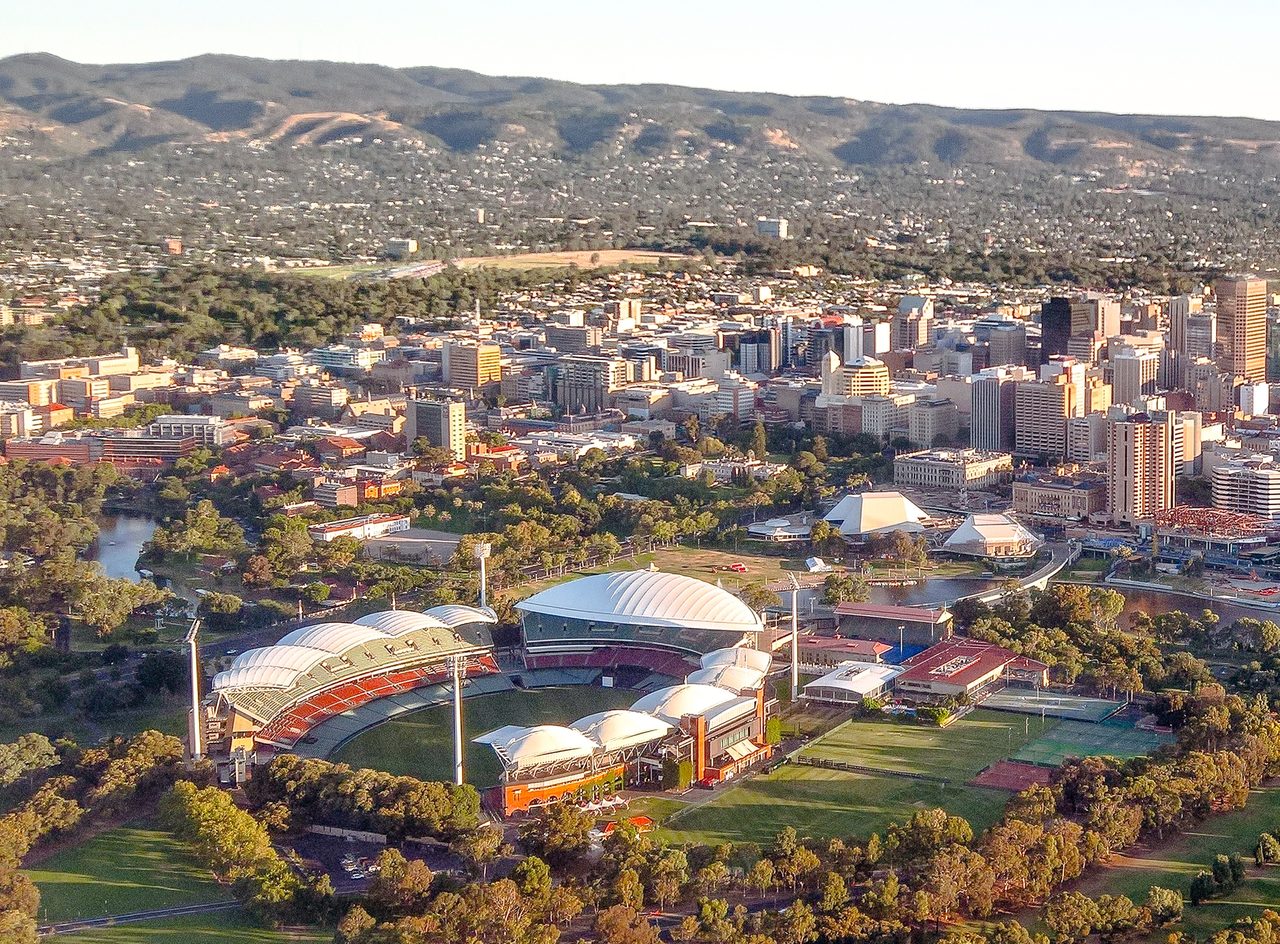
Afternoon. The museum's Aboriginal Cultures gallery is one of the largest collections in the world; give it an hour. Next door, the Adelaide Botanic Garden (free) has the glass Bicentennial Conservatory and the oldest giant waterlilies house in Australia. Walk back along the River Torrens past the footbridge to the Adelaide Oval.
Evening. Eat on Gouger Street in Chinatown, where yum cha and Malaysian laksa run A$18-28, or on Peel Street, a laneway of small bars off Hindley Street. A pint in the city costs roughly A$12-14.
The Adelaide Oval offers a RoofClimb over the stadium's roof, about 2 hours and roughly A$150-200; book a twilight climb for city views at sunset.
Day 2: Glenelg, the beach and Port Adelaide
Morning. Take the Glenelg tram from Victoria Square, about 25-30 minutes to the beach (a Metrocard fare is about A$4-6 for two hours; the city-centre section is free). Walk the jetty and Jetty Road, then swim at the patrolled beach in summer.
Afternoon. Catch a bus or drive 25 minutes north to Port Adelaide, the old harbour with sandstone warehouses. The South Australian Maritime Museum (about A$15) and the National Railway Museum fill two hours; dolphin cruises on the Port River run about 2 hours from around A$15-25.
Evening. Watch the sun set into the sea back at Henley Beach, a quieter strip 15 minutes north of Glenelg, then eat fish and chips on Henley Square for A$15-25.
Adelaide's beaches face west, so every clear evening is a sea sunset. Wind picks up in the afternoon in summer; swim in the morning.
Day 3: Adelaide Hills: koalas, Mount Lofty and Hahndorf
Morning. Drive or take a tour 25 minutes up the freeway to Cleland Wildlife Park (about A$30), where kangaroos roam free and you can stand next to koalas at set times. Then walk or drive up to Mount Lofty Summit at 710 metres for the view over the city to the gulf.
Afternoon. Continue 20 minutes to Hahndorf, founded by Prussian Lutherans in 1839, with its main street of stone cottages, bakeries and smallgoods shops. Detour to The Cedars, the home and studio of painter Hans Heysen, or to a cellar door in Lobethal or Balhannah for cool-climate pinot and sparkling.
Evening. Have dinner in Hahndorf or back in the city on Rundle Street in the East End, where restaurants and bars cluster near the Botanic Garden.
Cellar door tastings in South Australia typically cost A$10-25 and are often waived if you buy a bottle. Do not drive between tastings: the limit is 0.05 and police breath-test often.
Day 4: Barossa Valley (or McLaren Vale)
Morning. The Barossa Valley is about 1h15 by car north-east, home to old-vine shiraz and German heritage towns such as Tanunda and Angaston. Go with a small-group tour (about A$150-250 including lunch) so nobody has to drive. Begin at Seppeltsfield, reached by a 3-km avenue of date palms planted in the 1920s.
Afternoon. Visit two or three cellar doors, such as Yalumba in Angaston (family-owned since 1849) and smaller producers around Tanunda, with a stop at Mengler's Hill Lookout over the valley. Lunch at Maggie Beer's Farm Shop for pâté and verjuice products.
Evening. Return to Adelaide for a last dinner at a city wine bar; by the glass, South Australian wines run about A$12-20.
McLaren Vale is the alternative, 45 minutes south, with the glass d'Arenberg Cube and beaches at Port Willunga nearby. Choose it if you prefer grenache and the coast.
Only have 2 days?
With 2 days, do Day 1 and combine the Hills (Cleland and Hahndorf) with a late swim at Glenelg on Day 2. You lose a full wine day, but Hahndorf's cellar doors give you a taste.
Got extra days?
Add 2-3 days on Kangaroo Island: drive 1h45 to Cape Jervis, then 45 minutes by SeaLink ferry to see sea lions at Seal Bay, the Remarkable Rocks and wild kangaroos. Or drive 2 hours to the Clare Valley for riesling and the Riesling Trail cycle path.
Where to stay in Adelaide
| Budget | Area | Why | Typical double/night |
|---|---|---|---|
| Budget | West End / Hindley Street | Hostels and cheap hotels near the market and bus station; noisy on weekend nights. | A$90-150 |
| Mid-range | CBD around Victoria Square | On the Glenelg tram, walk to the market and North Terrace. | A$170-280 |
| Mid-range | North Adelaide | Quiet Victorian streets across the river, cafés on O'Connell and Melbourne Streets. | A$160-260 |
| Comfort | Glenelg beachfront or Barossa lodges | Sea-view rooms at the end of the tram, or vineyard stays for the wine day. | A$300-650 |
Getting around
The city grid is flat and walkable: Central Market to North Terrace is about 15 minutes. Adelaide Metro runs trams, buses and trains on one Metrocard, with the free city tram between the Entertainment Centre and the Botanic Garden. Adelaide Airport is only about 7 km from the centre; a taxi or rideshare costs about A$25-35 and the JetExpress bus is a few dollars. For the Hills, Barossa and McLaren Vale, hire a car or take a tour, as public transport is thin.
What to eat in Adelaide
Adelaide eats well for its size. The Central Market is the best breakfast: try the cheese at Smelly Cheese Shop and Lucia's café. Gouger Street has Chinese and Malaysian food from A$18. Order a pie floater (a meat pie sitting in pea soup) at a late-night stand, Haigh's chocolate from the Beehive Corner shop on Rundle Mall, and FruChocs, a local chocolate-covered apricot sweet. Wine is the main event: Barossa shiraz, Clare riesling, McLaren Vale grenache and Adelaide Hills sauvignon blanc all sell by the glass for A$12-20. A mid-range dinner with wine is A$60-100.
Best time to visit
March to May and September to November have days of 20-26°C and the vineyards at their best, with vintage in March-April. Summer (December-February) brings regular days above 35°C and occasional 40°C heatwaves, plus the Adelaide Fringe and Festival in February-March, when hotels fill. Winter (June-August) is cool and wet at 14-16°C but quiet and cheaper.
Month-by-month weather for Adelaide →
What a day costs
| Budget | Mid-range | Comfort | |
|---|---|---|---|
| Bed (per person, sharing a double) | A$55 | A$110 | A$230 |
| Food & drink | A$45 | A$90 | A$170 |
| Sights & tickets | A$15 | A$60 | A$180 |
| Local transport | A$8 | A$20 | A$70 |
| Total per person, per day | about A$125 | about A$280 | about A$650 |
Approximate 2026 prices in Australian dollars; the wine-day tour raises that day's costs to A$150-250 per person, and Australia has no city tourist tax.
Before you go
Common questions
Is Adelaide worth visiting compared with Melbourne or Sydney?
Yes, for a different reason. It is smaller, cheaper and quicker to get around, and its real strength is what lies within an hour: the Barossa, McLaren Vale, Clare and Adelaide Hills wine regions, plus beaches and Kangaroo Island. Visitors who like food and wine often rate it above the larger cities. Those looking for big-city nightlife will find it quieter.
Can I visit the Barossa without a car?
There is no practical public transport between cellar doors, so the realistic options are a small-group tour (about A$150-250 with lunch), a private driver, or hiring bikes in Tanunda for the Barossa Trail. Tours collect from city hotels around 8:30-9:00 and return by about 17:00. Driving yourself means one person cannot taste.
How do I see koalas and kangaroos near Adelaide?
Cleland Wildlife Park in the Adelaide Hills, about 25 minutes from the city, lets you walk among kangaroos and wallabies and stand next to koalas at scheduled sessions. For wild animals, Kangaroo Island is the best choice, and you may also spot koalas in the gum trees along Hills walking trails such as those around Mount Lofty.
When is the Adelaide Fringe?
The Fringe runs for about a month from mid-February to mid-March, with hundreds of shows in pop-up venues such as the Garden of Unearthly Delights in the East End parklands. The Adelaide Festival and WOMADelaide overlap in March. Book accommodation well ahead for those weeks, as prices can rise by half.
How this guide was made
Compiled by TonyPlan from official tourism, transport and attraction sources and on-the-ground travel knowledge. Prices are approximate for 2026 and change with season; anything we could not confirm is marked as approximate.
Some links on this page are partner links. If you book through them TonyPlan may earn a commission; the price you pay is the same. How we make money.