Home › Food tours › Reykjavik
Food tours in Reykjavik: what to eat and which tour to book
Icelandic food comes from a cold island that had to preserve everything: lamb smoked or salted, fish wind-dried, shark fermented, and milk turned into skyr. Today Reykjavik eats mainly very fresh fish (cod, haddock, Arctic char, langoustine), free-range lamb, skyr, dense rye bread and, famously, hot dogs made with lamb. The traditional preserved foods such as hákarl (fermented shark) are now eaten mostly at the midwinter Þorrablót feasts and by curious visitors. Eating out is expensive, so locals lean on bakeries, hot-dog stands, soup and food halls, and save restaurants for special occasions.
Use this page to know what to order and where. The tours shown here are real GetYourGuide listings, with prices as seen when we checked; prices and schedules change, so confirm on the booking page before you pay.
What to eat in Reykjavik
| Dish | What it is | Where to eat it | Typical price* |
|---|---|---|---|
| Icelandic hot dog pylsa ('ein með öllu') | A hot dog made mostly with lamb, in a soft bun with raw and crispy fried onions, sweet brown mustard (pylsusinnep), ketchup and remoulade. Order 'one with everything'. | Hot-dog stands in the centre, including the famous one near the harbour, and petrol stations. | about 700–900 ISK (about €5–6) |
| Lamb soup kjötsúpa | Hearty soup of lamb on the bone with root vegetables, rice or oats and herbs; a winter staple, often with free refills. | Cafés and soup places in the centre, and traditional restaurants. | roughly 2,500–3,800 ISK a bowl (about €17–26) |
| Fish stew plokkfiskur | Mashed cod or haddock and potatoes in a creamy white sauce with onion, usually served with buttered rye bread. Home food that many cafés now serve. | Cafés, lunch places and traditional restaurants. | roughly 2,800–4,000 ISK (about €19–28) |
| Fresh fish of the day fiskur dagsins | Pan-fried or baked cod, haddock, plaice or Arctic char, often with potatoes and butter; also langoustine (humar), usually from south-east Iceland, in soup or grilled. | Restaurants around the Old Harbour and in the centre; fish and chips counters are cheaper. | fish and chips roughly 2,800–3,800 ISK (about €19–26); restaurant main 4,500–7,000 ISK (about €31–48) |
| Skyr | Thick, high-protein cultured dairy product, eaten like yoghurt with berries or cream, and used in desserts. | Supermarkets (cheapest) and as a dessert in restaurants. | about 250–450 ISK a pot in a supermarket (about €2–3) |
| Rye bread rúgbrauð | Dense, dark, sweet rye bread, traditionally baked slowly in the ground near hot springs; eaten with butter, smoked trout, herring or lamb. | Bakeries and cafés; also served in restaurants and food halls. | an open sandwich roughly 1,800–2,800 ISK (about €12–19) |
| Fermented shark and dried fish hákarl / harðfiskur | Hákarl is Greenland shark, fermented and dried for months, with a strong ammonia smell; it is eaten in small cubes with a shot of brennivín (caraway schnapps). Harðfiskur is wind-dried cod or haddock eaten with butter as a snack. | Some traditional restaurants and tasting menus; harðfiskur in supermarkets. Check whether Kolaportið's food section is operating if you want to buy them there. | harðfiskur about 1,500–3,000 ISK a bag (about €10–21); hákarl tasting usually part of a larger order |
| Icelandic lamb lambakjöt | Free-range lamb raised on summer mountain pastures, served roasted, as fillet or smoked (hangikjöt, traditional at Christmas). | Restaurants in the centre. | roughly 5,500–8,500 ISK a main (about €38–59) |
Where to eat: markets and neighbourhoods
Laugavegur and Skólavörðustígur
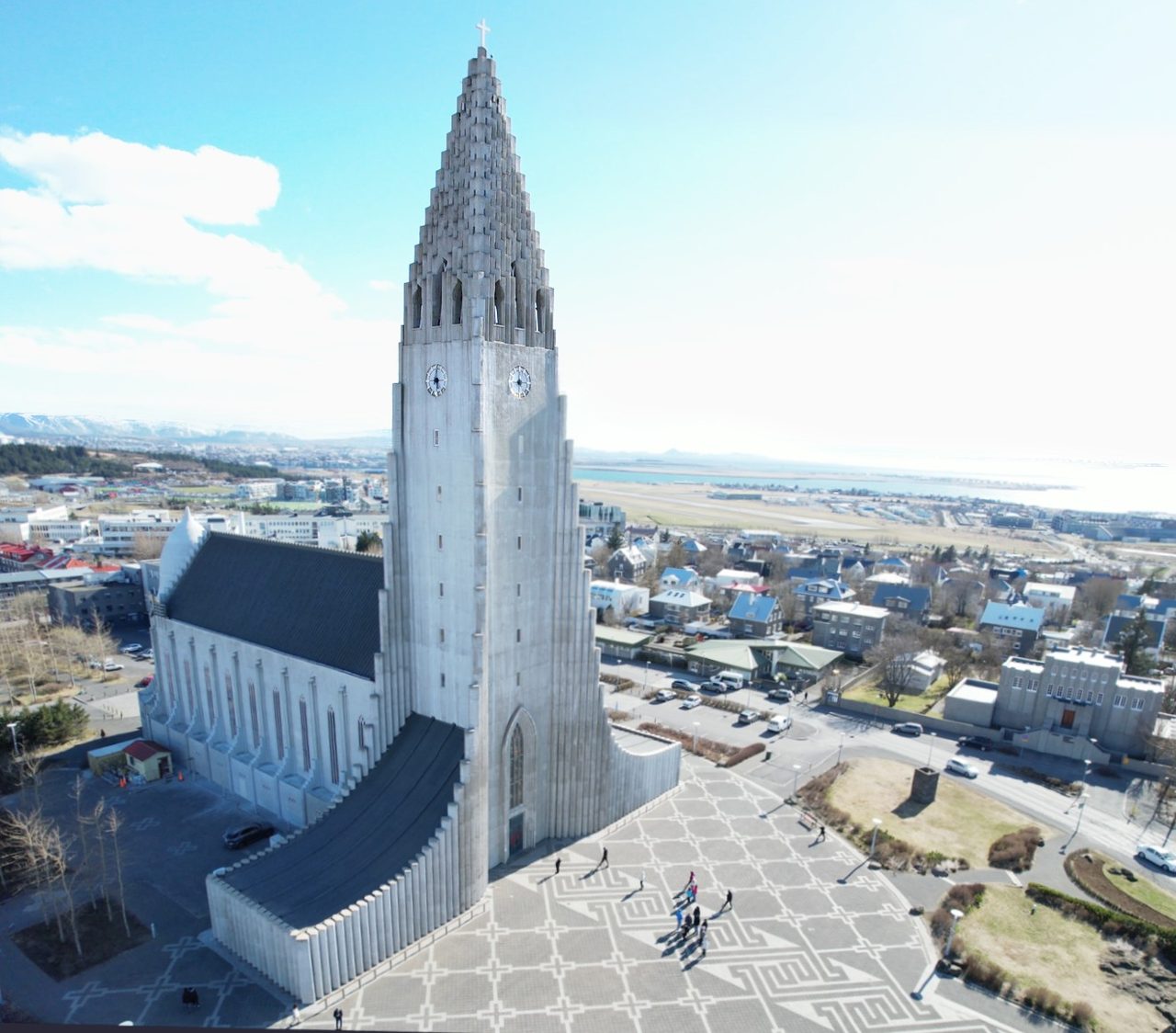
The main shopping streets in the centre, with bakeries, cafés, soup places, restaurants and bars; Skólavörðustígur leads up to Hallgrímskirkja.
Old Harbour and Grandi
Former industrial harbour with seafood restaurants, fish and chips counters, ice cream and the Grandi food hall in an old fish warehouse.
Food halls (mathöll)
Reykjavik has several food halls with independent counters selling everything from Icelandic fish to Vietnamese and Mexican food, among the more affordable ways to eat out. Hlemmur Mathöll at the eastern end of Laugavegur is the best known.
Kolaportið flea market
Long-running weekend flea market by the harbour with a food section selling dried fish, hákarl, smoked meats and sweets. Its building has been earmarked for other use and the market was operating under temporary arrangements, so check whether and where it is open.
Food tours in Reykjavik compared
Every tour below is a real listing on GetYourGuide or Viator, checked on 2 Oct 2026. Prices move with season and group size, so treat them as a guide and confirm on the booking page.
| Tour | Length | Price* | Group | Best for | |
|---|---|---|---|---|---|
| Reykjavik: Food Tour with 6+ Tastings of Icelandic Classics | 3 hours | from €130 per person | — | Travellers who want to cook the dishes again at home; easiest option for dietary needs, since you control the ingredients. | Check dates |
| Reykjavik: Guided Foodie Walking Tour with 6 Tastings | 3 hours | from €131 per person | — | First-timers who want a broad tasting of the classics with a local guide. | Check dates |
| Reykjavik: Icelandic Food Tour | 3 hours | from €126 per person | private | Couples, families or friends who want the route and pace set around them. | Check dates |
Reykjavik: Food Tour with 6+ Tastings of Icelandic Classics
On GetYourGuide · run by Secret Food Tours
- Length
- 3 hours
- Price
- from €130 per person
- Rating
- 4.8 ★ from 22 reviews (on 3 Oct 2026)
- Suits
- Travellers who want to cook the dishes again at home; easiest option for dietary needs, since you control the ingredients.
Reykjavik: Guided Foodie Walking Tour with 6 Tastings
On GetYourGuide · run by Wake Up Reykjavík
- Length
- 3 hours
- Price
- from €131 per person
- Rating
- 4.9 ★ from 2,078 reviews (on 3 Oct 2026)
- Included
- Local guide Walking tour Visit to 5 culinary stops Tastings of 6-8 local dishes
- Suits
- First-timers who want a broad tasting of the classics with a local guide.
- Starts
- Meet at the main entrance of Harpa Concert Music Hall (Big Glass Building). The main entrance has automated doors facing the street). Your guide will be wearing a blue backpack.
Reykjavik: Icelandic Food Tour
On GetYourGuide · run by Your Friend In Reykjavik
- Length
- 3 hours
- Price
- from €126 per person
- Rating
- 4.6 ★ from 477 reviews (on 3 Oct 2026)
- Group size
- private
- Included
- Food tastings Expert guide Water Gratuities
- Suits
- Couples, families or friends who want the route and pace set around them.
- Starts
- Hlöllabátar
Some links on this page are partner links. If you book through them TonyPlan earns a small commission — the price you pay is exactly the same.
Street food, sit-down or a cooking class?
Street food
Street food means hot dogs from stands, fish and chips counters and food trucks in summer. Food halls are the best-value way to try many things. Supermarkets such as Bónus and Krónan are where many visitors buy breakfast and picnic food.
Sit-down meals
Restaurants are expensive: a main course is often 4,500–8,000 ISK. Lunch menus and soup with free refills are better value. Happy hours, usually late afternoon to early evening, halve drink prices at many bars. Book ahead for popular restaurants on weekends.
Cooking classes
Cooking classes in Reykjavik are few. Food experiences are more often guided food walks with tastings, or visits to farms, greenhouses and geothermal bakeries outside the city on day tours.
How much to budget for food
| Style | Per person, per day* |
|---|---|
| Budget (street food, markets) | 8,000–11,000 ISK, about €55–75 (supermarket breakfast, hot dog and soup, food-hall dinner) |
| Mid-range (one sit-down meal a day) | 15,000–22,000 ISK, about €100–150 (lunch special and restaurant dinner with one drink) |
| Splurge (tasting menus, wine) | 35,000+ ISK, about €240+ (tasting menu with wine) |
Vegetarian, halal and gluten-free
Vegetarian & vegan: Easy in Reykjavik. Most restaurants have vegetarian and vegan options, there are dedicated vegan places, and supermarkets stock plenty of plant-based food. Lamb soup and fish stews are not vegetarian; vegetable soups often are.
Halal: Limited. A few halal restaurants and shops exist, mainly Middle Eastern, Turkish and South Asian, plus some kebab places. Fish restaurants are the easiest option. Hot dogs contain pork as well as lamb in most recipes, so ask.
Gluten-free: Good awareness: many menus mark gluten-free dishes and supermarkets have gluten-free bread. Fresh fish, lamb and skyr are naturally gluten-free; rye bread, fish and chips, hot-dog buns and many soups are not.
Food scams and tourist traps to avoid
- Whale and puffin on 'traditional' tourist menus. Very few Icelanders eat whale, and most whale meat sold in restaurants is bought by visitors. Decide for yourself whether to order it; many restaurants have dropped it, and some display 'whale-friendly' signs.
- Buying bottled water in shops and restaurants. Icelandic tap water is among the cleanest in the world and free in restaurants; let the cold tap run a moment. Hot tap water smells of sulphur but is safe.
- Ordering drinks at full price; a beer is often 1,500–2,000 ISK and wine more. Use happy hours, or buy alcohol at the airport duty-free on arrival; shops outside the state Vínbúðin stores sell only weak beer.
Top tours & activities in Reykjavik
Rent a car in Reykjavik
Compare rental cars from local and international companies, with free cancellation on most bookings.
Compare car rentals in ReykjavikPlan the rest of your Reykjavik trip
Staying near the markets saves time and taxi money — most food tours start in the old centre.
Common questions
Do I need to tip in Reykjavik?
No. Service is included in prices and staff are paid properly, so tipping is not expected anywhere. Leaving a little for exceptional service is fine but uncommon. Cards, including contactless, are accepted almost everywhere, even for a hot dog, so you rarely need cash. A tip for a food-tour guide is optional.
Should I try fermented shark?
If you are curious, yes, but in a small piece. Hákarl has a strong ammonia smell and is traditionally eaten in small cubes followed by a shot of brennivín. Most Icelanders eat it only at Þorrablót feasts in January and February. Some traditional restaurants and food tours offer a taste; a bite is enough for most people.
Is it OK to eat whale and puffin?
Both are legal, but very few Icelanders eat whale, and the meat sold in restaurants is mostly bought by visitors. Conservation groups encourage visitors not to order it. Puffin is also a declining seabird. It is your decision, but there is nothing uniquely 'traditional' about eating them in a Reykjavik restaurant today.
How can I eat cheaply in Reykjavik?
Use supermarkets such as Bónus and Krónan for breakfast and snacks, eat hot dogs and soup with free refills at lunch, and try the food halls for dinner. Bakeries are good for breakfast. Drink tap water, and use happy hours for drinks. Eating your main meal at lunch, when many restaurants have cheaper specials, also helps.
What is Þorrablót?
It is a midwinter festival held during the old month of Þorri, roughly late January to late February, when Icelanders gather to eat traditional preserved foods such as hákarl, sour ram's testicles, singed sheep's head, blood and liver sausage, smoked lamb and rye bread, with brennivín. Some restaurants serve Þorramatur platters during that period.
How much should I budget for food per day?
Even a budget day is roughly 8,000–11,000 ISK (about €55–75): supermarket breakfast, a hot dog and soup, and a food-hall dinner. A lunch special and a restaurant dinner with one drink is roughly 15,000–22,000 ISK (€100–150). A tasting menu with wine pairing is 35,000 ISK or more.
* Prices are approximate, gathered on 2 Oct 2026 from menus, markets and the booking pages linked above. They change with season and exchange rates.