How many days in Zurich? 3 days: the old town, the lake and a Rhine Falls day
By Tony Panopoulos · travel-agency planner in Greece · Updated
Zurich is Switzerland's largest city but feels small: the old town sits on both banks of the Limmat where it leaves Lake Zurich, and the water is clean enough to swim in from the centre in summer. Give it three days: one for the Altstadt and its churches, one for the lake, the art museums and the hill of Uetliberg, and one for a day trip to the Rhine Falls or Lucerne. It is expensive, so a transport pass and picnic lunches go a long way.
Short answer
Two days covers the old town, the lake and Uetliberg. The third day adds the Rhine Falls, Lucerne or the Lindt chocolate museum.
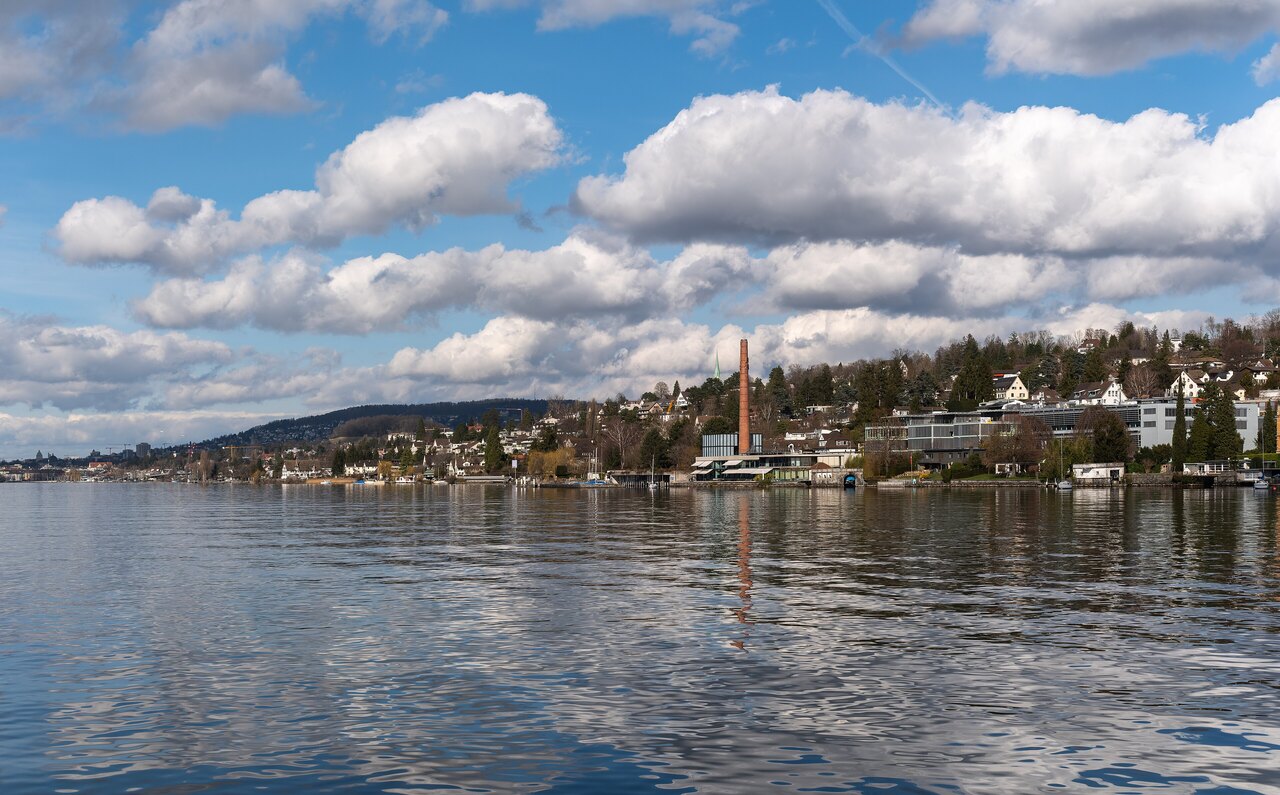
The 3-day plan, day by day
Day 1: The Altstadt: Lindenhof, Fraumünster and Grossmünster
Morning. Walk from the main station down Bahnhofstrasse, the shopping street of banks and watchmakers, and climb up to Lindenhof, a terrace on the site of the Roman fort, for the view over the Limmat. Walk on to St Peter's, whose clock face, 8.7 metres across, is the largest in Europe.
Afternoon. See the Fraumünster and its five stained-glass windows by Marc Chagall (about CHF 5). Cross the river to the Grossmünster, where Huldrych Zwingli started the Swiss Reformation in 1519, and climb its tower (about CHF 5).
Evening. Walk through the Niederdorf lanes and eat at the Zeughauskeller, a 15th-century arsenal turned beer hall, or at Hiltl, the world's oldest vegetarian restaurant, open since 1898.
Drink from any of the 1,200 public fountains; the water is drinking quality unless marked otherwise.
Day 2: The Kunsthaus, the lake and Uetliberg
Morning. Visit the Kunsthaus Zürich (about CHF 24), with Munch, Monet and Giacometti, or the Swiss National Museum next to the station (about CHF 10-13).
Afternoon. Take a lake cruise from Bürkliplatz; the short round trip takes about 1.5 hours. In summer, swim at a Badi: Frauenbadi on the Limmat or the river pool of Oberer Letten (free).
Evening. Take the S10 train 25 minutes up Uetliberg, 871 metres, for sunset over the city, the lake and the Alps. The Planet Trek walk to Felsenegg follows a scale model of the solar system.
The ZVV day pass for zone 110 covers trams, buses, trains and boats in the city; a single trip costs about CHF 4.60.
Day 3: The Rhine Falls (or Lucerne) and Lindt
Morning. Take the train to Schloss Laufen am Rheinfall, about 45-55 minutes, for the Rhine Falls, the largest waterfall in Europe by volume, 150 metres wide. Boats run to the rock in the middle (about CHF 15-20), and the castle has viewing platforms that put you right next to the spray. In early summer, after the snowmelt, the flow can reach about 600 cubic metres per second.
Afternoon. Back in Zurich, visit the Lindt Home of Chocolate in Kilchberg, 15 minutes south (about CHF 15-17), with the world's largest chocolate fountain.
Evening. Go out in Zurich West: bars under the railway arches of Im Viadukt and the rooftop of Frau Gerolds Garten.
Lucerne is 45 minutes by train: walk the Chapel Bridge and take a boat on Lake Lucerne instead.
Only have 2 days?
With 2 days, do the old town and the Kunsthaus on Day 1, the lake and Uetliberg on Day 2.
Got extra days?
A 4th day can go to Mount Rigi or Mount Pilatus near Lucerne, the Jungfraujoch (about 2.5 hours), or the old town of Stein am Rhein.
Where to stay in Zurich
| Budget | Area | Why | Typical double/night |
|---|---|---|---|
| Budget | Kreis 4 / Langstrasse | Hostels and simple hotels 10 minutes from the station. | CHF 130-200 |
| Mid-range | Altstadt / Niederdorf | Walk to the churches, the river and the lake. | CHF 250-380 |
| Mid-range | Zurich West | Modern hotels in the old industrial quarter. | CHF 220-330 |
| Comfort | Lakefront / Bahnhofstrasse | Grand hotels such as those on the lake and by Paradeplatz. | CHF 500-900 |
Getting around
Trams are frequent and punctual. Zurich Airport is 10-12 minutes by train from the main station (about CHF 7). The Zurich Card (24 or 72 hours) covers public transport, including the airport, and gives museum discounts. Swiss trains are frequent; check the SBB app for Supersaver fares, which can be half the normal price if you commit to a train. The old town is small and mostly pedestrian: the station to Bellevue on foot is about 15-20 minutes along the river, and most of the sights in this plan are within that walk. Taxis are very expensive, often CHF 30-40 for a short ride, so use trams instead.
What to eat in Zurich
Order Zürcher Geschnetzeltes, veal strips in cream sauce with Rösti, at classic restaurants such as the Kronenhalle. Try cheese fondue or raclette in winter, and Luxemburgerli, small macarons from Sprüngli on Paradeplatz. Lunch menus cost CHF 22-30, dinner CHF 50-90. Supermarkets such as Coop and Migros have good takeaway counters for picnics; eat by the lake at Zürichhorn or on the steps at Utoquai. Sausage stands sell a Kalbsbratwurst with bread and mustard for about CHF 8-10, the cheapest hot meal in town. Service is included in Swiss prices, so tipping is optional; locals round up by a franc or two.
Best time to visit
June to September, with highs of 22-28°C and swimming in the lake and river. Street Parade in August brings a huge techno parade. Sechseläuten in April burns a snowman effigy (the Böögg). Christmas markets fill the station and old town in December. Winter is cold, around 0-5°C, and often grey with fog over the lake, but the Alps are only an hour away for snow. Spring and autumn are mild and cheaper for hotels, except during the big trade fairs and banking conferences.
Month-by-month weather for Zurich →
What a day costs
| Budget | Mid-range | Comfort | |
|---|---|---|---|
| Bed (per person, sharing a double) | CHF 80 | CHF 150 | CHF 300 |
| Food & drink | CHF 50 | CHF 100 | CHF 180 |
| Sights & tickets | CHF 20 | CHF 40 | CHF 70 |
| Local transport | CHF 10 | CHF 15 | CHF 30 |
| Total per person, per day | about CHF 160 | about CHF 305 | about CHF 580 |
Approximate 2026 prices in Swiss francs; Zurich adds a city tax of about CHF 2.50 per person per night.
Before you go
Common questions
Is Zurich expensive?
Very. It is among the most expensive cities in the world. A coffee costs CHF 5-6, a beer CHF 7-9, a main course CHF 30-45. Save money with a transport pass, picnic lunches from Coop or Migros, and free sights such as the churches, Lindenhof and the river pools.
Is 2 or 3 days enough in Zurich?
Two days is enough for the old town, the museums and the lake. Three days lets you take a day trip to the Rhine Falls, Lucerne or the Alps, which are close by train. Zurich makes a good base because of its excellent rail connections.
Can I swim in Lake Zurich?
Yes, from June to September, when the water reaches about 20-24°C. The city has many Badis, public bathing places on the lake and the Limmat, some free and some with a small fee. The river can be strong: swim only in marked areas and follow local rules.
Should I buy a Swiss Travel Pass for Zurich?
Only if you travel widely across Switzerland. For Zurich and one or two day trips, a city day pass or the Zurich Card plus point-to-point Supersaver train tickets usually costs less. Compare prices on the SBB app before you buy.
How this guide was made
Compiled by TonyPlan from official tourism, transport and attraction sources and on-the-ground travel knowledge. Prices are approximate for 2026 and change with season; anything we could not confirm is marked as approximate.
Some links on this page are partner links. If you book through them TonyPlan may earn a commission; the price you pay is the same. How we make money.