Home › Tuscany › How many days
How many days in Tuscany? 5 days, from Florence to the Val d'Orcia
By Tony Panopoulos · travel-agency planner in Greece · Updated
Tuscany is two trips in one: art cities reached by train, and hill towns and vineyards that really need a car. Give it five days: one in Florence, one by train to Pisa and Lucca, then pick up a car for Chianti, San Gimignano, Siena and the Val d'Orcia. Sleep in Florence for two nights and in a farmhouse (agriturismo) near Siena for three.
Short answer
Four days drops Pisa and Lucca and keeps Florence, Chianti, Siena and the Val d'Orcia. Five is the comfortable minimum if Florence is part of the trip.
The 5-day plan, day by day
Day 1: Florence: the Duomo and the Uffizi
Morning. Climb Brunelleschi's Dome on a timed slot from 8:15; the 463 steps are included in the Brunelleschi Pass (about €30), which also covers the bell tower, baptistery and cathedral museum. Then walk 5 minutes down Via dei Calzaiuoli to Piazza della Signoria and the Palazzo Vecchio.
Afternoon. Enter the Uffizi Gallery with a pre-booked ticket (about €25 in high season) for Botticelli's Birth of Venus and Primavera; allow 2.5-3 hours. Cross the Ponte Vecchio with its goldsmiths' shops into the Oltrarno.
Evening. Walk 20 minutes uphill to Piazzale Michelangelo for sunset over the river and the dome. Then eat in Santo Spirito, where a trattoria dinner with house wine is about €30-40.
To see Michelangelo's David, book the Accademia Gallery (about €16-20) for the first or last slot of the day; queues without a booking can reach 2 hours.
Day 2: Pisa and Lucca by train
Morning. Take a regional train from Florence Santa Maria Novella to Pisa Centrale, about 1 hour for roughly €9. Walk 25 minutes, or take the LAM Rossa bus, to the Piazza dei Miracoli, where the Leaning Tower climb costs about €20 on a timed slot; the cathedral is free with a ticket.
Afternoon. Continue 30 minutes by train to Lucca. Rent a bike (about €4 an hour) and ride the 4.2 km of tree-lined Renaissance walls, then visit the oval Piazza dell'Anfiteatro, built on a Roman amphitheatre, and the Guinigi Tower with oak trees on its roof.
Evening. Eat in Lucca before heading back: try tordelli lucchesi, meat-filled pasta with ragù, and buccellato sweet bread. The last trains to Florence leave around 22:00; the ride takes about 1h20.
Only 45 people at a time can climb the Leaning Tower; book on the official Opera della Primaziale Pisana site a few days ahead in summer.
Day 3: Chianti and San Gimignano
Morning. Pick up a car outside the Florence ZTL and take the scenic SR222 Chiantigiana south. Stop at Greve in Chianti for its triangular arcaded square and the butcher Antica Macelleria Falorni, then visit a winery near Panzano or Castellina; tastings cost about €20-40.
Afternoon. Drive about 50 minutes west to San Gimignano, the hill town of 14 surviving medieval towers. Climb the Torre Grosso, 54 metres high, through the Civic Museum (about €10) and try the local white Vernaccia wine.
Evening. Stay for the evening, when day-trip coaches have left and the Piazza della Cisterna empties. Gelateria Dondoli on the square is famous for saffron and Vernaccia flavours. Drive 45 minutes to your agriturismo near Siena.
Every historic centre in Tuscany has a ZTL (limited-traffic zone) watched by cameras; driving in without a permit brings fines of about €80-300, often months later.
Day 4: Siena: the Campo and the cathedral
Morning. Park at one of the big car parks outside the walls, such as Il Campo or Santa Caterina with its escalators up to town. Be at Siena Cathedral at opening; the striped marble Duomo with its inlaid floor and the Piccolomini Library are covered by the OPA SI pass (about €15-20).
Afternoon. Walk to the shell-shaped Piazza del Campo, where the Palio horse race is run on 2 July and 16 August. Climb the Torre del Mangia, 400 steps and 88 metres (about €15-20), and see Lorenzetti's Allegory of Good and Bad Government in the Palazzo Pubblico.
Evening. Have an aperitivo on the Campo, then eat in the side streets. Order pici (thick hand-rolled pasta) with garlic tomato sauce, and buy ricciarelli almond biscuits from a pasticceria.
For the Palio itself, standing in the centre of the Campo is free but packed from early afternoon; seats on the stands sell for hundreds of euros.
Day 5: Val d'Orcia: Pienza, Montepulciano and Montalcino
Morning. Drive about 1 hour south to Montalcino for a tasting of Brunello di Montalcino, then 15 minutes to the Romanesque Abbey of Sant'Antimo. The road on to Pienza passes the classic Val d'Orcia scenes, including the cypress grove near San Quirico.
Afternoon. In Pienza, the ideal Renaissance town planned by Pope Pius II, buy pecorino sheep's cheese and walk the panoramic lane behind the cathedral. Continue 20 minutes to Montepulciano for Vino Nobile in cellars carved deep under the palaces.
Evening. Soak your feet in the warm channels of Bagno Vignoni, a village whose square is a 16th-century thermal pool, or book the Terme at nearby Bagni San Filippo. The drive back to Siena is about 1 hour.
The famous cypress-lined driveway photos are at the Agriturismo Poggio Covili and on the SP146 between Pienza and San Quirico; park safely, as these are working roads.
Only have 4 days?
With 4 days, skip Pisa and Lucca and go straight from Florence to Chianti. With 3, choose Florence plus a Siena and Chianti day tour.
Got extra days?
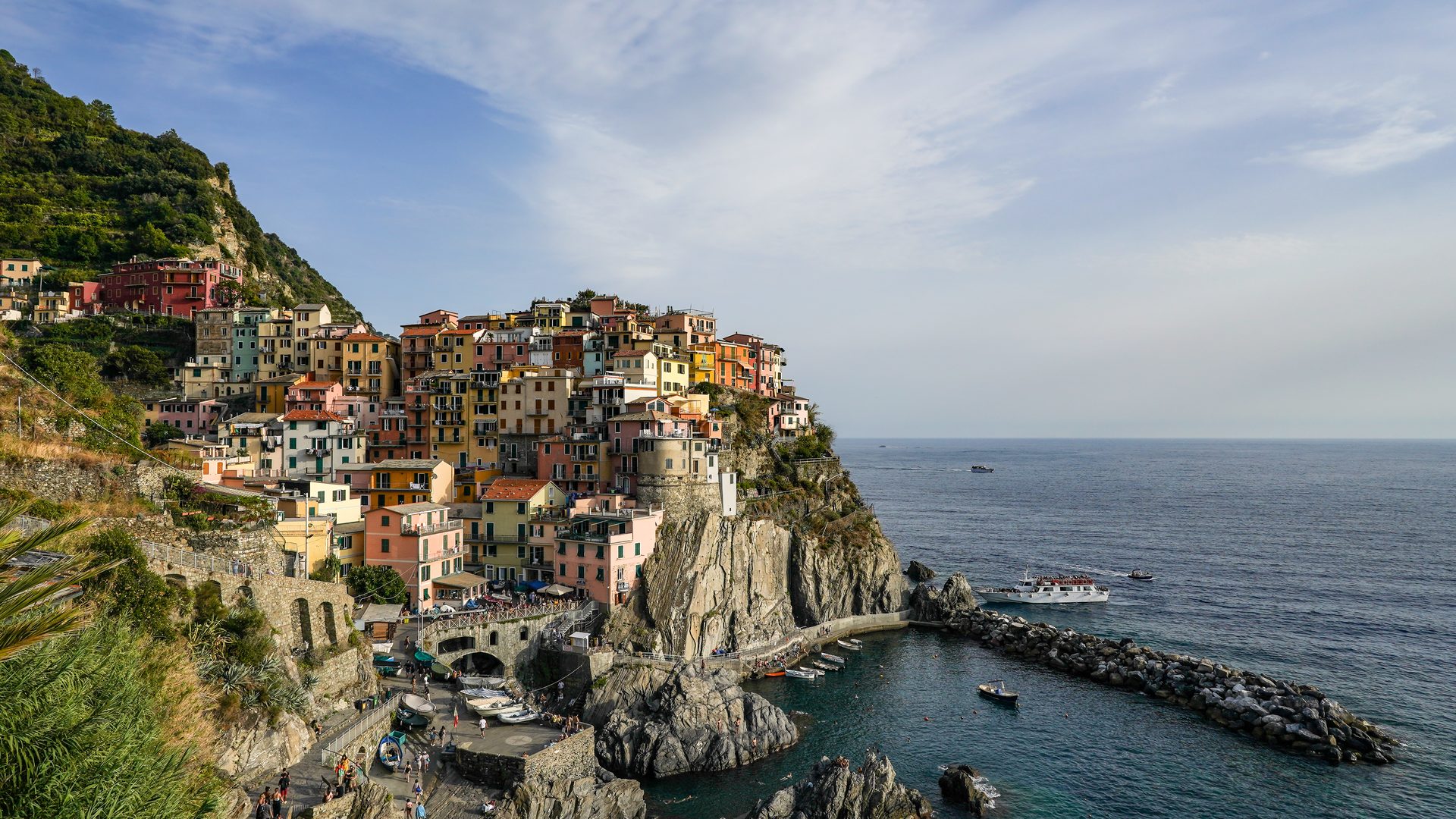
Add Cortona and Arezzo in the east, the Cinque Terre from Pisa or La Spezia (about 1.5 hours), the Etruscan town of Volterra, or a lazy day at a farmhouse pool.
Where to stay in Tuscany
| Budget | Area | Why | Typical double/night |
|---|---|---|---|
| Budget | Florence near Santa Maria Novella / Siena hostels | Next to the station for day trips by train. | €80-130 |
| Mid-range | Florence Oltrarno / Santa Croce | Quiet streets 10 minutes' walk from the Duomo, good trattorias. | €150-250 |
| Mid-range | Agriturismo near Siena or in Chianti | Farm stays with pools, breakfast and dinner from the estate. | €120-220 |
| Comfort | Val d'Orcia or Chianti wine-estate resorts | Restored villas and castles among the vineyards. | €300-700 |
Getting around
Florence, Pisa, Lucca and Siena are linked by Trenitalia regional trains (€5-10, validate paper tickets before boarding), and buses run from Florence to Siena in about 1h15. For Chianti and the Val d'Orcia, hire a car from about €45-70 a day; pick it up at Florence airport or outside the ZTL. From Pisa airport, the PisaMover shuttle reaches Pisa Centrale in 5 minutes.
What to eat in Tuscany
Tuscan food is plain and generous. Try bistecca alla fiorentina, a thick T-bone sold by weight (about €50-70 per kilo), ribollita (bread and bean soup), pappa al pomodoro, and lampredotto, a tripe sandwich from street carts near Florence's Mercato Centrale for about €5. In the hills, eat pici, wild boar ragù and pecorino. House wine by the carafe is about €10-15 a litre.
Best time to visit
May to June and September to October, with highs of 22-28°C; late September and October is grape harvest season. July and August often pass 35°C and Florence is crowded. Winter is quiet and cheap, though some agriturismi close from November to March.
Month-by-month weather for Tuscany →
What a day costs
| Budget | Mid-range | Comfort | |
|---|---|---|---|
| Bed (per person, sharing a double) | €45 | €90 | €200 |
| Food & drink | €35 | €60 | €110 |
| Sights & tickets | €20 | €40 | €70 |
| Local transport | €10 | €30 | €50 |
| Total per person, per day | about €110 | about €220 | about €430 |
Approximate 2026 prices; Florence's tourist tax is up to about €8 per person per night depending on the hotel, and smaller towns charge €1-5.
Before you go
Common questions
Do I need a car in Tuscany?
For Florence, Pisa, Lucca and Siena, no: trains and buses are cheap and frequent. For Chianti, San Gimignano and the Val d'Orcia, a car makes the trip, since buses are slow and infrequent and wineries are far from bus stops. Rent one only for the countryside days and never drive into a historic centre's ZTL.
Florence or Siena as a base?
Use both. Florence has the big museums and the best train links for Pisa and Lucca, but parking is difficult and expensive. A countryside base near Siena puts Chianti, San Gimignano and the Val d'Orcia all within an hour's drive and costs less. Two nights plus three is a good split.
Do I need to book wine tastings?
Yes, at most wineries, especially in Chianti and Montalcino. Smaller estates take visitors only by appointment, often at fixed times such as 10:00 or 15:00, and many close on Sundays. Book a few days ahead by email or online, and choose a designated driver: Italy's drink-driving limit is 0.5 g/l, and zero for new drivers.
Which museums need advance tickets?
The Uffizi, the Accademia for Michelangelo's David, the Brunelleschi Dome climb and the Leaning Tower all use timed entries that sell out in high season, so book them 1-3 weeks ahead. Florence's state museums are free on the first Sunday of the month, but expect very long queues on those days.
How this guide was made
Compiled by TonyPlan from official tourism, transport and attraction sources and on-the-ground travel knowledge. Prices are approximate for 2026 and change with season; anything we could not confirm is marked as approximate.
Some links on this page are partner links. If you book through them TonyPlan may earn a commission; the price you pay is the same. How we make money.