Home › Suriname › How many days
How many days in Suriname? 7 days for Paramaribo, the plantations and the rainforest river
By Tony Panopoulos · travel-agency planner in Greece · Updated
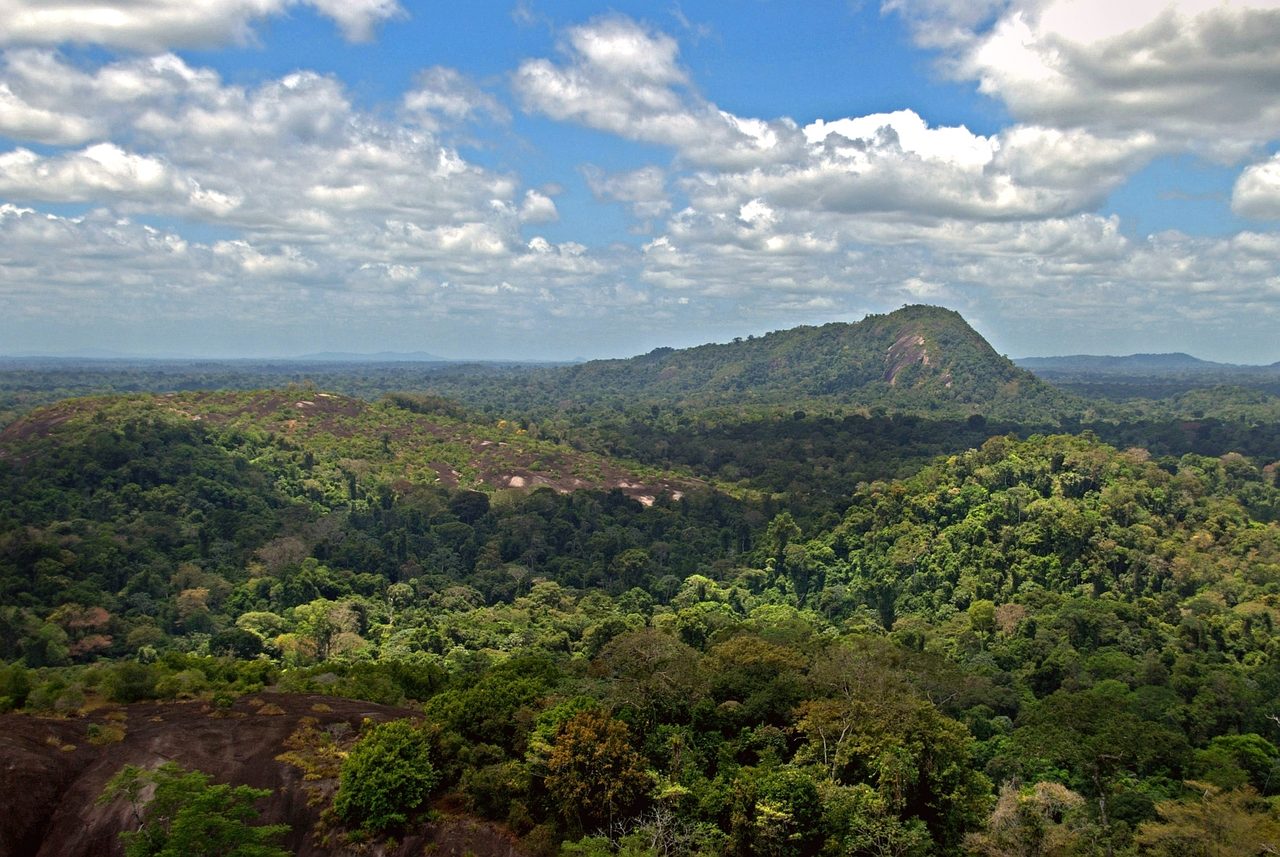
More than 90% of Suriname is rainforest, and almost everyone lives along the coast in and around Paramaribo, a Dutch-built city of white wooden houses where a mosque and a synagogue share the same street. Seven days covers both halves of the country: three in the capital and the old plantations of Commewijne, then a road-and-boat journey up the Suriname River to stay with Maroon communities in the forest. Dutch is the official language, but almost everyone also speaks Sranan Tongo, and English is widely understood.
Short answer
Five days covers Paramaribo, a plantation day and two nights on the Upper Suriname River. Seven adds Brownsberg Nature Park and a slower river stay.
The 7-day plan, day by day
Day 1: Paramaribo: the wooden UNESCO centre
Morning. Start at Fort Zeelandia on the river (about SRD 200-350 with the Suriname Museum), the 17th-century fort where the colony began. Walk the Waterkant, lined with white wooden merchant houses, to the Presidential Palace and the Palmentuin palm garden.
Afternoon. See the Cathedral Basilica of Saints Peter and Paul, one of the largest wooden buildings in the Americas, then the Keizerstraat, where the Neve Shalom Synagogue and the Mosque Keizerstraat stand next to each other.
Evening. Dinner at the Waterkant food stalls by the river, with Javanese bami, saoto soup and roti for SRD 150-300, and a cold Parbo beer.
The inner city is a UNESCO site, but many wooden houses are fragile and private; a guided walk from the tourist information office on the Waterkant explains who built them.
Day 2: Commewijne plantations by bike
Morning. Cross the Wijdenbosch Bridge or take the small boat from Leonsberg to Commewijne, then rent a bike (about SRD 200-400) and ride to Fort Nieuw Amsterdam (open-air museum, about SRD 150-250).
Afternoon. Ride the plantation route to Peperpot, a former coffee and cocoa estate in forest with monkeys and birds (small entry fee), and Marienburg, a former sugar plantation linked to Javanese contract labourers.
Evening. Join a dolphin and sunset boat tour at the meeting of the Suriname and Commewijne rivers to see Guiana dolphins (about SRD 1,000-1,500).
Many travellers book a combined plantation and dolphin tour; it avoids the boat logistics.
Day 3: Brownsberg Nature Park and Brokopondo
Morning. Drive about 2.5 hours south to Brownsberg Nature Park (about SRD 300-600 per person entry), a plateau 500 metres above the Brokopondo Reservoir. Hike to the Leo and Irene waterfalls (about 1-2 hours each).
Afternoon. Look for howler and spider monkeys, toucans and agoutis along the trails, then drive down to the reservoir.
Evening. Overnight at a lodge on the reservoir or back in Paramaribo.
Brownsberg is best done with a tour, as the road is rough and public transport is limited.
Day 4: Up the Suriname River
Morning. Take a minibus to Atjoni (about 3-4 hours on the paved road), the end of the road, then a motorised dugout canoe (korjaal) upriver for 1-3 hours.
Afternoon. Arrive at a river lodge such as Danpaati or one of the village guesthouses near Botopasi, run by Saamaka Maroon communities, whose ancestors escaped slavery in the 17th and 18th centuries.
Evening. Dinner at the lodge, then swim in the river and listen to the forest at night.
Book the interior package (transport, lodging and meals) with the lodge or a Paramaribo agency; it usually costs about SRD 10,000-18,000 per person for 3 nights.
Day 5: Maroon village visit
Morning. Visit a Saamaka village with a guide from the lodge. Learn about the traditional houses, the matrilineal clans and wood carving.
Afternoon. Swim in the rapids or walk into the forest to look for medicinal plants with a local guide.
Evening. Watch a dance performance, if offered, and return to the lodge.
Ask before taking photos of people, and respect village rules: some places, such as shrines, are off-limits to visitors.
Day 6: Forest hike and the river
Morning. Hike in the rainforest (about 2-3 hours) to an island or a viewpoint, or go by canoe to a waterfall.
Afternoon. Relax in a hammock, or try fishing with the boatmen.
Evening. Last night in the forest, with stars and the sounds of frogs and insects.
Bring insect repellent with DEET, long sleeves for the evening, a torch and a dry bag.
Day 7: Back to Paramaribo
Morning. Canoe back to Atjoni and drive to Paramaribo (about 5-6 hours in total).
Afternoon. Shop at the Central Market (Centrale Markt) by the river for spices, hot peppers and crafts.
Evening. Last dinner of pom (baked chicken and tayer root casserole) or Indonesian rijsttafel, then the night flight from Johan Adolf Pengel International Airport, about 45 minutes south of the city.
Allow 3 hours at the airport, and do not plan a flight on the same day as returning from the interior if you can avoid it.
Only have 5 days?
With 5 days, skip Brownsberg and stay two nights on the Upper Suriname River.
Got extra days?
Extra days go to Galibi on the north-east coast to see leatherback and green turtles nest (about February to August), the Central Suriname Nature Reserve and the Raleigh Falls by small plane, or the old Jodensavanne, a 17th-century Jewish settlement in the forest.
Where to stay in Suriname
| Budget | Area | Why | Typical double/night |
|---|---|---|---|
| Budget | Paramaribo inner city | Guesthouses in wooden houses, walk to the Waterkant. | SRD 1,200-2,000 |
| Mid-range | Paramaribo inner city / Zorg en Hoop | Restored colonial hotels near the river, close to restaurants. | SRD 3,000-5,000 |
| Mid-range | Upper Suriname River lodges | Riverside huts with meals included in packages. | SRD 3,000-6,000 |
| Comfort | Paramaribo riverside hotels | Pools, river views and the best restaurants. | SRD 6,000-10,000 |
Getting around
In Paramaribo, walk the centre, and use taxis or apps for longer trips (about SRD 150-400). Minibuses run on fixed routes around the city and to Atjoni. The interior is reached by road and boat or small plane from Zorg en Hoop airport. Hire cars are available, but traffic drives on the left. Tours often include all transport.
What to eat in Suriname
Suriname's food reflects its people: Hindustani, Javanese, Creole, Chinese, Maroon and Indigenous. Try roti with chicken and potatoes, bami and nasi, pom, saoto soup and moksi alesi (mixed rice). Bakabana (fried plantain with peanut sauce) is a cheap snack. A warung meal costs about SRD 150-300; a restaurant dinner about SRD 600-1,200.
Best time to visit
The dry seasons run from about mid-August to November and February to April, with highs of 30-32°C. The main rainy season runs from about April to August, and a short one from December to January. Turtles nest at Galibi from about February to August.
Month-by-month weather for Suriname →
What a day costs
| Budget | Mid-range | Comfort | |
|---|---|---|---|
| Bed (per person, sharing a double) | SRD 700 | SRD 2,000 | SRD 4,000 |
| Food & drink | SRD 500 | SRD 1,000 | SRD 2,000 |
| Sights & tickets | SRD 300 | SRD 1,000 | SRD 2,000 |
| Local transport | SRD 200 | SRD 500 | SRD 1,200 |
| Total per person, per day | about SRD 1,700 | about SRD 4,500 | about SRD 9,200 |
Approximate 2026 prices in Surinamese dollars (about SRD 37-40 to the US dollar; the rate moves often); interior lodge packages and tours are often priced in US dollars or euros.
Before you go
Common questions
Do I need a visa for Suriname?
Many nationalities, including EU, UK, US and Canadian citizens, have needed an e-visa or e-tourist card bought online before travel, for roughly US$50. Some neighbouring countries and Caricom citizens are exempt. The rules have changed several times in recent years, so apply only on the official Suriname e-visa website and print the approval before your flight.
Is Suriname safe?
Paramaribo is generally safe for visitors during the day. At night, avoid walking alone in deserted areas, and take taxis. In the interior, travel with a lodge or a licensed guide. Petty theft happens, especially in markets, so keep valuables hidden. Gold-mining areas in the far interior are best avoided.
Can I pay by card?
In Paramaribo's hotels, supermarkets and many restaurants, yes, but cash is still important. ATMs are found in the city and at the airport. Bring euros or US dollars as backup to exchange at banks or official exchange offices. In the interior, everything is usually paid in advance or in cash.
Is 7 days enough for Suriname?
It is enough for Paramaribo, the plantations and a three-night river stay. With more time, add the turtle beaches of Galibi or a flight to the Central Suriname Nature Reserve. Many travellers combine Suriname with French Guiana, across the Marowijne River to the east.
How this guide was made
Compiled by TonyPlan from official tourism, transport and attraction sources and on-the-ground travel knowledge. Prices are approximate for 2026 and change with season; anything we could not confirm is marked as approximate.
Some links on this page are partner links. If you book through them TonyPlan may earn a commission; the price you pay is the same. How we make money.