Home › New Zealand › How many days
How many days in New Zealand? 10 days: Auckland, Rotorua, Tongariro and the Southern Alps
By Tony Panopoulos · travel-agency planner in Greece · Updated
New Zealand is about the size of the UK with a population of only five million, and its highlights are spread over two islands. Ten days is the minimum for a first taste of both: the volcanic heart of the North Island around Rotorua and Tongariro, then a flight south to Queenstown and a road trip through the Southern Alps to Christchurch. Rent a car or campervan; distances look short on the map but roads are winding.
Short answer
Seven days is enough for one island done well, usually the South Island from Queenstown to Christchurch. Ten days lets you add Rotorua and Tongariro in the north.
The 10-day plan, day by day
Day 1: Auckland and Waiheke
Morning. Walk the Viaduct Harbour and Wynyard Quarter, then climb Maungawhau / Mount Eden, a volcanic cone with a 50-metre crater and views over the city (free, 20 minutes up).
Afternoon. Take the ferry to Waiheke Island (40 minutes, about NZ$50-60 return) for vineyards, olive groves and beaches such as Onetangi.
Evening. Return for dinner in Ponsonby or the Britomart quarter; mains cost NZ$30-45.
Auckland's public transport uses the AT HOP card or contactless payment on buses, trains and ferries.
Day 2: Hobbiton and Rotorua
Morning. Drive 2 hours south to Matamata for the Hobbiton Movie Set tour (about NZ$120-140, 2 hours), with 44 hobbit holes and the Green Dragon Inn. Book ahead.
Afternoon. Continue 1 hour to Rotorua, the geothermal town that smells of sulphur. Walk among giant trees in the Redwoods Whakarewarewa Forest and its treetop walk.
Evening. Go to a Māori cultural evening with a hāngī feast cooked in the ground, a haka and songs, at Te Pā Tū or Mitai (NZ$140-220).
Book a Hobbiton tour that starts at about 10:00 to arrive in Rotorua by mid-afternoon.
Day 3: Rotorua's geothermal valleys
Morning. Drive 30 minutes south to Wai-O-Tapu (about NZ$45) to see the Lady Knox Geyser erupt at 10:15 and the orange and green Champagne Pool.
Afternoon. Visit Te Puia in Whakarewarewa (about NZ$80), with the Pōhutu Geyser, which erupts up to 20 times a day, a carving school and kiwi house.
Evening. Soak in the lakeside Polynesian Spa pools (from about NZ$40), then drive 1 hour to Taupō.
The free Kuirau Park in central Rotorua has bubbling mud pools and hot foot baths.
Day 4: Tongariro Alpine Crossing
Morning. Take a 6:00 shuttle (about NZ$45-70) to the start of the Tongariro Alpine Crossing, often called the best day hike in New Zealand: 19.4 km and 6-8 hours across a volcanic landscape.
Afternoon. Pass Mount Ngauruhoe (Mount Doom in the films), the Red Crater and the turquoise Emerald Lakes, then descend to the Ketetahi car park.
Evening. Back in Taupō, soak in the free hot stream at Spa Thermal Park where it meets the Waikato River.
The weather changes fast; check the forecast with the Department of Conservation and turn back in high wind or cloud.
Day 5: Fly to Queenstown
Morning. Drive back to Rotorua or Auckland and fly to Queenstown (about 2 hours from Auckland), one of the most beautiful airport approaches in the world.
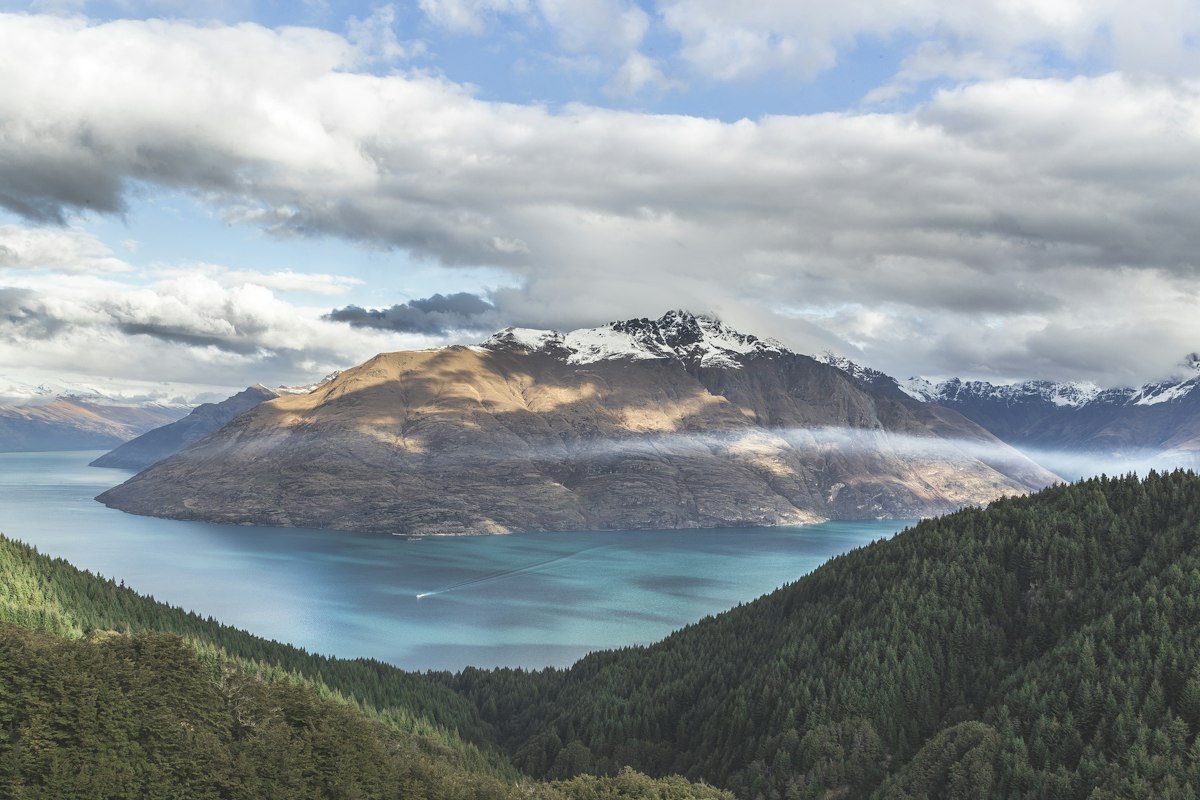
Afternoon. Ride the Skyline Gondola up Bob's Peak (about NZ$60) for the view of Lake Wakatipu and the Remarkables, and try the luge.
Evening. Queue for a Fergburger (about NZ$18-25) or eat on the waterfront at Steamer Wharf.
Book a rental car or campervan for the South Island from Queenstown and return it in Christchurch; one-way fees apply.
Day 6: Milford Sound
Morning. Leave by 7:00 for Milford Sound in Fiordland National Park: about 4 hours by road via Te Anau, stopping at the Mirror Lakes and the Homer Tunnel. Coach tours from Queenstown cost NZ$200-280.
Afternoon. Take a 2-hour cruise (about NZ$100-150) under Mitre Peak and past waterfalls that pour straight into the sea, with seals and sometimes dolphins.
Evening. Return to Queenstown by 20:00, or stay overnight in Te Anau.
Rain makes Milford better, not worse: hundreds of temporary waterfalls appear.
Day 7: Arrowtown and Wānaka
Morning. Drive 20 minutes to Arrowtown, a gold-rush village of the 1860s. Walk its main street and the restored Chinese miners' settlement by the river (free).
Afternoon. Cross the Crown Range Road, the highest sealed road in New Zealand, to Wānaka (1 hour). See the famous That Wānaka Tree growing out of the lake.
Evening. Hike Roys Peak for sunset if you are fit (16 km, 5-6 hours return), or watch a film at the Cinema Paradiso.
The Roys Peak track closes for lambing from 1 October to 10 November each year.
Day 8: Aoraki/Mount Cook
Morning. Drive 3 hours north via the Lindis Pass to Aoraki/Mount Cook National Park, with views along the turquoise Lake Pukaki.
Afternoon. Walk the Hooker Valley Track (10 km, about 3 hours return, free) over three swing bridges to a glacial lake with icebergs below Aoraki/Mount Cook, at 3,724 metres the highest mountain in the country.
Evening. Stay in Mount Cook Village; the Hermitage hotel has a planetarium.
There is only one petrol station in the area, and it is expensive. Fill up in Twizel.
Day 9: Lake Tekapo and the dark sky
Morning. Drive 1h15 to Lake Tekapo. Visit the Church of the Good Shepherd (1935), a stone chapel on the shore.
Afternoon. Walk up Mount John (about 2 hours return) for the view, or soak in the Tekapo Springs hot pools (about NZ$35-40).
Evening. Join a stargazing tour in the Aoraki Mackenzie Dark Sky Reserve (about NZ$100-180) for the Southern Cross and the Magellanic Clouds.
Lupins flower purple and pink along the lake from mid-November to late December.
Day 10: Christchurch
Morning. Drive 3 hours to Christchurch across the Canterbury Plains. Stop at Geraldine for coffee and its cheese and jam shops.
Afternoon. Walk the Botanic Gardens, ride the heritage tram and see the Cardboard Cathedral, built after the 2011 earthquake, and the new Te Pae centre.
Evening. Have a final dinner on New Regent Street or in Riverside Market, then fly home from Christchurch Airport (20 minutes from the city).
Allow at least an hour to return a rental car before an international flight.
Only have 7 days?
With 7 days, do the South Island only: Queenstown, Milford Sound, Wānaka, Mount Cook, Tekapo and Christchurch. You lose Rotorua and Tongariro.
Got extra days?
Extra days fit the Bay of Islands, the glaciers of the West Coast, whale watching at Kaikōura, the Abel Tasman coast or Wellington and its Te Papa museum.
Where to stay in New Zealand
| Budget | Area | Why | Typical double/night |
|---|---|---|---|
| Budget | Hostels and holiday parks | Dorms, cabins and campervan sites in every town. | NZ$80-140 |
| Mid-range | Motels in Rotorua, Wānaka and Tekapo | Self-contained rooms with kitchens and parking, the classic NZ road-trip bed. | NZ$170-260 |
| Mid-range | Queenstown centre | Walk to the lake, the gondola and restaurants. | NZ$220-350 |
| Comfort | Lodges in Queenstown and Mount Cook | Lake- and mountain-view lodges with fine dining. | NZ$450-1,200 |
Getting around
Drive: rent a car (from about NZ$60-100 a day) or a campervan (NZ$120-300). Drive on the left, and expect single-lane bridges and gravel shoulders. InterCity buses link most towns, and Air New Zealand and Jetstar fly between the islands. From Auckland Airport, the SkyDrive bus runs to the city in 45 minutes for about NZ$20.
What to eat in New Zealand
Try lamb, green-lipped mussels, whitebait fritters on the West Coast, a meat pie from a bakery (NZ$6-9), and a hāngī in Rotorua. Fish and chips by the sea cost NZ$15-25. Cafés serve flat whites and brunch for NZ$20-30. Desserts are pavlova and hokey pokey ice cream. New Zealand Sauvignon Blanc from Marlborough and Pinot Noir from Central Otago are world-class.
Best time to visit
December to March is summer, with highs of 20-28°C and the longest days. March-April brings autumn colours in Arrowtown and fewer crowds. June to August is ski season in Queenstown and Wānaka. Spring (October-November) is changeable.
Month-by-month weather for New Zealand →
What a day costs
| Budget | Mid-range | Comfort | |
|---|---|---|---|
| Bed (per person, sharing a double) | NZ$50 | NZ$110 | NZ$250 |
| Food & drink | NZ$45 | NZ$90 | NZ$170 |
| Sights & tickets | NZ$30 | NZ$90 | NZ$200 |
| Local transport | NZ$30 | NZ$60 | NZ$120 |
| Total per person, per day | about NZ$155 | about NZ$350 | about NZ$740 |
Approximate 2026 prices in New Zealand dollars, excluding the domestic flight; most visitors also need an **NZeTA** and pay the **International Visitor Conservation and Tourism Levy** (NZ$100 since October 2024) before arrival.
Before you go
Common questions
North Island or South Island?
With only a week, choose the South Island for mountains, lakes and fjords. The North Island has geothermal Rotorua, Māori culture, Tongariro and beaches. With 10 days or more, a flight between the two lets you see the best of both without long drives.
Car or campervan?
A campervan saves on beds but costs more per day to rent, uses more fuel and needs a booked site each night, as freedom camping is restricted. A car with motels is often similar in price and easier on winding roads. Book either months ahead for December to February.
Do I need to book in advance?
Yes, in summer. Book Hobbiton, Milford Sound cruises, Māori evenings and Queenstown beds weeks ahead, and rental cars months ahead for Christmas and January. Great Walks such as the Milford and Routeburn tracks sell out within hours of opening, usually in winter for the following summer.
Is New Zealand expensive?
It is costly, similar to Australia or the UK. Accommodation, rental cars and activities are the big costs. Save with motels with kitchens, supermarket picnics (Pak'nSave and Countdown/Woolworths), free walks such as the Hooker Valley, and by booking activities directly.
How this guide was made
Compiled by TonyPlan from official tourism, transport and attraction sources and on-the-ground travel knowledge. Prices are approximate for 2026 and change with season; anything we could not confirm is marked as approximate.
Some links on this page are partner links. If you book through them TonyPlan may earn a commission; the price you pay is the same. How we make money.