How many days in Nepal? 9 days: Kathmandu Valley, a Poon Hill trek and Chitwan
By Tony Panopoulos · travel-agency planner in Greece · Updated
You do not need three weeks and an Everest permit to see the Himalaya. Nine days gives you three in the Kathmandu Valley, with seven UNESCO monument zones within 15 km of each other, a three-day lodge trek to Poon Hill above Pokhara for sunrise over the Annapurnas and Dhaulagiri, and two days of jungle and rhinos in Chitwan. Plan around the roads: 200 km here can take seven hours.
Short answer
Six days covers the Kathmandu Valley, Pokhara and a short walk up to Sarangkot or Australian Camp for the mountain view. Nine adds the real trek and Chitwan.
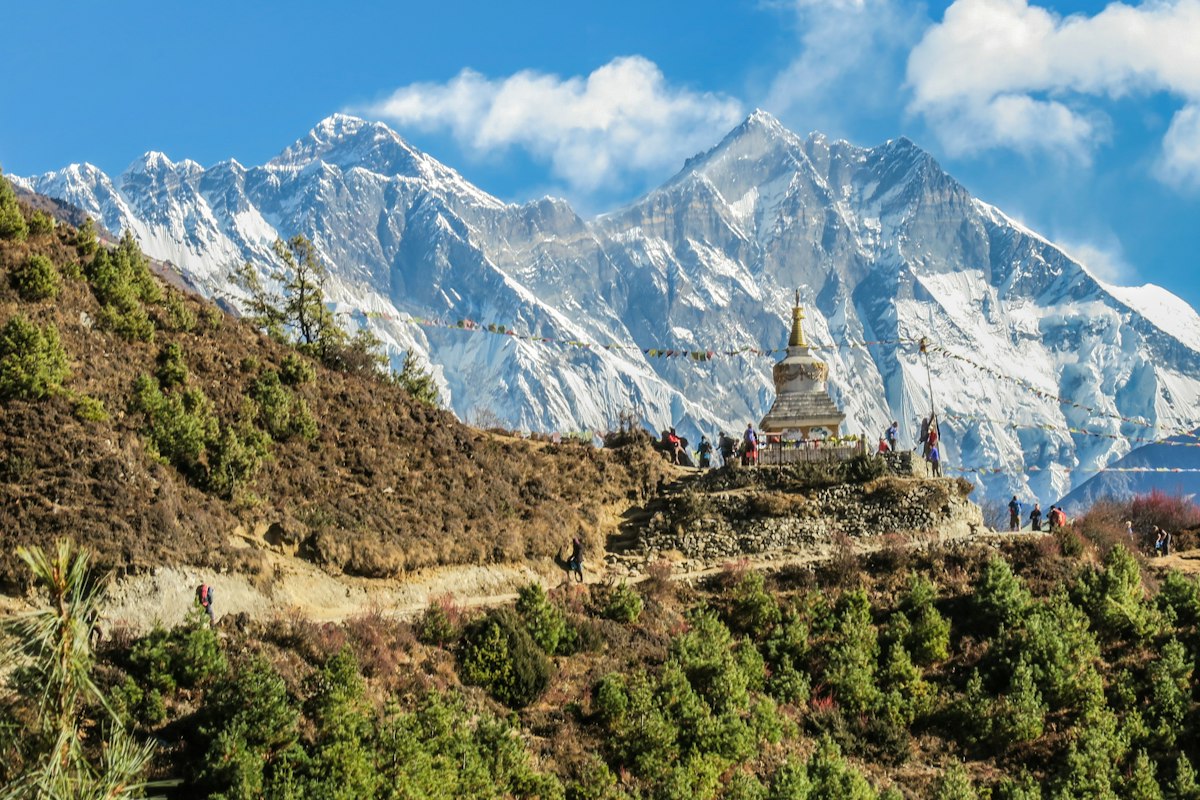
The 9-day plan, day by day
Day 1: Kathmandu Durbar Square and Swayambhunath
Morning. Walk from Thamel 15 minutes south through Asan Tole, the old spice and brass market, to Kathmandu Durbar Square (foreigners about Rs 1,000). See the Hanuman Dhoka palace and Kumari Ghar, home of the living child goddess.
Afternoon. Take a taxi (Rs 400-600) or walk 40 minutes west to Swayambhunath, the 'monkey temple', and climb its 365 steps to the white stupa with the painted eyes of the Buddha (about Rs 200). The terrace looks across the whole valley.
Evening. Back in Thamel, eat momos (dumplings, Rs 200-350 a plate). Most lanes are pedestrian after dark.
Visa on arrival costs US$30 for 15 days or US$50 for 30 days, in cash dollars.
Day 2: Pashupatinath and Boudhanath
Morning. Take a taxi 20-30 minutes to Pashupatinath (about Rs 1,000), Nepal's holiest Hindu temple on the Bagmati River. Non-Hindus cannot enter the main shrine but can watch cremations on the ghats from the east bank; do not photograph mourners up close.
Afternoon. Walk about 30 minutes, or take a short taxi, to Boudhanath (about Rs 400), one of the largest stupas in the world, the centre of Tibetan life in Kathmandu. Walk clockwise with the pilgrims.
Evening. Watch dusk from a rooftop cafe on the Boudha circle as butter lamps are lit, then eat Tibetan thukpa noodle soup or thenthuk for Rs 300-500.
From November to April Kathmandu is dusty; carry a face mask.
Day 3: Patan and Bhaktapur
Morning. Take a taxi 20 minutes to Patan (Lalitpur) for its Durbar Square (about Rs 1,000) and the Patan Museum, Nepal's best for Hindu and Buddhist art. The Golden Temple is 5 minutes north.
Afternoon. Continue about 45 minutes east to Bhaktapur (entry about Rs 1,800). Its Durbar Square, Taumadhi Square with the five-storey Nyatapola temple and Pottery Square feel like a living medieval town.
Evening. Stay the night in Bhaktapur: the squares are calm after the day visitors leave. Try juju dhau, Bhaktapur's 'king of curd' yoghurt in clay bowls (about Rs 100-150), and a Newari set meal.
Keep your Bhaktapur ticket: with your passport it is valid for a week.
Day 4: To Pokhara and Phewa Lake
Morning. Fly from Kathmandu to Pokhara (about 25 minutes, roughly US$100-130 one way) for the mountain views on the right side of the plane, or take a tourist bus from Kantipath (about 7-8 hours, Rs 1,500-2,500).
Afternoon. Walk the lakeside promenade of Lakeside, then rent a rowing boat on Phewa Lake (about Rs 700-900 an hour) to the island temple of Tal Barahi. Machhapuchhre (6,993 m) rises 30 km away.
Evening. Meet your guide, check permits and eat in Lakeside for Rs 800-1,500. Paragliding from Sarangkot costs about Rs 9,000-12,000.
Since 2023 foreign trekkers in the Annapurna area must hire a licensed guide through a registered agency.
Day 5: Trek day 1: Nayapul to Tikhedhunga or Ulleri
Morning. Drive about 1.5 hours from Pokhara to Nayapul or by jeep further to Hile, show your ACAP permit (about Rs 3,000) at the checkpoint, and start walking along the Bhurungdi river past rice terraces.
Afternoon. Reach Tikhedhunga (about 1,500 m) after 3-4 hours, or push on up the famous stone staircase of about 3,300 steps to Ulleri (about 2,050 m), about 2 hours more.
Evening. Sleep in a teahouse lodge (rooms about Rs 500-1,500). You are expected to eat there; dal bhat costs about Rs 600-900.
There are no ATMs above Nayapul: carry rupees for the whole trek.
Day 6: Trek day 2: through rhododendron forest to Ghorepani
Morning. Climb steadily through Banthanti and the rhododendron forest, which blooms red and pink in March and April, for about 5-6 hours in total to Ghorepani (2,860 m).
Afternoon. Arrive by early afternoon, rest and watch the light change on Dhaulagiri (8,167 m) and Annapurna South from the village.
Evening. Eat by the dining-room stove and go to bed early. The sunrise walk starts at about 4:45.
Go slowly and drink 3 litres of water a day; severe headache means descend.
Day 7: Poon Hill sunrise and back to Pokhara
Morning. Climb about 45-60 minutes in the dark to Poon Hill (3,210 m; small fee about Rs 100-200) for sunrise over a 180-degree panorama: Dhaulagiri, the Annapurnas, Machhapuchhre and more than 20 peaks above 6,000 metres.
Afternoon. Return to Ghorepani for breakfast, then descend about 5-6 hours via Ulleri to Hile or Nayapul, where your jeep or taxi takes you back to Pokhara (about 2 hours).
Evening. Have a celebratory dinner in Lakeside and get a massage for tired legs (about Rs 2,500-4,000 an hour).
With an extra day, descend via Tadapani and the Gurung village of Ghandruk.
Day 8: To Chitwan National Park
Morning. Take a tourist bus from Pokhara to Sauraha at the edge of Chitwan National Park (about 5-6 hours, Rs 1,500-2,500), dropping from the hills to the hot lowlands of the Terai.
Afternoon. Check in at a lodge in Sauraha and walk to the Rapti River bank, where rhinos and crocodiles are sometimes seen from the shore. Visit a Tharu village of the Terai's indigenous people.
Evening. Watch the sunset over the river. Later, see a Tharu stick dance (about Rs 200-300).
Park entry is about Rs 2,000 per day; lodge packages usually include it.
Day 9: Chitwan safari and fly back to Kathmandu
Morning. Start at dawn with a dugout canoe ride on the Rapti or Budhi Rapti, watching for gharial crocodiles and kingfishers, then a guided jungle walk or a 4-hour jeep safari into the park, the best chance to see one-horned rhinos, deer and, rarely, a Bengal tiger.
Afternoon. Visit the Elephant Breeding Centre near Sauraha, then drive about 30 minutes to Bharatpur airport for the 25-minute flight to Kathmandu (about US$100-120), or take a 6-7 hour bus.
Evening. Back in Kathmandu, end with a Newari feast and dance show in Thamel or Durbar Marg. Expect about Rs 2,500-4,000.
Skip elephant-back rides for welfare reasons; walks and jeeps see more.
Only have 6 days?
With 6 days, do the three Kathmandu Valley days, fly to Pokhara, and replace the trek with a sunrise drive to Sarangkot and a one-night hike to Australian Camp, then fly back. Skip Chitwan.
Got extra days?
Extra days go to a longer trek: Annapurna Base Camp (about 7-10 days from Pokhara) or the Everest View and Namche Bazaar via a flight to Lukla (about 8-12 days to Base Camp). Or add Lumbini, the birthplace of the Buddha, about 4-5 hours from Chitwan.
Where to stay in Nepal
| Budget | Area | Why | Typical double/night |
|---|---|---|---|
| Budget | Kathmandu: Thamel / Pokhara: Lakeside | Guesthouses, trekking agencies and restaurants on every lane. | Rs 1,500-3,500 |
| Mid-range | Kathmandu: Thamel edges / Boudha | Quieter heritage-style hotels within walking distance of the sights. | Rs 5,000-10,000 |
| Mid-range | Bhaktapur old town / Sauraha (Chitwan) | Small guesthouses in Newari houses, or river-edge jungle lodges. | Rs 4,000-9,000 |
| Comfort | Kathmandu: Dwarika's area / Pokhara lakeside resorts | Restored palaces and resorts with Annapurna views. | Rs 18,000-40,000 |
Getting around
In Kathmandu, taxis cost Rs 300-800 for most rides (agree the fare first) and the Pathao and inDrive apps work well. Between cities, tourist buses leave Kathmandu at 7:00 for Pokhara and Chitwan (Rs 1,500-2,500) and take 6-8 hours on the busy Prithvi Highway. Domestic flights (Buddha Air, Yeti Airlines) take 25-30 minutes, roughly US$100-130, but delays are common in fog and monsoon.
What to eat in Nepal
Dal bhat, rice with lentil soup, curry and pickles, is the national meal, eaten twice a day and refilled until you stop the server: 'dal bhat power, 24 hour'. Momos (steamed or fried dumplings) are the snack everywhere, Rs 150-350 a plate. Newari cuisine in Kathmandu and Bhaktapur adds bara (lentil pancakes), chatamari (rice-flour 'pizza'), choila (spiced grilled buffalo) and yomari sweets. Tibetan thukpa fills you up on cold evenings. A local meal costs Rs 300-700, a tourist restaurant meal Rs 800-1,800.
Best time to visit
October to November is the classic season: clear mountain views, dry trails, 20-25°C days in Kathmandu and cold nights on the trek. March to April is second best, warmer and with rhododendrons in bloom, but hazier. June to September is monsoon, with leeches on trails, landslides on roads and cloudy peaks. December-February is clear but cold above 2,500 metres.
Month-by-month weather for Nepal →
What a day costs
| Budget | Mid-range | Comfort | |
|---|---|---|---|
| Bed (per person, sharing a double) | Rs 1,200 | Rs 3,500 | Rs 12,000 |
| Food & drink | Rs 1,500 | Rs 3,000 | Rs 6,000 |
| Sights & tickets | Rs 1,000 | Rs 2,500 | Rs 4,000 |
| Local transport | Rs 800 | Rs 4,000 | Rs 9,000 |
| Total per person, per day | about Rs 4,500 | about Rs 13,000 | about Rs 31,000 |
Approximate 2026 prices in Nepalese rupees (roughly Rs 135-140 to US$1); mid-range transport includes your share of a trekking guide and the domestic flights, and many hotels add 10% service charge plus 13% VAT.
Before you go
Common questions
Do I need a guide for the Poon Hill trek?
Yes. Since April 2023, Nepal requires foreign trekkers in national parks and conservation areas, including the Annapurna Conservation Area, to trek with a licensed guide arranged through a registered agency. A guide costs roughly US$25-35 per day; a porter about US$20-25. You also need the ACAP permit, about Rs 3,000. Rules are enforced unevenly, so check before you book.
Is 9 days enough to see Everest?
Not on foot. Everest Base Camp takes about 12-14 days return from Lukla, and Lukla flights are often delayed by weather. With nine days, take the one-hour dawn mountain flight from Kathmandu (about US$200-250) instead, and enjoy the Annapurna views from Poon Hill on foot.
Should I fly or take the bus to Pokhara?
The bus is cheap (about Rs 1,500-2,500) and scenic but takes 7-8 hours, sometimes more with roadworks and traffic leaving Kathmandu. The flight takes 25 minutes and roughly US$100-130, and on a clear morning you see the whole Himalaya. Many travellers bus one way and fly the other.
Is Nepal safe for travellers?
Generally yes; violent crime against visitors is rare. The real risks are roads (night buses, mountain jeeps), altitude on treks, and monsoon landslides. Choose day buses, trek with a registered agency, and buy insurance that covers helicopter rescue above 3,000 metres.
How this guide was made
Compiled by TonyPlan from official tourism, transport and attraction sources and on-the-ground travel knowledge. Prices are approximate for 2026 and change with season; anything we could not confirm is marked as approximate.
Some links on this page are partner links. If you book through them TonyPlan may earn a commission; the price you pay is the same. How we make money.