Home › Nairobi › How many days
How many days in Nairobi? 3 days: lions at dawn, elephant orphans, city and Rift Valley
By Tony Panopoulos · travel-agency planner in Greece · Updated
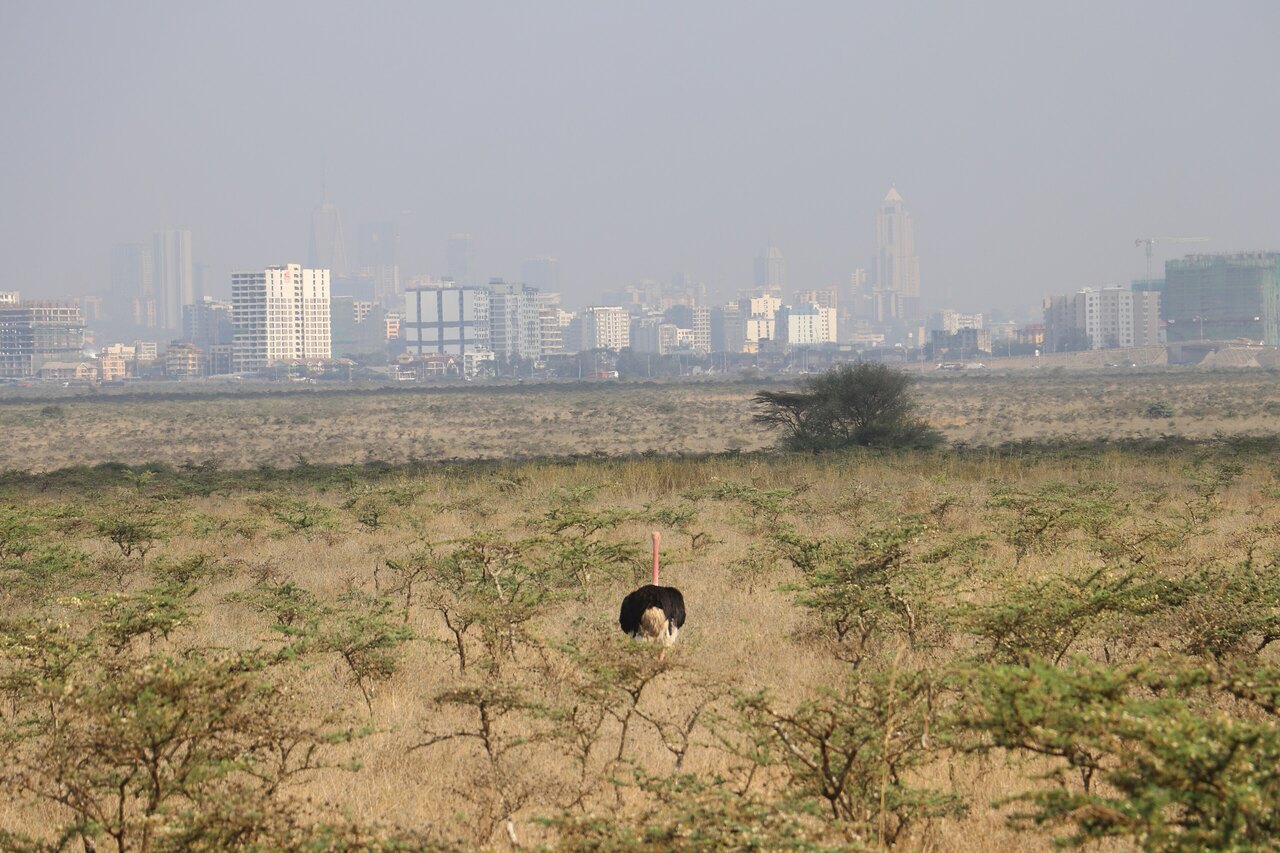
Nairobi is the start or end of most Kenyan safaris, and it is the only capital with a national park inside its limits, where lions and rhinos graze with skyscrapers on the horizon. Three days is right: one for the wildlife of the south-west suburbs, with Nairobi National Park, the Sheldrick elephant orphanage and the Giraffe Centre, one for the city and its forest, and one down into the Great Rift Valley at Lake Naivasha. Traffic is heavy, so start early and group sights by area.
Short answer
Two days covers the national park, the elephant orphans, the Giraffe Centre and the Karen Blixen Museum. A third adds the city museums and Karura Forest, or a Rift Valley day trip.
The 3-day plan, day by day
Day 1: Nairobi National Park, elephants and giraffes
Morning. Enter Nairobi National Park at 6:00 for a dawn game drive; it lies 7 km from the centre and has lions, black rhinos, buffalo, giraffes and cheetahs on 117 km² of plains. Entry for non-residents is about US$80, paid cashless through the KWS eCitizen system; a vehicle with driver-guide adds about US$100-150 for a half-day.
Afternoon. Be at the David Sheldrick Wildlife Trust at 11:00 for the one-hour public visit (book online, roughly KSh 1,500-2,000), when the orphaned baby elephants come in for milk and a mud bath. Then drive 20 minutes to the Giraffe Centre in Lang'ata (about KSh 1,500), where you feed endangered Rothschild's giraffes from a raised platform.
Evening. Visit the Karen Blixen Museum (about KSh 1,200) before it closes at 17:30, the farmhouse of the *Out of Africa* author at the foot of the Ngong Hills, then dinner in Karen, where garden restaurants charge KSh 1,500-3,000 for a main.
The Sheldrick visit is limited to one hour a day and sells out in high season; book a few days ahead on its website.
Day 2: The city: museums, markets and Karura Forest
Morning. Start at the Nairobi National Museum (about KSh 1,200) on Museum Hill, with early human fossils from the Turkana Basin, birds and Kenyan art, and the snake park next door. Then go up to the helipad on the roof of the Kenyatta International Convention Centre (KICC) for a 360° view over the city (about KSh 500-1,000).
Afternoon. Walk through the City Market for crafts and flowers, and visit the Nairobi Railway Museum, with colonial-era locomotives of the Uganda Railway. Then take a taxi to Karura Forest in the north (about KSh 1,000 entry), 1,000 hectares with walking and cycling trails, caves and a waterfall.
Evening. Have dinner in Westlands, Nairobi's bar and restaurant district, or try Carnivore near Wilson Airport, where waiters carve grilled meat at your table (about KSh 4,000-5,000 per person).
The Maasai Market moves around the city by day of the week, often at malls such as Village Market or The Junction; ask your hotel where it is today, and haggle.
Day 3: Day trip: Lake Naivasha and Hell's Gate
Morning. Drive about 2 hours north-west, past the Rift Valley viewpoint on the escarpment, to Hell's Gate National Park (about US$50 for non-residents), one of the few parks where you can cycle among zebras, giraffes and buffalo. Bikes cost about KSh 1,000-1,500 at the gate. Walk into the Ol Njorowa gorge with a local guide.
Afternoon. Take a boat on Lake Naivasha (about KSh 2,500-4,000 per person for an hour) to see hippos and fish eagles, and walk on Crescent Island, where giraffes, wildebeest and zebras roam without predators.
Evening. Drive back to Nairobi before dark. Stop for nyama choma, grilled goat or beef with kachumbari salad, at a roadside place or back in the city, about KSh 800-1,500.
The Nairobi-Naivasha road is busy with lorries. Hire a driver or join a tour rather than driving yourself.
Only have 2 days?
With 2 days, do Day 1 as written and use Day 2 for the National Museum, KICC and Karura Forest, or for a half-day in the national park if you missed the big cats.
Got extra days?
Most visitors continue on safari: the Maasai Mara is about 5-6 hours by road or 45 minutes by light aircraft from Wilson Airport. Amboseli, with Kilimanjaro views, is about 4 hours. The SGR train reaches Mombasa and the coast in about 5 hours.
Where to stay in Nairobi
| Budget | Area | Why | Typical double/night |
|---|---|---|---|
| Budget | Kilimani / Hurlingham | Guesthouses and serviced apartments with good taxi links. | KSh 5,000-9,000 |
| Mid-range | Westlands | Safe, central hotels near restaurants, malls and nightlife. | KSh 12,000-20,000 |
| Mid-range | Karen / Lang'ata | Quiet garden cottages near the park, Sheldrick and the Giraffe Centre. | KSh 12,000-22,000 |
| Comfort | Karen manor hotels / Westlands | Colonial-style manor hotels and international hotels. | KSh 30,000-70,000 |
Getting around
Use Uber, Bolt or a hotel driver for almost everything; trips across the city cost KSh 500-1,500 but take longer at rush hour (7:00-9:30 and 16:30-19:30). Matatus, the minibuses, are cheap but crowded and hard to follow. The Nairobi Expressway links the airport (JKIA) and Westlands in 20-30 minutes for a toll. Walking at night is not advised in the centre.
What to eat in Nairobi
Kenyan food is simple and filling. Try nyama choma (grilled meat) with ugali (maize porridge) and sukuma wiki (kale), pilau rice, chapati, and mandazi doughnuts with tea. Indian food is excellent thanks to a long-established community. Local cafés charge KSh 300-800 a meal; Westlands and Karen restaurants KSh 1,500-3,500. Kenyan coffee and tea are among the best in the world; try a Tusker beer for KSh 300-500.
Best time to visit
June to October is the long dry season, cool (15-25°C at 1,700 m altitude) and the best time for wildlife, and the Mara migration from about July to October. January to February is also dry and warm. The long rains come from March to May and the short rains in November and December, when parks are greener and quieter.
Month-by-month weather for Nairobi →
What a day costs
| Budget | Mid-range | Comfort | |
|---|---|---|---|
| Bed (per person, sharing a double) | KSh 3,000 | KSh 8,000 | KSh 20,000 |
| Food & drink | KSh 2,000 | KSh 4,500 | KSh 9,000 |
| Sights & tickets | KSh 5,000 | KSh 10,000 | KSh 15,000 |
| Local transport | KSh 1,500 | KSh 6,000 | KSh 12,000 |
| Total per person, per day | about KSh 11,500 | about KSh 28,500 | about KSh 56,000 |
Approximate 2026 prices in Kenyan shillings (about KSh 130 to US$1); national park fees are priced in US dollars and paid cashless. Hotels add 16% VAT plus a catering levy and service charge.
Before you go
Common questions
Is Nairobi safe for tourists?
With care, yes. Use registered taxis or ride-hailing apps instead of walking at night, keep phones out of sight in the centre, and avoid displaying valuables. Westlands, Karen and Lang'ata are the usual visitor areas. Daytime walking in the centre is fine in groups, and parks and museums are secure.
Do I need a visa or eTA for Kenya?
Most visitors need an Electronic Travel Authorisation (eTA), applied for online on the official eCitizen site a few days before travel. Citizens of many African countries are exempt. Rules have changed several times recently, so check the government site and avoid unofficial agents.
Can I see lions in Nairobi National Park?
Often, but not every time. Lions are most active at dawn, so enter at 6:00 and ask your guide about recent sightings. The park also has one of Kenya's best chances to see black rhino. A half-day drive is usually enough for good sightings of giraffes, zebras and buffalo.
How do I pay park fees?
Kenya Wildlife Service parks are cashless. Pay through the eCitizen platform by card or mobile money (M-Pesa) before you arrive at the gate, or let your tour operator do it. Keep the receipt on your phone, and carry your passport for checks at the gate.
How this guide was made
Compiled by TonyPlan from official tourism, transport and attraction sources and on-the-ground travel knowledge. Prices are approximate for 2026 and change with season; anything we could not confirm is marked as approximate.
Some links on this page are partner links. If you book through them TonyPlan may earn a commission; the price you pay is the same. How we make money.