Home › Jerusalem › How many days
How many days in Jerusalem? 3 days, the Old City quarter by quarter
By Tony Panopoulos · travel-agency planner in Greece · Updated
The walled Old City of Jerusalem is less than one square kilometre, yet it holds the holiest site in Judaism, the place Christians venerate as the tomb of Jesus and the third holiest site in Islam, divided into Jewish, Christian, Muslim and Armenian quarters. Give it three days: two inside and around the walls, starting early before the alleys fill, and one in the modern city for Yad Vashem, the Israel Museum and the Mahane Yehuda market. Plan around Shabbat, from Friday afternoon to Saturday night, and check your government's current travel advice before you book.
Short answer
Two days covers the Old City, the Western Wall, the Holy Sepulchre and the Mount of Olives. The third day adds Yad Vashem, the Israel Museum and the market, or a day trip to the Dead Sea and Masada.
The 3-day plan, day by day
Day 1: Western Wall, Temple Mount and the Jewish Quarter
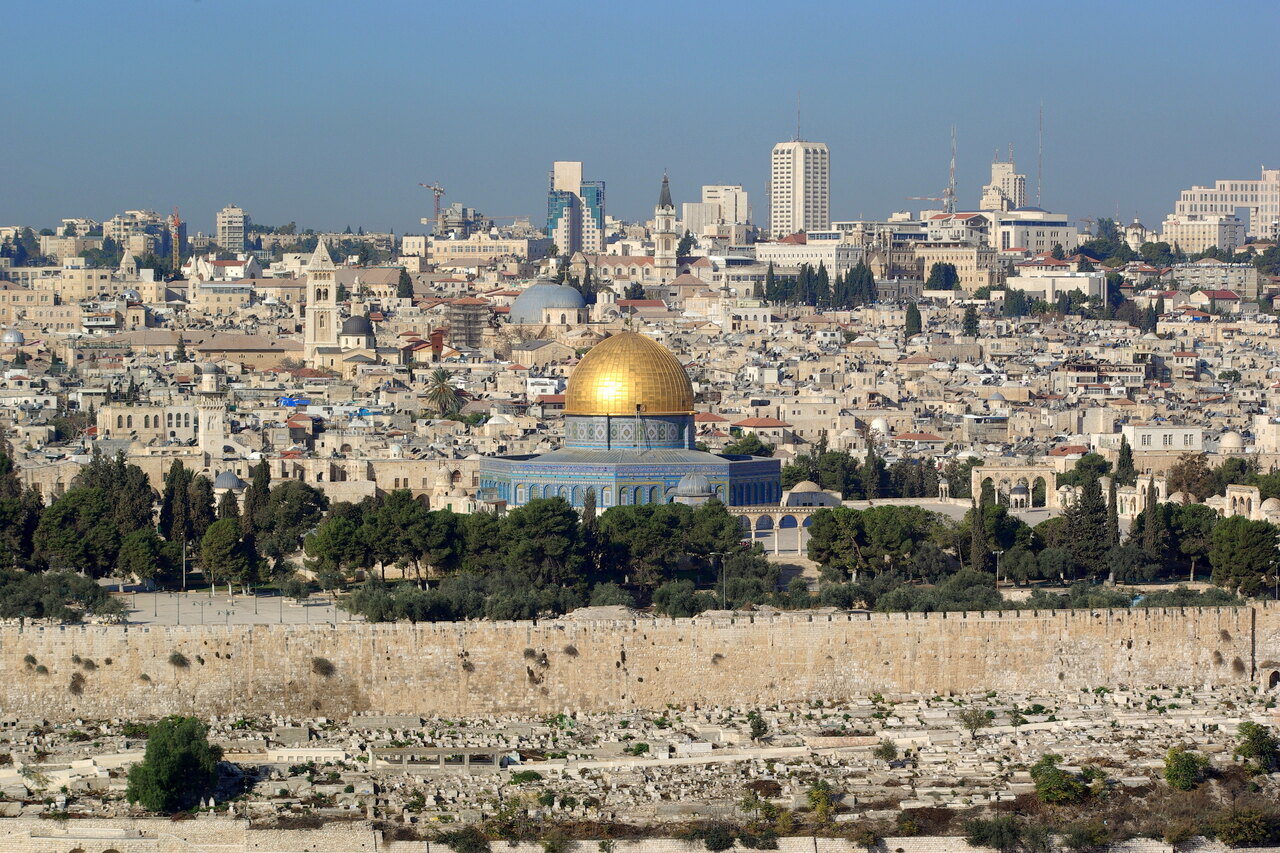
Morning. Enter through the Dung Gate and go first to the Western Wall (free, open all day), the remaining retaining wall of the Second Temple. Non-Muslims can visit the Temple Mount / Haram al-Sharif only at set hours, usually a few hours on weekday mornings, via the wooden Mughrabi Bridge next to the Wall; the Dome of the Rock and Al-Aqsa Mosque are closed to non-Muslims.
Afternoon. Book the Western Wall Tunnels (about ₪40-50), which follow the foundations of the Wall underground for some 450 metres. Then explore the Jewish Quarter: the excavated Cardo, the Roman main street, and the rebuilt Hurva Synagogue.
Evening. Climb onto the Ramparts Walk (about ₪20-30) for the walls at sunset, or see the evening light show at the Tower of David citadel by Jaffa Gate.
Opening times for the Temple Mount change at short notice for security and holidays; check on the day, arrive early, and bring your passport.
Day 2: Via Dolorosa, the Holy Sepulchre and the Mount of Olives
Morning. Start at the Church of the Holy Sepulchre at about 6:00-7:00, before the groups. Shared by six Christian denominations, it holds Golgotha and the tomb in the Edicule. Then follow the Via Dolorosa backwards through the Muslim Quarter to the Lions' Gate and the Crusader Church of St Anne, with its remarkable acoustics.
Afternoon. Walk out to the Garden of Gethsemane with its ancient olive trees and the Church of All Nations, then climb the Mount of Olives (about 20-25 minutes, steep; or take a taxi to the top) for the classic view over the Old City and the Jewish cemetery on the slopes.
Evening. Eat hummus in the Old City at places such as Lina, near the Holy Sepulchre (about ₪25-35), then browse the Armenian Quarter, known for its painted ceramics, before the shops close.
Visit the Tower of David Museum (about ₪40-50), reopened after a long renovation, for the clearest overview of 3,000 years of the city's history.
Day 3: Yad Vashem, the Israel Museum and Mahane Yehuda
Morning. Take the light rail to Mount Herzl for Yad Vashem, the World Holocaust Remembrance Center (free, but book a slot; closed Saturdays). The main history museum takes about 3 hours; the Children's Memorial is a short walk away.
Afternoon. Ride a bus or taxi 10-15 minutes to the Israel Museum (about ₪60-65), which keeps the Dead Sea Scrolls in the Shrine of the Book and a large model of Jerusalem in the Second Temple period.
Evening. Go to Mahane Yehuda market (shuk), where stalls close and bars open after dark; it is busiest on Thursday nights. Try Jerusalem mixed grill (me'orav yerushalmi) nearby on Agripas Street.
On Friday the market is packed until early afternoon, then shuts for Shabbat; most buses and the light rail stop until Saturday night.
Only have 2 days?
With 2 days, do Days 1 and 2 and visit Yad Vashem first thing on Day 2, with the Holy Sepulchre later in the day. You lose the Israel Museum and the market.
Got extra days?
A 4th day goes to the Dead Sea and Masada, Herod's mountain fortress (about 1.5-2 hours by car or tour; the cable car is about ₪80-90 return with entry). Bethlehem and the Church of the Nativity, 10 km south in the West Bank, need a Palestinian taxi or tour from the checkpoint; check current advice first.
Where to stay in Jerusalem
| Budget | Area | Why | Typical double/night |
|---|---|---|---|
| Budget | Old City hostels / Jaffa Road | Hostels inside the walls or near the light rail, walking distance to everything. | ₪300-500 |
| Mid-range | City centre / Mahane Yehuda | On the light rail, 15 minutes' walk to Jaffa Gate, with restaurants open on Shabbat nearby. | ₪600-1,000 |
| Mid-range | East Jerusalem / American Colony area | Older hotels near Damascus Gate, quieter on Saturdays in the Jewish areas. | ₪550-950 |
| Comfort | Mamilla / King David Street | Grand hotels facing the Old City walls, steps from Jaffa Gate. | ₪1,500-3,500 |
Getting around
The Old City is walk-only, on steep stone lanes and steps. The light rail Red Line runs from Mount Herzl through the city centre and past the Old City walls to the north; buy a Rav-Kav card or pay by contactless card, about ₪6 a ride. Taxis use meters; ask for 'moneh'. From Ben Gurion airport, the train reaches Jerusalem Yitzhak Navon station in about 25-30 minutes (about ₪20); a shared sherut taxi costs about ₪70. Most public transport stops on Shabbat.
What to eat in Jerusalem
Jerusalem's food mixes Jewish, Arab, Armenian and immigrant traditions. Eat hummus for breakfast or lunch with warm pitta, falafel in pitta (about ₪15-25), sabich (aubergine, egg and salad), and long sesame bread rings called ka'ak, sold from carts. At Jafar sweets in the Muslim Quarter, have knafeh, warm cheese pastry in syrup. In the market, rugelach from the bakeries and a fresh juice. A sit-down dinner in the centre costs ₪120-200 per person. Many restaurants in West Jerusalem are kosher and close on Shabbat; East Jerusalem and the Old City stay open.
Best time to visit
March to May and September to November, with highs of 20-28°C. Summer is hot and dry, about 30°C, but cooler than Tel Aviv at 800 metres altitude. Winter is cold for the region (10-12°C), with rain and occasional snow. Passover, Easter, Christmas and the autumn Jewish High Holidays bring large crowds and high prices; during Ramadan, the Muslim Quarter changes rhythm, with evenings busiest after iftar.
Month-by-month weather for Jerusalem →
What a day costs
| Budget | Mid-range | Comfort | |
|---|---|---|---|
| Bed (per person, sharing a double) | ₪150 | ₪400 | ₪1,000 |
| Food & drink | ₪120 | ₪220 | ₪400 |
| Sights & tickets | ₪30 | ₪100 | ₪200 |
| Local transport | ₪15 | ₪40 | ₪120 |
| Total per person, per day | about ₪315 | about ₪760 | about ₪1,720 |
Approximate 2026 prices in Israeli shekels (₪); foreign tourists showing an entry slip are usually exempt from the 18% VAT on hotel bills.
Before you go
Common questions
Is it safe to visit Jerusalem?
It depends on the security situation at the time of your trip, which has changed sharply in recent years. Check your government's travel advice before booking and again before departure, and buy insurance that covers Israel. On the ground, follow police instructions, avoid demonstrations and large gatherings around holy sites on tense days, and carry your passport.
How should I dress?
Modestly for all holy sites: shoulders and knees covered for men and women. Women should bring a scarf for the Temple Mount and may be asked to cover their hair. At the Western Wall, men and women pray in separate sections, and paper kippot are provided for men. In ultra-Orthodox neighbourhoods such as Mea Shearim, dress conservatively and do not photograph people.
What closes on Shabbat?
From Friday afternoon, about an hour before sunset, until Saturday night, most Jewish-owned shops, kosher restaurants, Yad Vashem and nearly all buses and the light rail stop. The Old City's Christian and Muslim quarters, East Jerusalem and many churches stay open. Plan Friday morning for the market and Saturday for the Old City.
Can I visit Bethlehem from Jerusalem?
Usually yes, with a foreign passport. Arab bus 231 runs from near Damascus Gate to the checkpoint in about 30-45 minutes, and Palestinian taxis wait on the other side; many visitors take a half-day tour with a Palestinian guide instead. Israeli citizens are not permitted to enter. Check the current situation and your travel advice before going.
How this guide was made
Compiled by TonyPlan from official tourism, transport and attraction sources and on-the-ground travel knowledge. Prices are approximate for 2026 and change with season; anything we could not confirm is marked as approximate.
Some links on this page are partner links. If you book through them TonyPlan may earn a commission; the price you pay is the same. How we make money.