How many days in Italy? 9 days, Rome, Florence and Venice by fast train
By Tony Panopoulos · travel-agency planner in Greece · Updated
The classic first trip to Italy is the triangle of Rome, Florence and Venice, linked by high-speed trains in about 1h35 and 2h15. Nine days gives three to Rome, three to Florence including the Tuscan hill towns, and three to Venice with the lagoon islands. Book the Colosseum, Vatican, Uffizi and Accademia in advance and you skip most queues.
Short answer
Seven days covers Rome, Florence and Venice in two to three days each, without the Tuscan day trip or the islands. Nine days lets you see Siena and San Gimignano and spend a slow morning on Burano.
The 9-day plan, day by day
Day 1: Rome: Colosseum, Forum and Palatine
Morning. Enter the Colosseum with a timed ticket at opening, around 8:30-9:00 (about €18 plus a small booking fee; the arena floor and underground need a pricier 'Full Experience' ticket). The same ticket covers the Roman Forum and the Palatine Hill; allow 3-4 hours for all three.
Afternoon. Walk 10 minutes up to the Capitoline Hill and Michelangelo's square, then to the Pantheon (about €5), the 2,000-year-old temple with its open oculus.
Evening. Cross the Tiber to Trastevere for dinner in the cobbled lanes, where cacio e pepe or carbonara costs €12-16, and a glass of wine €5-7.
Colosseum tickets are released about 30 days ahead on the official site and sell out quickly for spring and autumn; be ready on the day they open.
Day 2: Rome: the Vatican
Morning. Book an early entry to the Vatican Museums (about €25 online, closed most Sundays), and follow the route through the Raphael Rooms to the Sistine Chapel. Allow 3 hours.
Afternoon. Visit St Peter's Basilica (free; climbing the dome is about €10-17), with Michelangelo's Pietà just inside the door. Dress codes apply: shoulders and knees covered. Walk 15 minutes along the river to Castel Sant'Angelo.
Evening. Cross the Ponte Sant'Angelo to Piazza Navona and its Bernini fountain, then eat in the streets around Campo de' Fiori.
The Vatican Museums are free on the last Sunday of the month, but the queues are huge; pay and go on a weekday instead.
Day 3: Rome: fountains, Borghese and the Spanish Steps
Morning. Reach the Trevi Fountain before 8:00 for a calm view; Rome now charges a small fee (about €2) to walk down to the basin at busy hours. Walk 10 minutes to the Spanish Steps and up to the Villa Borghese park.
Afternoon. Visit the Galleria Borghese (about €15-22, timed 2-hour slots, booking compulsory) for Bernini's sculptures of Apollo and Daphne and six Caravaggios.
Evening. Watch sunset from the Pincio terrace over Piazza del Popolo, then try Roman pizza al taglio or supplì (fried rice balls) in the Monti district.
Rome's buses and metro use one ticket (€1.50 for 100 minutes); you can tap a contactless card at metro gates.
Day 4: Train to Florence: the Duomo and Ponte Vecchio
Morning. Take a Frecciarossa or Italo train from Roma Termini to Firenze Santa Maria Novella, about 1h35 (€20-55 booked ahead). Leave bags at your hotel and walk 10 minutes to the Duomo.
Afternoon. With the Brunelleschi Pass (about €30), climb the 463 steps of Brunelleschi's dome, then visit the Baptistery and the cathedral museum. Walk across Piazza della Signoria to the Ponte Vecchio, lined with goldsmiths since 1593.
Evening. Climb or take bus 12/13 to Piazzale Michelangelo for sunset over the city, then eat a bistecca alla fiorentina (sold by weight, about €50-70 per kilo, for two) in the Oltrarno.
The dome climb is booked by timed slot, often days ahead in summer; choose the slot first and plan the rest around it.
Day 5: Florence: Uffizi, David and the Oltrarno
Morning. Be at the Uffizi at 8:15 (about €25 in high season, timed entry) for Botticelli's Birth of Venus, Leonardo and Caravaggio; allow 3 hours.
Afternoon. Visit the Galleria dell'Accademia (about €16 plus booking fee) for Michelangelo's David, 5.17 metres of marble. Then cross to the Pitti Palace and the Boboli Gardens, or browse the leather stalls of the San Lorenzo market and the food hall upstairs at the Mercato Centrale.
Evening. Have an aperitivo in Santo Spirito square, then dinner in a trattoria, where ribollita or pappardelle with wild boar cost €12-18.
Most state museums in Florence close on Mondays; plan your Uffizi and Accademia days around that.
Day 6: Tuscan day trip: Siena and San Gimignano
Morning. Take a bus or tour about 1h15 south to Siena. Stand in the shell-shaped Piazza del Campo, where the Palio horse race runs on 2 July and 16 August, and visit the striped Siena Cathedral with its inlaid marble floor (about €8-16).
Afternoon. Continue about 1 hour to San Gimignano, a hill town of 14 medieval stone towers, and try the gelato on Piazza della Cisterna. Many tours add a Chianti winery tasting on the way back (about €20-40).
Evening. Return to Florence and eat simply: a lampredotto (tripe) sandwich from a street cart is about €5, or panini at All'Antico Vinaio.
Without a car, a small-group tour (about €80-130 with wine tasting) is the easiest way to see both towns in one day.
Day 7: Train to Venice: the Grand Canal and St Mark's
Morning. Take the train from Florence to Venezia Santa Lucia, about 2h15 (€25-55). Leave the station and board vaporetto line 1 along the full Grand Canal under the Rialto Bridge to St Mark's (about 45 minutes).
Afternoon. Visit St Mark's Basilica with its golden mosaics (a few euros with a timed reservation) and the Doge's Palace (about €30-35), crossing the Bridge of Sighs into the old prisons.
Evening. Get lost in Cannaregio, where Venetians still drink ombre (small glasses of wine) and eat cicchetti (bar snacks, €2-4 each) along the Fondamenta della Misericordia.
On certain peak days from spring to summer, day visitors pay the Venice access fee (about €5-10); overnight guests are exempt but must register online.
Day 8: Venice: Dorsoduro, Rialto and a gondola
Morning. Go to the Rialto Market for fish and vegetables (closed Sunday and Monday for fish), then cross to Dorsoduro and the Gallerie dell'Accademia (about €15) for Titian and Tintoretto.
Afternoon. Visit the Peggy Guggenheim Collection (about €16-19) on the Grand Canal, then the domed church of Santa Maria della Salute. Ride the traghetto, a standing gondola ferry across the Grand Canal, for about €2.
Evening. A gondola ride costs a fixed €90 or so for about 30 minutes for up to five people by day, more after 19:00. Then dinner of sarde in saor (sweet-sour sardines) or seafood risotto in Castello.
Coffee standing at a bar costs about €1.50; on St Mark's Square with a band, €15 or more.
Day 9: Venice lagoon: Murano and Burano
Morning. Take vaporetto 12 from Fondamente Nove to Murano (about 10 minutes) to watch glassblowers at a furnace and visit the Glass Museum (about €10-14).
Afternoon. Continue 30-40 minutes to Burano, a fishing island of brightly painted houses and lace-makers, and hop across the footbridge to Mazzorbo. Optional: Torcello, 5 minutes away, with its 7th-century cathedral mosaics.
Evening. Return to Venice for a last evening on the Zattere waterfront in Dorsoduro, facing the Giudecca island at sunset.
A 24-hour or 48-hour vaporetto pass (about €25 or €35) pays off as soon as you take three or four boats, since a single ride costs about €9.50.
Only have 7 days?
With 7 days, give Rome 3 days, Florence 2 days and Venice 2 days. You lose the Tuscan hill towns and the lagoon islands.
Got extra days?
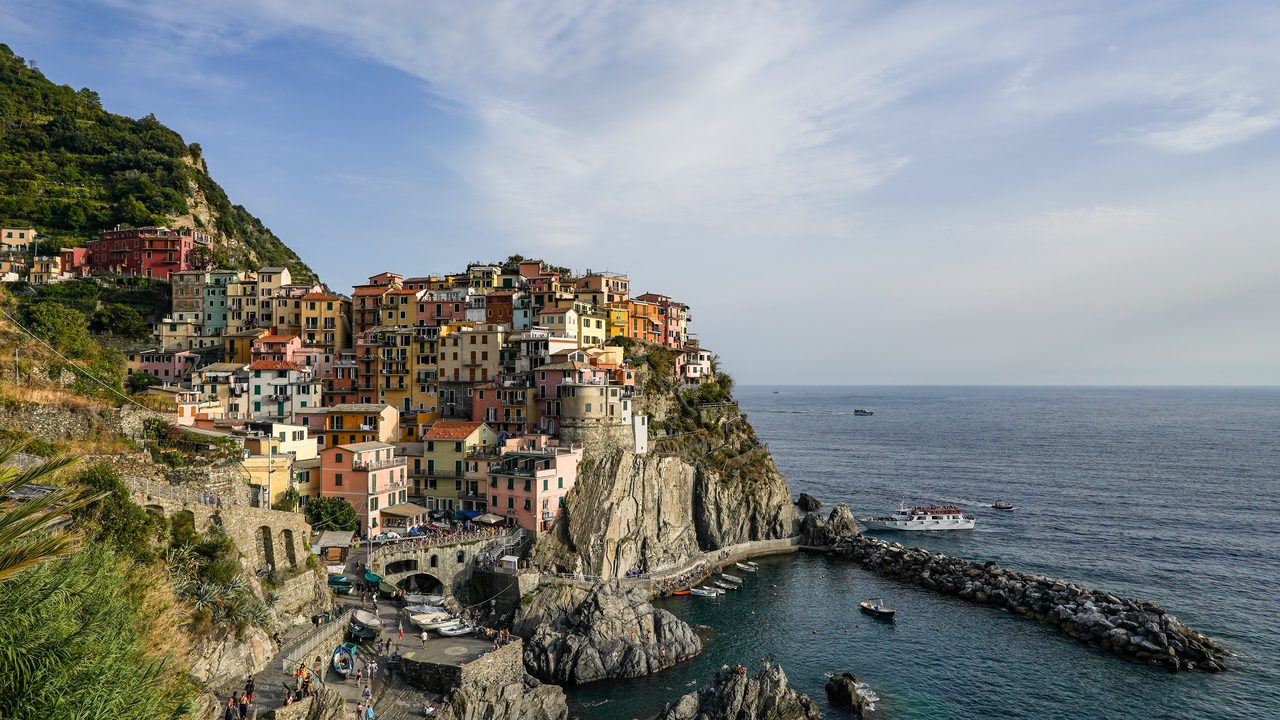
Add 3 days in the Cinque Terre (about 2.5 hours from Florence by train) for five coastal villages joined by footpaths, or continue south from Rome to Naples, Pompeii and the Amalfi Coast, about 1h10 by fast train to Naples.
Where to stay in Italy
| Budget | Area | Why | Typical double/night |
|---|---|---|---|
| Budget | Rome Termini / Florence Santa Maria Novella / Venice Mestre | Near the stations; Mestre is 10 minutes from Venice by train and far cheaper. | €80-130 |
| Mid-range | Rome Monti / Florence centro storico | Walk to the Colosseum in Rome and the Duomo in Florence. | €150-250 |
| Mid-range | Venice Cannaregio | Quieter canals, local bars and the vaporetto to the islands. | €160-280 |
| Comfort | Rome Spanish Steps / Florence Oltrarno / Venice Grand Canal | Historic palazzo hotels and terraces with views. | €300-700 |
Getting around
High-speed trains run by Trenitalia (Frecciarossa) and Italo link Rome, Florence and Venice. Florence's centre is walkable, about 20 minutes end to end. In Venice, everything is on foot or by vaporetto water bus. From Rome's Fiumicino airport, the Leonardo Express train takes 32 minutes to Termini (about €14).
What to eat in Italy
In Rome, eat the four pastas: carbonara, cacio e pepe, amatriciana and gricia, plus fried artichokes in the old Jewish Ghetto. In Florence, order ribollita and pappa al pomodoro. In Venice, eat cicchetti in a bacaro and fegato alla veneziana (liver with onions). Expect a coperto (cover charge) of €2-4. A trattoria dinner costs €25-40.
Best time to visit
April to June and September to October have highs of 20-27°C and the biggest crowds. July and August are hot (32-36°C in Rome and Florence). November to March is cool, rainy and cheaper; Venice can have acqua alta floods from October to January.
Month-by-month weather for Italy →
What a day costs
| Budget | Mid-range | Comfort | |
|---|---|---|---|
| Bed (per person, sharing a double) | €50 | €100 | €220 |
| Food & drink | €35 | €60 | €110 |
| Sights & tickets | €25 | €45 | €80 |
| Local transport | €10 | €25 | €50 |
| Total per person, per day | about €120 | about €230 | about €460 |
Approximate 2026 prices in euros, with the train legs averaged over the trip; Rome, Florence and Venice charge a city tax of about €3-10 per person per night, depending on the hotel's stars.
Before you go
Common questions
Is it worth buying a rail pass for Italy?
Usually not. Point-to-point tickets booked a few weeks ahead on Trenitalia or Italo cost €20-50 per leg, cheaper than most passes. Fares rise near departure, so book once your dates are fixed. Regional trains have fixed prices and need no booking.
Which tickets should I book in advance?
The Colosseum, the Vatican Museums, the Galleria Borghese (compulsory booking), the Uffizi, the Accademia's David, Brunelleschi's dome and the Last Supper if you add Milan. Book two to four weeks ahead in spring and autumn, and longer for the Borghese and the Last Supper. Use the official sites to avoid resellers' mark-ups.
Do I need to tip in Italy?
Not as in North America. Restaurants add a cover charge and sometimes a service charge. Leaving a few euros for good service is appreciated and rounding up a taxi fare is normal, but never tip on top of a listed service charge.
Should I add the Amalfi Coast or the Cinque Terre?
Add the Cinque Terre for hiking and easy trains from Florence, about 2.5 hours away. Choose the Amalfi Coast, with Pompeii and Naples, for cliffside towns, but allow 3-4 extra days: the coast road and ferries are slow and busy from June to September.
How this guide was made
Compiled by TonyPlan from official tourism, transport and attraction sources and on-the-ground travel knowledge. Prices are approximate for 2026 and change with season; anything we could not confirm is marked as approximate.
Some links on this page are partner links. If you book through them TonyPlan may earn a commission; the price you pay is the same. How we make money.