How many days in India? 10 days: Delhi, Agra, Jaipur, Udaipur and Varanasi
By Tony Panopoulos · travel-agency planner in Greece · Updated
India is too large for one trip, so pick a region. For a first visit, ten days in the north covers the classic Golden Triangle of Delhi, Agra and Jaipur, plus Udaipur on its lakes and Varanasi on the Ganges. Use fast trains where they exist and domestic flights for the long legs, and see the big monuments at opening time, before the heat and the crowds. Expect noise, traffic and long days, and leave space for rest.
Short answer
Seven days covers the Golden Triangle with an extra night in Jaipur. Ten adds Udaipur and Varanasi, the two places most visitors remember best.
The 10-day plan, day by day
Day 1: Old Delhi
Morning. Start at Jama Masjid, India's largest mosque, built by Shah Jahan in 1656 (free; a camera fee applies). Then take a cycle rickshaw through Chandni Chowk and the spice market of Khari Baoli.
Afternoon. Visit the Red Fort (about ₹600 for foreigners), the Mughal palace complex with the Diwan-i-Aam hall; it is closed on Mondays.
Evening. Eat in the lanes around Jama Masjid, where Karim's has served kebabs and mutton korma since 1913, about ₹400-700 per person.
Use the Delhi Metro: the Yellow Line reaches Chandni Chowk, and fares are ₹10-60.
Day 2: New Delhi
Morning. See Humayun's Tomb (about ₹600), the 1570 garden tomb that inspired the Taj, at opening time, then walk 10 minutes to the Sufi shrine of Nizamuddin.
Afternoon. Visit the Qutb Minar (about ₹600), the 73 m victory tower begun around 1199, then the Lodhi Garden among 15th-century tombs.
Evening. Drive past India Gate and Kartavya Path, then join the free communal meal at Gurudwara Bangla Sahib, the Sikh temple, open to all.
Book trains on the official IRCTC site or a reliable app; foreign cards are sometimes refused, so ask your hotel if needed.
Day 3: To Agra: the fort and Mehtab Bagh
Morning. Take the Gatimaan Express or a Vande Bharat train from Hazrat Nizamuddin to Agra (about 1h45-2h, ₹800-1,600).
Afternoon. Visit Agra Fort (about ₹650), the red sandstone fortress where Shah Jahan spent his last years looking at the Taj, and the tomb of Itimad-ud-Daulah, the 'Baby Taj', with its marble inlay.
Evening. Watch sunset at Mehtab Bagh, the garden across the Yamuna River, facing the Taj.
Stay in the Taj Ganj area, a 5-10 minute walk from the east or south gate.
Day 4: The Taj Mahal at sunrise, Fatehpur Sikri
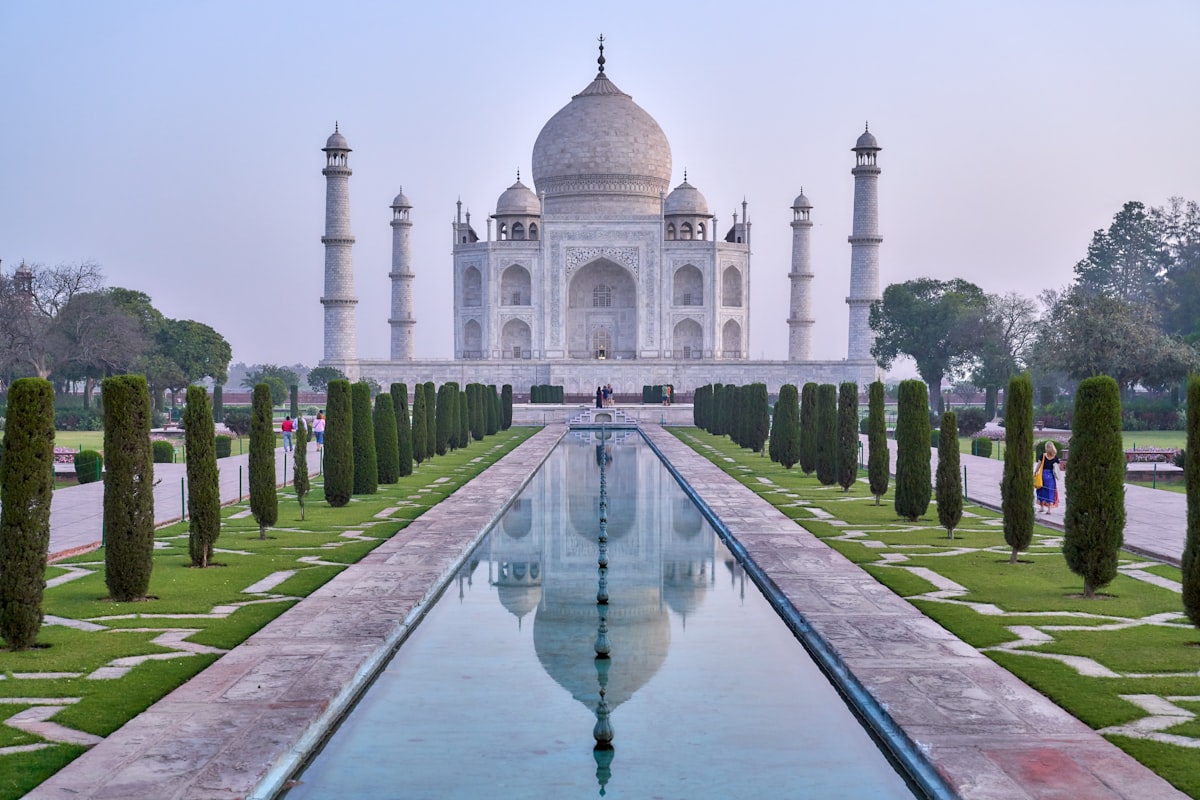
Morning. Enter the Taj Mahal at sunrise (about ₹1,100 for foreigners, plus ₹200 for the main mausoleum); it is closed on Fridays. Allow 2-3 hours.
Afternoon. Drive 40 km to Fatehpur Sikri (about ₹600), Akbar's abandoned red sandstone capital from the 1570s, then on to Jaipur (about 4 hours).
Evening. Arrive in Jaipur and eat Rajasthani thali, about ₹400-800.
Only a small bag, water and phone are allowed in the Taj; food and tripods are not.
Day 5: Jaipur: Amber Fort and the Pink City
Morning. Go early to Amber Fort (about ₹500), 11 km north of the city, with its mirror hall, the Sheesh Mahal. Walk up instead of riding the elephants.
Afternoon. Photograph Hawa Mahal, the five-storey screen of windows, then shop in Johari Bazaar for jewellery and block-printed textiles.
Evening. Have a lassi at Lassiwala on MI Road and dinner on a rooftop near the old city.
A composite ticket (about ₹1,000) covers Amber, Hawa Mahal, Jantar Mantar and other monuments for two days.
Day 6: Jaipur, then Udaipur
Morning. Visit the City Palace (about ₹700-1,000) and the Jantar Mantar observatory next door, with an 18th-century sundial 27 m tall.
Afternoon. Fly to Udaipur (about 1 hour) or take the train (about 6-7 hours).
Evening. Arrive and walk to Gangaur Ghat on Lake Pichola for the lights of the old city.
In Udaipur, rooms with a lake view cost more but are worth it for sunsets.
Day 7: Udaipur, the city of lakes
Morning. Visit the City Palace of Udaipur (about ₹300-400 plus museum), the largest palace complex in Rajasthan, and Jagdish Temple nearby.
Afternoon. Take a boat on Lake Pichola (about ₹500-1,000), past the Lake Palace hotel to Jag Mandir island.
Evening. Watch the folk dance show at Bagore Ki Haveli (about ₹150-300, 19:00), then dinner by the lake.
Cooking classes in Udaipur's old town are a good way to learn Rajasthani dishes (about ₹1,500-2,500).
Day 8: Varanasi: the evening aarti
Morning. Fly to Varanasi, usually via Delhi (about 4-5 hours in total).
Afternoon. Walk the ghats along the Ganges, from Assi Ghat north, past Manikarnika, the main cremation ghat, where photos are not appropriate.
Evening. Watch the Ganga aarti at Dashashwamedh Ghat, a fire ceremony each evening at sunset, from the steps or a boat (about ₹300-800).
The old city lanes are narrow and confusing; hire a guide for the first walk.
Day 9: Varanasi at dawn and Sarnath
Morning. Take a sunrise boat on the Ganges (about ₹500-1,000 per boat, 1 hour), when pilgrims bathe and pray.
Afternoon. Drive 10 km to Sarnath, where Buddha gave his first sermon, to see the Dhamek Stupa and the museum with the Lion Capital of Ashoka (both small fees).
Evening. Eat kachori sabzi and sweets in the old city, and try a lassi at Blue Lassi.
Varanasi is hot and humid from April to September; plan the walks for early morning and evening.
Day 10: Back to Delhi
Morning. Fly from Varanasi to Delhi (about 1h30), or take the Vande Bharat train (about 8 hours).
Afternoon. Shop for last gifts at Dilli Haat or Khan Market, or visit the National Museum.
Evening. A last dinner in Hauz Khas Village, by the medieval lake and ruins.
Leave at least 3 hours for the airport in Delhi traffic.
Only have 7 days?
With 7 days, do the Golden Triangle (Days 1-6) and fly home from Jaipur or Delhi. Choose Varanasi or Udaipur if you have one extra day.
Got extra days?
With two weeks, add Jodhpur and the blue city under Mehrangarh Fort, Jaisalmer in the Thar Desert, or Ranthambore for tigers. Or fly south to Kerala.
Where to stay in India
| Budget | Area | Why | Typical double/night |
|---|---|---|---|
| Budget | Paharganj (Delhi) / Taj Ganj (Agra) | Cheap guesthouses near the station and the Taj gates. | ₹1,500-3,000 |
| Mid-range | Heritage havelis in Jaipur and Udaipur | Old mansions turned into hotels, with rooftop restaurants. | ₹4,000-8,000 |
| Mid-range | Varanasi ghats | Guesthouses on the river, walking to the aarti. | ₹3,000-7,000 |
| Comfort | Palace hotels | Former royal residences in Jaipur and Udaipur. | ₹15,000-50,000 |
Getting around
Fast trains (Gatimaan Express, Shatabdi, Vande Bharat) are the best way between Delhi, Agra and Jaipur; book on IRCTC up to 60 days ahead. Domestic flights (IndiGo, Air India) cover the long legs. In cities, use Uber or Ola and auto-rickshaws (agree a price first).
What to eat in India
North Indian food changes by city. In Delhi try butter chicken and chole bhature; in Jaipur dal baati churma and laal maas; in Varanasi kachori and malaiyo in winter. A thali costs ₹200-600. Drink only bottled or filtered water, and eat at busy places.
Best time to visit
October to March: 15-28°C and dry. December and January can be foggy in Delhi and cold at night. April to June is very hot (often above 40°C), and the monsoon runs from July to September. Diwali (October or November) and Holi (March) are festive but crowded.
Month-by-month weather for India →
What a day costs
| Budget | Mid-range | Comfort | |
|---|---|---|---|
| Bed (per person, sharing a double) | ₹1,200 | ₹3,500 | ₹12,000 |
| Food & drink | ₹800 | ₹2,000 | ₹5,000 |
| Sights & tickets | ₹800 | ₹1,500 | ₹3,000 |
| Local transport | ₹1,000 | ₹2,500 | ₹6,000 |
| Total per person, per day | about ₹3,800 | about ₹9,500 | about ₹26,000 |
Approximate 2026 prices in Indian rupees, with foreigner monument fees; transport is averaged with two domestic flights. Hotels add GST of 5-18% depending on the room rate.
Before you go
Common questions
Do I need a visa for India?
Most visitors need one. The e-Visa is available for tourism, with options for 30 days, one year or five years, applied for online on the official Indian government site at least four days before arrival. Avoid third-party sites that charge extra and look official.
How do I avoid getting sick?
Drink bottled or filtered water, avoid ice and raw salads at first, and eat freshly cooked food at busy places. Street food is often safe when it is cooked hot in front of you. Carry hand sanitiser and oral rehydration salts, and give your stomach a few easy days.
Is India safe for women travellers?
Many women travel in India without problems, but staring and unwanted attention are common. Dress modestly, covering shoulders and knees, use registered taxis or apps at night, and stay in well-reviewed hotels. Women-only carriages on the Delhi Metro help in crowds.
What is the best way to see the Taj Mahal?
At sunrise, when the marble turns pink and the crowds are smaller. Buy tickets online, enter by the east gate, and visit the mausoleum first. Remember it is closed on Fridays. For a second view, Mehtab Bagh across the river at sunset is quieter.
How this guide was made
Compiled by TonyPlan from official tourism, transport and attraction sources and on-the-ground travel knowledge. Prices are approximate for 2026 and change with season; anything we could not confirm is marked as approximate.
Some links on this page are partner links. If you book through them TonyPlan may earn a commission; the price you pay is the same. How we make money.