Home › Germany › How many days
How many days in Germany? 10 days from Berlin to Bavaria and the Rhine
By Tony Panopoulos · travel-agency planner in Greece · Updated
Germany is a federation of strong regions, and ten days by train lets you see three of them: the capital Berlin, Bavaria with Munich and its castles, and the Rhine with its vineyards and cathedral cities. The ICE high-speed trains link them in 1-4 hours, so you never lose a full day travelling. Book long-distance tickets early for the cheap Sparpreis fares, and use regional trains for the day trips.
Short answer
Seven days covers Berlin, Munich and Neuschwanstein with one stop on the way west. Ten adds Heidelberg, the Rhine Valley and Cologne at a pace that leaves evenings free.
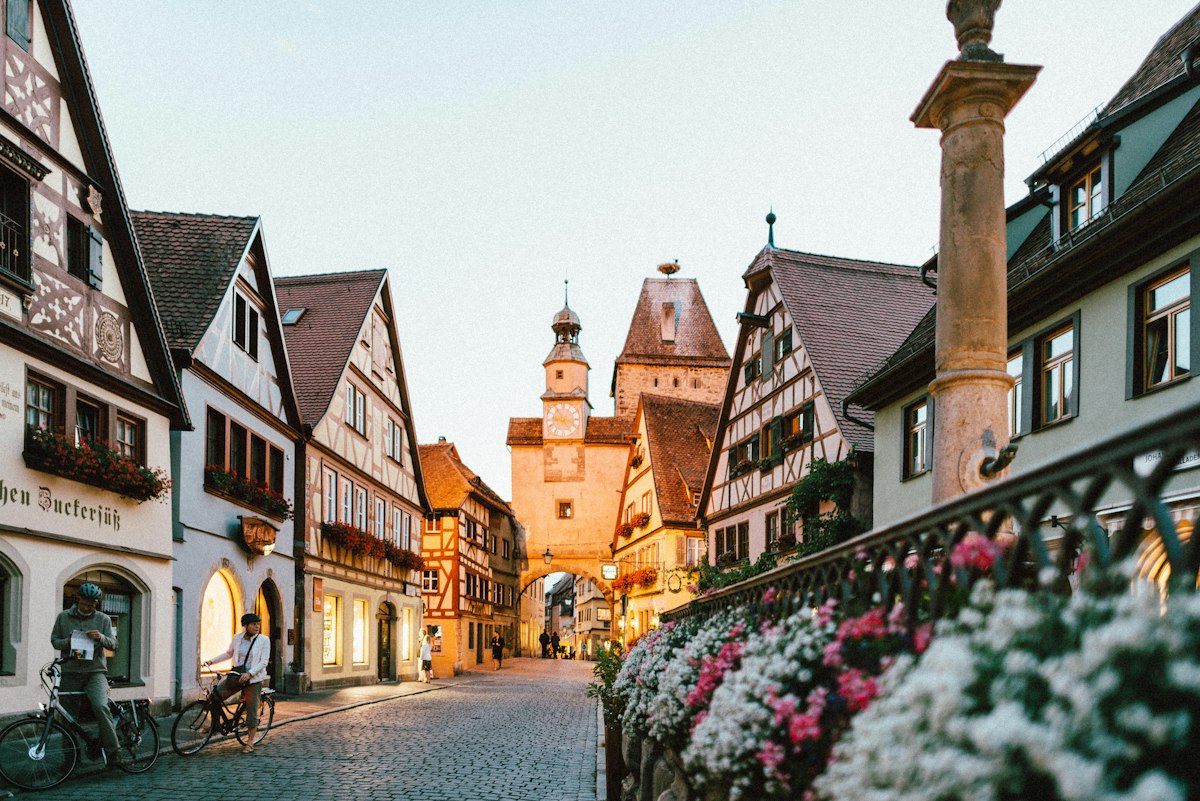
The 10-day plan, day by day
Day 1: Berlin: Reichstag to Museum Island
Morning. Book the free Reichstag dome visit online, then walk 5 minutes to the Brandenburg Gate and the 2,711 concrete blocks of the Memorial to the Murdered Jews of Europe.
Afternoon. Walk Unter den Linden to Museum Island. The Neues Museum (about €14) holds the bust of Nefertiti; the Pergamonmuseum is closed for long-term renovation.
Evening. Dinner in Mitte or Prenzlauer Berg, where a schnitzel or modern German main costs €16-25. Return to the Reichstag after dark if you booked an evening dome slot; the city lights are the reward.
A Berlin AB day ticket (about €10-11) covers the U-Bahn, S-Bahn, trams and buses in the city.
Day 2: Berlin: the Wall and Kreuzberg
Morning. Start at the Berlin Wall Memorial on Bernauer Strasse (free), with a preserved death strip and watchtower. Then Checkpoint Charlie and the free Topography of Terror on the former Gestapo site.
Afternoon. Take the U-Bahn to Warschauer Strasse for the East Side Gallery, 1.3 km of painted Wall along the Spree.
Evening. Cross the Oberbaum Bridge to Kreuzberg for a currywurst or a döner (€4-7) and bars along the canal.
Many museums close on Mondays; check before planning.
Day 3: Day trip to Potsdam
Morning. Take the regional train about 25-40 minutes to Potsdam (zone ABC ticket). Visit Sanssouci Palace (about €14-19, timed entry), Frederick the Great's summer palace above terraced vineyards.
Afternoon. Walk the park to the New Palace, then the Dutch Quarter's red-brick houses, and Cecilienhof, where the 1945 Potsdam Conference was held.
Evening. Back in Berlin, eat in Schöneberg or Charlottenburg. Around Savignyplatz, old-style Berlin pubs serve meatballs (Buletten) and beer for €15-20.
Buy the Sanssouci+ ticket for several palaces in one day.
Day 4: ICE to Munich
Morning. Take the fastest ICE Sprinter from Berlin Hauptbahnhof to Munich, about 4 hours (from about €30 with an early Sparpreis).
Afternoon. Walk from Karlsplatz to Marienplatz for the Glockenspiel at 11:00 or 12:00 (and 17:00 in summer), and climb St Peter's tower (about €5) for the Alps on a clear day.
Evening. Dinner at the Augustiner Bräustuben or the Hofbräuhaus: a litre of beer (a Mass) is about €13-15.
Sparpreis tickets lock you to one train; Flexpreis lets you take any train that day.
Day 5: Munich: Residenz, market and park
Morning. Visit the Residenz (about €10-15), the Bavarian kings' city palace, then the Viktualienmarkt for weisswurst before noon.
Afternoon. Walk 15 minutes to the Englischer Garten to watch surfers on the Eisbach wave, then the Chinese Tower beer garden.
Evening. Visit the Alte Pinakothek or the Deutsches Museum, or eat in Haidhausen.
A Munich day ticket for the inner zone is about €9-10.
Day 6: Neuschwanstein Castle
Morning. Take the regional train about 2 hours to Füssen, then the bus to Hohenschwangau. The Neuschwanstein tour is about €21; book weeks ahead in summer.
Afternoon. Walk 10 minutes to the Marienbrücke for the classic view, or see Hohenschwangau Castle below.
Evening. Back in Munich by about 19:00-20:00. Eat in Schwabing, where the student bars and Italian places are cheaper than the old town.
The Bayern-Ticket covers regional trains and buses for a day for up to five people.
Day 7: Nuremberg
Morning. ICE to Nuremberg, about 1h10. Climb to the Kaiserburg castle (about €7-9) for the view over the old town walls.
Afternoon. Visit the Documentation Centre at the Nazi Party Rally Grounds, about 20 minutes by tram, or the Albrecht Dürer House.
Evening. Eat Nürnberger Rostbratwürste, finger-sized sausages, six or twelve on pewter, near the Hauptmarkt.
Leave luggage in the station lockers if you continue the same day.
Day 8: Heidelberg
Morning. Train to Heidelberg, about 3 hours via Stuttgart or Mannheim. Take the funicular to Heidelberg Castle (about €9-11 with the train), a red sandstone ruin with the world's largest wine barrel.
Afternoon. Walk the Hauptstrasse to the Old Bridge, then climb the Philosophers' Walk for the view back.
Evening. Eat in the student taverns of the Altstadt, where carved tables go back generations. In summer, walk the river meadows on the north bank as the castle is floodlit.
Climb the Philosophers' Walk before sunset; the light on the castle is best then.
Day 9: The Rhine Valley
Morning. Train about 2 hours to Bacharach in the UNESCO Upper Middle Rhine Valley, a half-timbered wine village under Stahleck castle.
Afternoon. Take a KD Rhine boat (about €20-35) downstream past the Loreley rock to St Goar and climb Rheinfels Castle.
Evening. Continue to Cologne, about 1h30 by train, and walk out of the station to the cathedral.
Boats run mainly April to October.
Day 10: Cologne
Morning. See Cologne Cathedral (free), then climb 533 steps to the south tower (about €6-8).
Afternoon. Visit the Roman-Germanic Museum or the Museum Ludwig, then walk the Rhine promenade to the Hohenzollern Bridge and its love locks.
Evening. Drink Kölsch in a brewery tavern such as Früh or Päffgen; waiters bring a new glass until you cover it.
Cologne/Bonn and Düsseldorf airports are both 15-30 minutes away by train; Frankfurt is about 1 hour by ICE.
Only have 7 days?
With 7 days, drop Potsdam and Nuremberg and go Berlin (2 days), Munich (2), Neuschwanstein (1), then Heidelberg or the Rhine and Cologne (2).
Got extra days?
Add Dresden (about 2 hours from Berlin) for the rebuilt Frauenkirche and the Zwinger, Hamburg for its harbour and Elbphilharmonie, or the Black Forest around Freiburg.
Where to stay in Germany
| Budget | Area | Why | Typical double/night |
|---|---|---|---|
| Budget | Berlin Friedrichshain / Munich near the Hauptbahnhof | Hostels and simple hotels by good transport. | €70-120 |
| Mid-range | Berlin Mitte | Walk to the main sights, on every U-Bahn and S-Bahn line. | €120-200 |
| Mid-range | Munich Altstadt-Lehel / Heidelberg Altstadt | Old towns on foot, near the stations. | €130-230 |
| Comfort | Cologne cathedral district / Munich Maxvorstadt | Historic hotels and design hotels steps from the sights. | €220-450 |
Getting around
Deutsche Bahn ICE trains are the backbone: Berlin-Munich about 4 hours, Munich-Nuremberg about 1h10, Frankfurt-Cologne about 1 hour. Book Sparpreis fares early, from about €20-40. Delays are common, so leave buffers. The Deutschlandticket (about €63 a month in 2026) covers local and regional trains nationwide but not ICE or IC. City day tickets are €9-11.
What to eat in Germany
German food is regional. In Berlin, eat currywurst and döner kebab; in Bavaria, weisswurst with sweet mustard and a pretzel before noon, schweinshaxe (pork knuckle) and käsespätzle; in Nuremberg, small grilled sausages; in Cologne, Halve Hahn, a rye roll with cheese. Beer halls serve mains for €14-22. Bakeries sell breakfast for €4-6. In beer gardens you may bring your own food if you buy drinks.
Best time to visit
May to September is warm at 20-27°C, with beer gardens open and Rhine boats running. Oktoberfest in Munich runs from mid-September to the first Sunday in October; prices double. December brings Christmas markets in Nuremberg, Cologne and Dresden. Winter is cold, around 0-5°C.
Month-by-month weather for Germany →
What a day costs
| Budget | Mid-range | Comfort | |
|---|---|---|---|
| Bed (per person, sharing a double) | €40 | €80 | €160 |
| Food & drink | €30 | €50 | €95 |
| Sights & tickets | €12 | €25 | €45 |
| Local transport | €15 | €30 | €60 |
| Total per person, per day | about €95 | about €185 | about €360 |
Approximate 2026 prices; local transport averages the ICE legs over the trip. Berlin adds a 7.5% city tax on room rates and Cologne about 5%.
Before you go
Common questions
Is a German Rail Pass worth it?
Only if you take many long ICE journeys at short notice. For this route, early Sparpreis tickets usually cost less than a pass. A pass suits travellers who want flexibility. For regional day trips, the Bayern-Ticket or the Deutschlandticket is far cheaper.
Do I need to book Neuschwanstein in advance?
Yes, from May to October. Tickets are timed and sold online in advance; same-day tickets sell out. Book the castle first, then plan the train. You can only visit the interior on a guided tour of about 30 minutes; photos inside are not allowed.
Can I pay by card everywhere?
Much more than before, but not everywhere. Many bakeries, beer halls and market stalls still prefer cash, and some take only the German Girocard. Carry €50-100 in cash, and use contactless cards for trains and larger shops. Public toilets in stations often cost €0.50-1, so keep a few coins too.
How reliable are German trains?
Less reliable than their reputation. Long-distance ICE trains are often late, sometimes by 30 minutes or more. Leave at least an hour between a train and a flight, use the DB Navigator app for live times, and know that you can usually take the next train if you miss a connection.
How this guide was made
Compiled by TonyPlan from official tourism, transport and attraction sources and on-the-ground travel knowledge. Prices are approximate for 2026 and change with season; anything we could not confirm is marked as approximate.
Some links on this page are partner links. If you book through them TonyPlan may earn a commission; the price you pay is the same. How we make money.