How many days in France? 9 days, Paris to the Riviera by fast train
By Tony Panopoulos · travel-agency planner in Greece · Updated
France is too big to see in one trip, so pick a line and follow it. The most rewarding for a first visit is the TGV spine from Paris south through Lyon to Provence and the Riviera: about 6 hours of fast train in total, broken into four stops. Give it nine days: three in Paris, one in Lyon, three in Provence for Avignon, the Pont du Gard and Arles, and two on the coast around Nice. Book TGV seats early; the cheapest fares go first.
Short answer
Seven days covers Paris (three days), one day in Avignon and two or three in Nice, skipping Lyon and Arles. Nine lets you stop in Lyon for France's best eating and see Roman Provence at a normal pace.
The 9-day plan, day by day
Day 1: Paris: the Louvre, the islands and Notre-Dame
Morning. Book the first timed slot at the Louvre (about €22, with a higher price for non-EU visitors from 2026; closed Tuesdays). Allow 3 hours and pick two wings rather than everything; enter by the Carrousel entrance to avoid the pyramid queue.
Afternoon. Walk through the Tuileries and along the Seine to the Ile de la Cité for Notre-Dame, reopened in December 2024 after the fire (free entry; book a slot to skip the line), and the stained glass of the Sainte-Chapelle (about €20).
Evening. Cross to the Latin Quarter and Saint-Germain-des-Prés for dinner; a bistro menu costs €25-40.
The Paris Museum Pass (2, 4 or 6 days) covers the Louvre, Orsay, Sainte-Chapelle and Versailles, but still requires timed bookings at some of them.
Day 2: Paris: Orsay, the Eiffel Tower and Montmartre
Morning. See the Impressionists at the Musée d'Orsay (about €16), a former railway station; its fifth-floor galleries hold Monet, Renoir and Van Gogh.
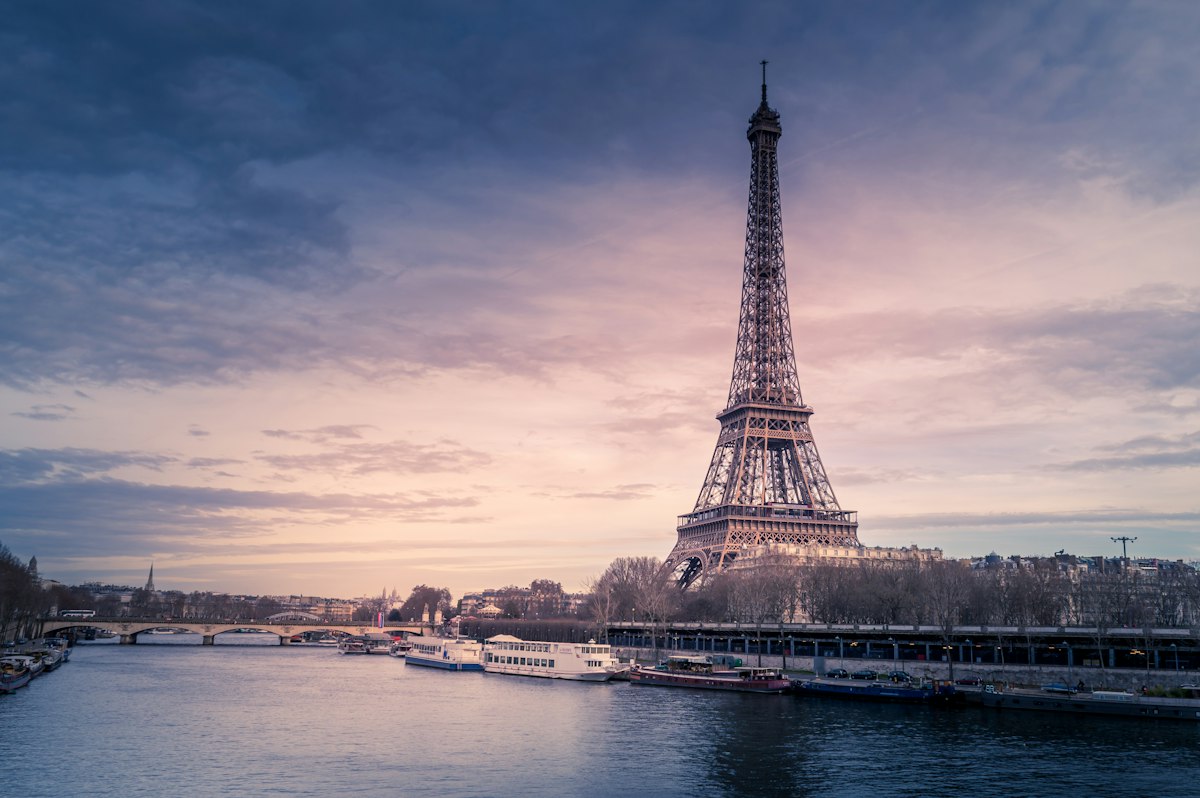
Afternoon. Walk 30 minutes along the river to the Eiffel Tower. Book the summit by lift online (about €35-36), or climb the stairs to the second floor for less. Then picnic on the Champ de Mars.
Evening. Take metro line 2 to Montmartre for the Sacré-Coeur at sunset, free, with the city below, then dinner around the Abbesses square.
The Eiffel Tower sparkles for five minutes on the hour after dark; watch from the Trocadéro across the river.
Day 3: Versailles and the Marais
Morning. Take the RER C to Versailles (about 40 minutes, around €4-5 each way) for the palace (about €21-32 with the gardens and Trianon estate; closed Mondays). See the Hall of Mirrors first, at opening.
Afternoon. Walk the gardens to the Trianon palaces and the Queen's Hamlet, or hire a bike or rowing boat on the Grand Canal.
Evening. Back in Paris, explore the Marais, with the Place des Vosges, falafel on Rue des Rosiers (about €8-10) and wine bars.
On summer weekends the fountains run to music, and the gardens charge entry.
Day 4: Lyon: Vieux Lyon and Fourvière
Morning. Take the TGV from Paris Gare de Lyon to Lyon (about 2 hours, €30-100). Ride the funicular to Fourvière for the 19th-century basilica and the Roman theatres on the hill.
Afternoon. Walk down into Vieux Lyon, a Renaissance quarter of silk merchants' houses, and through its traboules, covered passageways linking parallel streets. Cross to the Presqu'île for the Place Bellecour and the Fresque des Lyonnais mural.
Evening. Eat in a bouchon, a traditional Lyon tavern: quenelles, sausage with lentils and a pot of Côtes du Rhône, about €25-35 per person.
Visit Les Halles de Lyon Paul Bocuse for oysters and cheese at the counter; closed Monday.
Day 5: Avignon: the Palace of the Popes
Morning. Take the TGV to Avignon (about 1 hour from Lyon). The Palais des Papes (about €12-15 with a tablet guide), seat of the popes in the 14th century, is the largest Gothic palace in Europe.
Afternoon. Walk out on the Pont Saint-Bénézet, the half-bridge of the song 'Sur le pont d'Avignon' (combined ticket with the palace), and up to the Rocher des Doms garden for the view over the Rhône.
Evening. Dinner on the Place de l'Horloge or in the side streets inside the walls.
In July the Avignon Festival fills the town with theatre and doubles hotel prices; book months ahead.
Day 6: Pont du Gard and Arles
Morning. Drive or bus 30-40 minutes west to the Pont du Gard (about €10-12), the Roman aqueduct bridge, 48 metres high, built in the 1st century. In summer you can swim in the Gardon river below.
Afternoon. Continue to Arles (about 40 minutes), with its Roman arena and theatre, the cloister of Saint-Trophime and the places Van Gogh painted in 1888-89.
Evening. Return to Avignon, or stay the night in Arles for dinner on the Place du Forum.
A rental car makes this day and the hill villages of the Luberon (Gordes, Roussillon) much easier; buses are infrequent.
Day 7: Provence to Nice
Morning. Spend a slow morning at Avignon's covered market, Les Halles, or drive to the hill village of Gordes for the view and the Sénanque Abbey lavender (in flower roughly late June to late July).
Afternoon. Take the train to Nice (about 3-4 hours from Avignon, often with a change in Marseille). Walk the Promenade des Anglais along the pebble beach.
Evening. Eat in Vieux Nice, the old town, where a socca (chickpea pancake) costs €4-5 and a plate of petits farcis about €15.
The tram line 2 runs from Nice airport to the port in about 25 minutes, for the price of a normal city ticket.
Day 8: Nice: Cours Saleya and Castle Hill
Morning. Walk through the flower and produce market on the Cours Saleya (closed Mondays, when it becomes an antiques market), then climb Castle Hill (Colline du Château) by the stairs or the free lift for the view over the Baie des Anges.
Afternoon. Visit the Matisse Museum in Cimiez (about €12-15) or the Chagall Museum, then swim at a public beach or a private beach club (sunbed about €20-30).
Evening. Have dinner at the port, or take the 20-minute train to Villefranche-sur-Mer for fish on the harbour.
Nice's municipal museums share one multi-day pass.
Day 9: Eze and Monaco
Morning. Take bus 82 or 112 up to Eze (about 30 minutes), a medieval village perched 400 metres above the sea, with the exotic garden at the top (about €8). Walk down the Nietzsche path to Eze-sur-Mer station in about 1 hour.
Afternoon. Ride the train 10 minutes to Monaco for the Prince's Palace on the Rock, the changing of the guard at 11:55, and the Oceanographic Museum (about €20).
Evening. See the Casino de Monte-Carlo square, then return to Nice by train in 20-25 minutes.
Monaco uses the euro and needs no separate visa or passport check from France.
Only have 7 days?
With 7 days, cut Lyon and Arles: take the TGV from Paris straight to Avignon (about 2h40), spend one day there with the Pont du Gard, and give Nice three days. You lose France's food capital and the Roman city of Arles.
Got extra days?
With 10-12 days, add the Loire Valley châteaux (Chambord and Chenonceau, 1-2 hours from Paris), Normandy and Mont-Saint-Michel, or Bordeaux and its vineyards, about 2 hours from Paris by TGV.
Where to stay in France
| Budget | Area | Why | Typical double/night |
|---|---|---|---|
| Budget | Paris 11th arrondissement / Nice near the station | Lower prices, good metro or tram links, plenty of cheap food. | €90-140 |
| Mid-range | Paris Marais or Latin Quarter | Walk to the islands, the Louvre and the Seine. | €170-280 |
| Mid-range | Avignon inside the walls / Lyon Presqu'île | Old-town hotels, a short walk from the stations and the sights. | €110-190 |
| Comfort | Paris Saint-Germain / Nice Promenade des Anglais | Classic Left Bank hotels, or sea-view rooms on the bay. | €300-650 |
Getting around
Use SNCF TGV trains between cities: Paris-Lyon about 2 hours, Lyon-Avignon about 1 hour, Avignon-Nice about 3-4 hours. Book on SNCF Connect; the low-cost Ouigo trains are cheaper but leave from outer stations. In Paris, the metro covers everything; a single ticket is about €2.50, and you can load tickets on a Navigo Easy card or phone. In Provence, rent a car for the Pont du Gard, Arles and the Luberon.
What to eat in France
Eat by region. In Paris: a croque-monsieur at a café, steak frites and duck confit in a bistro, and croissants from a real bakery (look for 'artisan boulanger'), about €1.30-2. In Lyon: quenelles de brochet, saucisson brioché and the praline tart. In Provence: ratatouille, daube stew, goat's cheese and rosé. On the Riviera: salade niçoise, pissaladière (onion tart) and socca. Lunch menus (formule) cost €15-25 and are the best value.
Best time to visit
May to June and September are best, with highs of 20-27°C in Paris and warmer in the south. July and August are hot in Provence (often 33°C and above), and many Parisians are away in August, closing some restaurants. Lavender blooms roughly late June to late July. Winter is grey in Paris and mild on the Riviera at 12-14°C, with the Nice Carnival in February.
Month-by-month weather for France →
What a day costs
| Budget | Mid-range | Comfort | |
|---|---|---|---|
| Bed (per person, sharing a double) | €50 | €100 | €220 |
| Food & drink | €30 | €60 | €120 |
| Sights & tickets | €15 | €30 | €60 |
| Local transport | €15 | €35 | €70 |
| Total per person, per day | about €110 | about €225 | about €470 |
Approximate 2026 prices in euros, with TGV fares averaged across the trip. Every French town charges a taxe de séjour per person per night, from under €1 in simple hotels to €10 or more in Paris palace hotels.
Before you go
Common questions
Is 9 days enough for France?
It is enough for one line through the country, not for all of it. This route covers Paris, Lyon, Provence and the Riviera by train, with three nights in Paris and two or three in each region. Normandy, the Loire, Bordeaux, the Alps and Brittany need another trip, or can replace Lyon and Arles here if they matter more to you.
Should I buy a rail pass?
Usually not. A Eurail France pass still needs paid seat reservations on TGV trains, and advance point-to-point tickets bought on SNCF Connect are often cheaper for three or four journeys. Passes make sense if you want full flexibility or travel last-minute in summer, when regular fares are high.
What do I need to book ahead in Paris?
Timed tickets for the Louvre, the Eiffel Tower summit, Versailles and the Sainte-Chapelle, ideally a few weeks ahead in spring and summer. Notre-Dame is free but a reserved slot saves queuing. Popular restaurants take bookings online through apps such as TheFork; many bistros only take reservations a week or two in advance.
Do I need a car in Provence?
For Avignon, Arles and Nice, no: trains and buses link them. For the Pont du Gard, the Luberon hill villages and lavender fields, a car is far easier, as buses are infrequent, especially on Sundays. Rent one in Avignon for a day or two rather than driving from Paris, and return it before you head to the Riviera.
How this guide was made
Compiled by TonyPlan from official tourism, transport and attraction sources and on-the-ground travel knowledge. Prices are approximate for 2026 and change with season; anything we could not confirm is marked as approximate.
Some links on this page are partner links. If you book through them TonyPlan may earn a commission; the price you pay is the same. How we make money.