How many days in Egypt? 7 days, Cairo's pyramids to Luxor's tombs
By Tony Panopoulos · travel-agency planner in Greece · Updated
Egypt's great sites lie along 900 km of the Nile, so the trip is a line: Cairo in the north, Aswan in the south, Luxor in between. Seven days covers all three without a cruise: three in Cairo, an overnight train or short flight south, two in Aswan with Abu Simbel, then the road north past two temples to Luxor. Start every site at opening time; by 11:00 the heat and the tour coaches arrive together.
Short answer
Five days covers Giza, the Grand Egyptian Museum and Luxor by flight. Seven adds Islamic Cairo, Saqqara, Aswan, Abu Simbel and the temples of Edfu and Kom Ombo on the drive north.
The 7-day plan, day by day
Day 1: Giza pyramids and the Grand Egyptian Museum
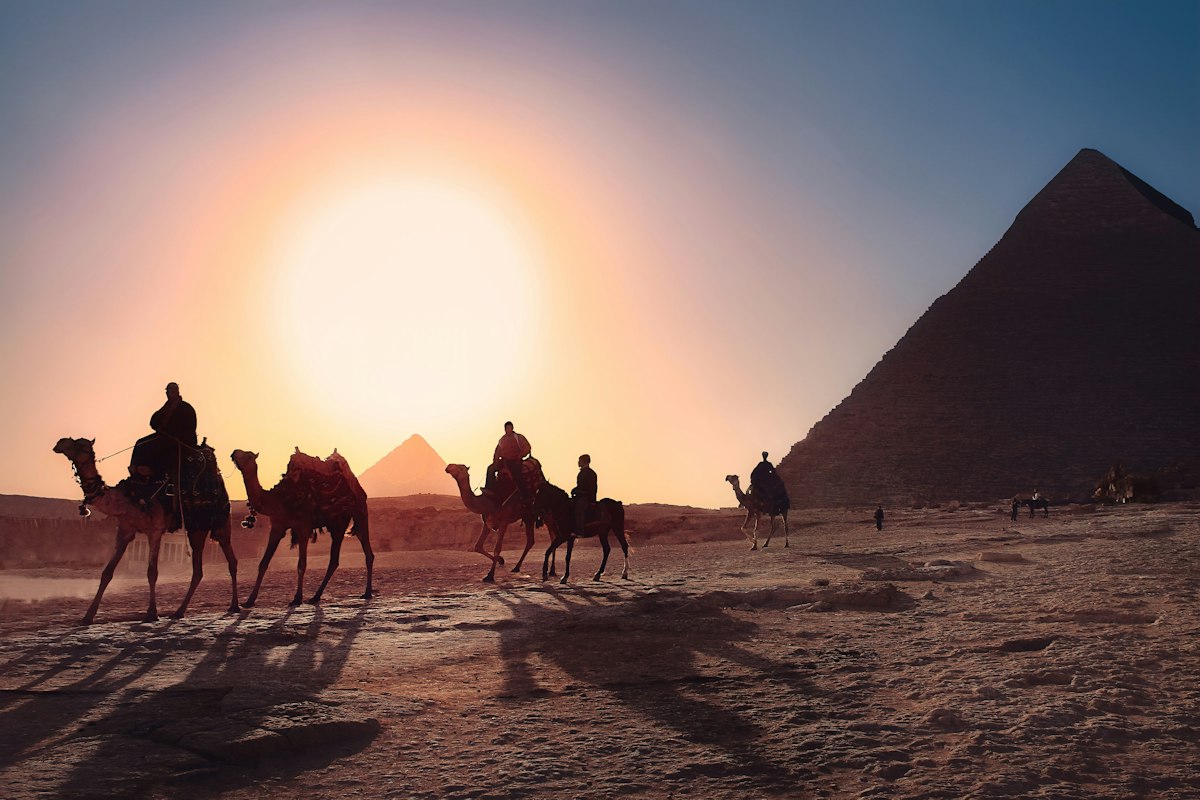
Morning. Be at the Giza plateau gate at 7:00 (about E£700; extra tickets to enter the Great Pyramid). Walk round Khufu's pyramid, then take a taxi or the plateau bus to the panorama point for all three pyramids, and down to the Sphinx.
Afternoon. Walk or ride 10 minutes to the Grand Egyptian Museum (about E£1,200-1,500 for foreigners), the new museum by the plateau that holds the Tutankhamun collection in full, with the colossal statue of Ramses II in the atrium. Allow at least 3 hours.
Evening. Watch the sound and light show at the Sphinx (about E£400-500) or eat at a rooftop restaurant facing the pyramids in Nazlet el-Samman, where grilled meat costs E£400-800.
Camel and horse touts at Giza are persistent. Agree a price and duration before getting on, or politely refuse and keep walking.
Day 2: Islamic Cairo and the mummies
Morning. Take a taxi to the Citadel of Saladin (about E£550) and the alabaster Mosque of Muhammad Ali, with views across the city. Then walk down to the Sultan Hassan Mosque and the Al-Rifai Mosque below.
Afternoon. Visit the National Museum of Egyptian Civilization in Fustat (about E£500-600), where 20 royal mummies, including Ramses II, lie in a dark gallery. Then walk Al-Muizz Street, a pedestrian lane of Mamluk mosques and madrasas.
Evening. Get lost in Khan el-Khalili, the bazaar founded in the 14th century, and drink mint tea at El Fishawy café, open for over 200 years. Across the road, Al-Azhar Mosque is lit at night.
Use Uber or Careem in Cairo: rides across the city cost E£100-250 and you avoid haggling with street taxis.
Day 3: Saqqara and Dahshur, then south by night train
Morning. Drive about 45 minutes south to Saqqara (about E£600) for the Step Pyramid of Djoser, the oldest stone pyramid, about 4,700 years old, and the painted tombs of the nobles. A car and driver for the day costs about E£1,500-2,500.
Afternoon. Continue 20 minutes to Dahshur for the Bent Pyramid and the Red Pyramid, which you can climb inside down a 60-metre passage, usually with almost no other visitors. Return to Cairo by 16:00.
Evening. Board the sleeper train from Ramses or Giza station to Aswan (about 13-14 hours, roughly US$100-120 per person in a two-berth cabin with dinner and breakfast), or fly to Aswan in about 1h20.
Sleeper tickets for foreigners are sold through the official Watania sleeper company in US dollars; book a few days ahead in winter.
Day 4: Aswan: Philae and the Nile by felucca
Morning. Arrive in Aswan and take a motorboat from the Shellal landing to Philae Temple (about E£550), the island temple of Isis moved stone by stone in the 1970s when the dams raised the river. Stop at the High Dam and the Unfinished Obelisk quarry.
Afternoon. Rest through the heat, then sail a felucca among the granite boulders and islands at sunset (about E£400-700 for the boat for an hour), past Elephantine Island and Kitchener's botanical island.
Evening. Take a boat to the Nubian village of Gharb Soheil for painted houses and dinner, or eat at a riverside restaurant on the Corniche for E£300-600.
Aswan is the most relaxed city in Egypt. In summer, temperatures pass 40°C, so plan sites for 6:00-10:00 and the river for late afternoon.
Day 5: Abu Simbel
Morning. Leave Aswan at about 4:00 by convoy minibus (about 3.5 hours each way across the desert) or fly 45 minutes. Abu Simbel (about E£750) has two temples carved into a cliff by Ramses II, with four seated colossi 20 metres high, moved uphill in the 1960s to escape Lake Nasser.
Afternoon. Return to Aswan by early afternoon and rest. Visit the Nubian Museum (about E£300), which explains the villages flooded by the lake.
Evening. Walk the Aswan souk on Sharia el-Souk for spices, hibiscus and dates, then an early night before the drive north.
On about 22 February and 22 October, sunlight reaches the statues deep inside the temple; Abu Simbel is packed on those dates.
Day 6: Kom Ombo, Edfu and Luxor's East Bank
Morning. Hire a car and driver for the road to Luxor (about 3.5-4 hours, roughly E£2,500-3,500), stopping at Kom Ombo (about E£300), a double temple to the crocodile and falcon gods with mummified crocodiles, and Edfu (about E£550), the best-preserved temple in Egypt.
Afternoon. Reach Luxor and visit Karnak (about E£600), the largest temple complex of ancient Egypt, with the 134 columns of the Great Hypostyle Hall. Allow 2-3 hours.
Evening. Walk 3 km along the Corniche, or take a horse carriage, to Luxor Temple, open into the evening and lit after dark, at the end of the Avenue of Sphinxes.
A Nile cruise between Aswan and Luxor (3-4 nights) is the classic alternative to the road and covers the same temples at a slower pace.
Day 7: Luxor's West Bank: Valley of the Kings
Morning. Rise at 4:30 for a hot-air balloon over the West Bank at sunrise (about US$70-150), then enter the Valley of the Kings (about E£750 for three tombs) as it opens. Tutankhamun's and Seti I's tombs need extra tickets.
Afternoon. Visit the terraced Temple of Hatshepsut at Deir el-Bahari (about E£450), the Ramesseum or Medinet Habu, and the two Colossi of Memnon by the road.
Evening. Cross back to the East Bank by public ferry (a few pounds) and eat at a rooftop above Luxor Temple, with grilled fish or kofta for E£300-600.
Photography inside the tombs is now allowed without flash, but guides cannot speak inside, so get the background before you go in.
Only have 5 days?
With 5 days, keep two days in Cairo (Giza with the museum, then Islamic Cairo), fly to Luxor and spend two days on Karnak and the West Bank. You lose Aswan, Abu Simbel and the temples in between.
Got extra days?
Add a Nile cruise of 3-4 nights instead of the road, or 3-4 days on the Red Sea at Hurghada or Marsa Alam (about 4 hours by road from Luxor) for coral reef snorkelling. Desert lovers can go to the White Desert and Siwa Oasis.
Where to stay in Egypt
| Budget | Area | Why | Typical double/night |
|---|---|---|---|
| Budget | Downtown Cairo / Luxor West Bank | Cheap guesthouses near the metro in Cairo; quiet family hotels by the fields in Luxor. | E£1,200-2,500 |
| Mid-range | Giza pyramid-view hotels | Wake up facing the pyramids, 10 minutes from the new museum. | E£3,000-6,000 |
| Mid-range | Zamalek, Cairo | Leafy Nile island with cafés and embassies, central for Islamic Cairo. | E£4,000-7,000 |
| Comfort | Historic Nile hotels in Aswan and Luxor | Grand old hotels with river terraces, or luxury cruise boats. | E£12,000-35,000 |
Getting around
In Cairo, use Uber or Careem (E£100-250 across town); the metro is very cheap but crowded. Cairo to Aswan takes about 13-14 hours by sleeper train, about 1h20 by EgyptAir flight. Aswan to Luxor is about 3.5-4 hours by car with temple stops, or 3 hours by day train. In Luxor, local ferries cross the Nile for a few pounds and taxis or a driver cover the West Bank (about E£800-1,500 a day). Many nationalities can buy a visa on arrival for US$25 or an e-visa online.
What to eat in Egypt
Egyptian street food is cheap and excellent. Try koshary (rice, lentils, pasta and fried onion with spicy tomato sauce) at Abou Tarek in downtown Cairo for about E£50-100, ta'ameya (fava-bean falafel), ful medames at breakfast and feteer, a flaky layered pie. Molokhia, a green leaf stew, and stuffed pigeon (hamam mahshi) are classic dishes. Drink sugarcane juice and hibiscus karkadeh. A grill dinner in a tourist restaurant costs E£400-900. Alcohol is sold in hotels and some restaurants.
Best time to visit
October to April is the season, with Cairo at 20-28°C and Luxor and Aswan at 23-30°C; December and January are the busiest and coolest, with cold desert nights. May to September is very hot in the south, often above 40°C, but sites are empty and hotels cheap. During Ramadan, opening hours shorten and many restaurants open after sunset.
Month-by-month weather for Egypt →
What a day costs
| Budget | Mid-range | Comfort | |
|---|---|---|---|
| Bed (per person, sharing a double) | E£900 | E£2,500 | E£9,000 |
| Food & drink | E£500 | E£1,300 | E£3,500 |
| Sights & tickets | E£1,000 | E£2,200 | E£4,000 |
| Local transport | E£300 | E£1,000 | E£3,000 |
| Total per person, per day | about E£2,700 | about E£7,000 | about E£19,500 |
Approximate 2026 prices in Egyptian pounds (roughly E£50 to US$1, and site prices for foreigners rise often); add the sleeper train or flight south, around US$100-150, and tips of E£20-100 for small services.
Before you go
Common questions
Is the Grand Egyptian Museum open and is it worth it?
Yes. The Grand Egyptian Museum next to the Giza pyramids opened fully in 2025 and now holds the complete Tutankhamun collection, over 5,000 objects shown together for the first time. It needs at least three hours. The old Egyptian Museum on Tahrir Square remains open for other collections. Book GEM tickets online for a timed entry in high season.
Should I take a Nile cruise or travel by land?
A 3-4 night cruise between Aswan and Luxor is relaxing and covers Kom Ombo and Edfu with meals included, but the boat schedules decide your timing. Travelling by road and train, as in this plan, is faster, cheaper and lets you choose hotels. A dahabiya, a small sailing boat, is the slower and more expensive option.
Is Egypt safe for tourists?
The main tourist route of Cairo, Luxor, Aswan and the Red Sea resorts is visited by millions each year and heavily policed. The common problems are scams, persistent touts and overcharging rather than crime. Avoid the Sinai border areas and the Libyan border that foreign governments warn against, and check current advice before you travel.
How much should I tip?
Tipping, called baksheesh, is part of daily life. Give E£20-50 to bathroom attendants and temple guards who show you a corner, around 10% in restaurants, and about US$5-10 per day per person to a guide and somewhat less to a driver. Keep small notes ready, as change is often short.
How this guide was made
Compiled by TonyPlan from official tourism, transport and attraction sources and on-the-ground travel knowledge. Prices are approximate for 2026 and change with season; anything we could not confirm is marked as approximate.
Some links on this page are partner links. If you book through them TonyPlan may earn a commission; the price you pay is the same. How we make money.