How many days in Cusco? 5 days with the Sacred Valley and Machu Picchu
By Tony Panopoulos · travel-agency planner in Greece · Updated
Cusco, the old capital of the Inca empire, sits at 3,400 metres, and the altitude shapes the whole trip. Five days is the sensible minimum: one easy day in the city, one in the lower Sacred Valley (good for acclimatisation), a night near Machu Picchu and a morning on the site, and a last day for Cusco's ruins or Rainbow Mountain. Book Machu Picchu tickets and trains weeks or months ahead: entry is limited per day and per circuit.
Short answer
Four days is the minimum: Cusco, the Sacred Valley, Machu Picchu and back. Five days gives the altitude buffer and a spare day for weather or Rainbow Mountain.
The 5-day plan, day by day
Day 1: Cusco, slowly
Morning. Take it easy on arrival: drink coca tea, walk slowly and avoid alcohol. Visit the Plaza de Armas with the Cathedral (paintings of the Cusco School, including a Last Supper with guinea pig) and the Iglesia de la Compañía.
Afternoon. Visit Qorikancha, the Inca Temple of the Sun, whose perfect stone walls now support the Santo Domingo convent, then walk up to San Blas, the artisans' quarter, past the famous twelve-angled stone on Hatun Rumiyoc street.
Evening. Have dinner near the plaza: try lomo saltado or alpaca, and a pisco sour if you feel well. Early night.
Many travellers fly from Lima straight to Cusco and go down to the Sacred Valley (about 2,800 m) on the first day, sleeping lower to acclimatise. That works well too.
Day 2: The Sacred Valley
Morning. Drive about 1 hour to Pisac for its Tuesday, Thursday and Sunday market (the biggest days) and the hilltop Inca citadel with agricultural terraces. Many sites in the valley need the boleto turístico (tourist ticket).
Afternoon. Visit the circular terraces of Moray, possibly an Inca agricultural laboratory, and the Maras salt pans, thousands of terraced pools still worked by local families, then Ollantaytambo, a living Inca town with a temple fortress above it.
Evening. Sleep in Ollantaytambo or Urubamba, which are lower than Cusco and close to the Machu Picchu train station.
Group tours of the Sacred Valley cover all of this in a long day; a private driver lets you change the order to avoid crowds.
Day 3: Train to Aguas Calientes
Morning. Explore Ollantaytambo's fortress early, then take the train from Ollantaytambo to Aguas Calientes (about 1.5 hours with PeruRail or Inca Rail, roughly US$70-150 each way depending on the class). Sit on the left side going there for river views.
Afternoon. In Aguas Calientes (Machu Picchu Pueblo), relax at the hot springs or walk to the Mandor waterfall.
Evening. Early dinner and bed. You need to be in the queue for the first buses up to Machu Picchu in the morning.
If you have the time and permits, the classic Inca Trail (4 days, permits sell out months ahead, closed in February) or the shorter one-day trail arrives at Machu Picchu through the Sun Gate.
Day 4: Machu Picchu
Morning. Take the Consettur bus up the zigzag road (about 25 minutes, around US$24 each way) or walk up (about 1.5 hours, steep). Enter on your timed ticket. Visits follow fixed circuits; the classic upper-terrace circuit gives the postcard view. Huayna Picchu or Machu Picchu Mountain climbs need separate tickets.
Afternoon. Return by bus and take the afternoon train to Ollantaytambo, then a connecting bus or taxi to Cusco (about 1.5-2 hours).
Evening. Late dinner in Cusco. You will be tired: Machu Picchu is a long day.
Early morning often has mist that clears by about 9:00-10:00. Afternoon slots can have better light and fewer crowds. Bring your passport: it is checked at the entrance.
Day 5: Sacsayhuamán or Rainbow Mountain
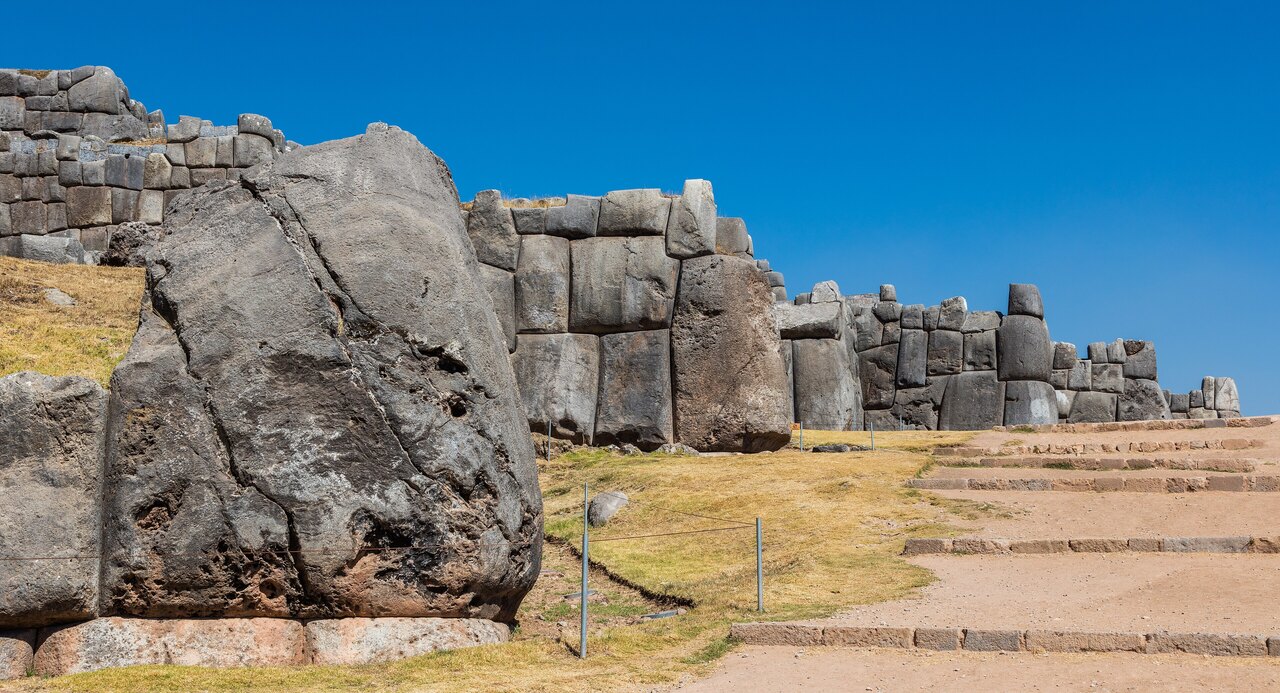
Morning. Walk or take a short taxi up to Sacsayhuamán, the zig-zag Inca walls above Cusco made of stones weighing up to 100 tonnes, and the smaller sites of Q'enqo, Puka Pukara and Tambomachay (all on the boleto turístico).
Afternoon. Visit the San Pedro Market for fruit juices, soups and bread, and the Museo de Arte Precolombino.
Evening. Alternatively, take a day tour to Rainbow Mountain (Vinicunca), at 5,036 metres, with pick-up around 3:00-4:00 and a 1.5-2 hour hike to striped mineral hills. It is hard at that altitude: only attempt it after acclimatising.
If Rainbow Mountain is too crowded or too high for you, Palccoyo, a lower rainbow mountain with an easier walk, is a good alternative.
Only have 4 days?
With 4 days, combine the Sacred Valley and the train to Aguas Calientes on Day 2, see Machu Picchu on Day 3, and return to Cusco; you lose the last day and the buffer.
Got extra days?
With more time, take the scenic train or bus to Lake Titicaca and Puno (about 7-10 hours), or spend two days in Lima, Peru's food capital, before or after Cusco.
Where to stay in Cusco
| Budget | Area | Why | Typical double/night |
|---|---|---|---|
| Budget | Cusco centre / San Blas guesthouses | Cheap rooms with breakfast and coca tea. | S/ 120-220 |
| Mid-range | Cusco (near the Plaza de Armas) | Colonial hotels, walk to everything; some have oxygen enrichment. | S/ 300-550 |
| Mid-range | Sacred Valley (Urubamba / Ollantaytambo) | Lower altitude, gardens, close to the train. | S/ 280-550 |
| Comfort | Cusco palace hotels / valley lodges | Restored colonial palaces and luxury river lodges. | S/ 1,200-3,500 |
Getting around
Walk in central Cusco (the cobbled streets are steep). Use taxis or drivers to the Sacred Valley, and the trains from Ollantaytambo or Poroy to Aguas Calientes; there is no road to Machu Picchu Pueblo. Cusco airport has flights from Lima (about 1h20). Altitude makes walking tiring: allow extra time on every climb.
What to eat in Cusco
Andean food is hearty. Try lomo saltado (stir-fried beef with tomatoes and chips, a Chinese-Peruvian dish), alpaca steak, rocoto relleno (stuffed hot pepper), quinoa soup, chicharrón (fried pork) sandwiches at breakfast, and cuy, roast guinea pig, a traditional festive dish. Drink chicha morada (purple-corn juice), coca tea for the altitude and pisco sour. Lunch menus (menú del día) in local places cost S/ 15-25; tourist restaurants cost S/ 50-120.
Best time to visit
The dry season, May to September, has sunny days (highs about 20°C) and cold nights (near 0°C), and is the busiest. April and October-November have fewer people. The rainy season, December to March, brings afternoon storms and landslide risks; the Inca Trail closes in February. Inti Raymi, the Inca festival of the sun, is held on 24 June at Sacsayhuamán.
Month-by-month weather for Cusco →
What a day costs
| Budget | Mid-range | Comfort | |
|---|---|---|---|
| Bed (per person, sharing a double) | S/ 60 | S/ 200 | S/ 800 |
| Food & drink | S/ 50 | S/ 120 | S/ 300 |
| Sites, tours & tickets | S/ 80 | S/ 200 | S/ 450 |
| Transport (excluding trains) | S/ 20 | S/ 80 | S/ 250 |
| Total per person, per day | about S/ 210 | about S/ 600 | about S/ 1,800 |
Approximate 2026 prices in Peruvian soles (very roughly S/ 4 to €1). Machu Picchu tickets, trains and buses add about US$200-350 per person in total.
Before you go
Common questions
How do I avoid altitude sickness?
Ascend gradually where possible, sleep low in the Sacred Valley at first, drink plenty of water and coca tea, avoid alcohol for the first day, and walk slowly. Some travellers take medication on medical advice.
How far ahead should I book Machu Picchu?
Several weeks to months ahead for May to September, especially for the classic circuits and Huayna Picchu. Buy only from the official government site or authorised agencies.
Do I need a guide at Machu Picchu?
The rules require visitors to enter with a licensed guide on many tickets. Check the current regulations when you book; guides can be hired at the entrance or in advance.
Is the boleto turístico worth it?
Yes if you visit several sites: it covers Sacsayhuamán, Pisac, Ollantaytambo, Moray and many museums. Partial tickets cover fewer sites at a lower price.
When is the best time to visit Machu Picchu?
May to September for dry weather; April, October and November for fewer crowds. The site is open all year.
How this guide was made
Written by hand, without AI, from experience planning Peru trips. Ticket rules, circuits and train prices change; confirm on the official Machu Picchu ticket site (Ministerio de Cultura), PeruRail, Inca Rail and Consettur websites before booking.
Some links on this page are partner links. If you book through them TonyPlan may earn a commission; the price you pay is the same. How we make money.