How many days in Chile? 10 days: Santiago, Valparaíso, the Atacama and Patagonia
By Tony Panopoulos · travel-agency planner in Greece · Updated
Chile is 4,300 km long and only about 180 km wide, so a first trip is really three short trips joined by flights: the capital and the coast, the Atacama Desert in the north and Patagonia in the far south. Ten days is the minimum to do all three without exhaustion. Flights between regions take 2-3.5 hours; book them early, because domestic fares rise sharply close to departure.
Short answer
Seven days covers Santiago, Valparaíso and either the Atacama or Patagonia, not both. Ten days lets you see the desert and the glaciers on one trip.
The 10-day plan, day by day
Day 1: Santiago: the historic centre
Morning. Start at the Plaza de Armas with the cathedral and the Museo Chileno de Arte Precolombino (about CLP$10,000), one of the best pre-Columbian collections in South America. Walk 5 minutes to the Palacio de La Moneda, the presidential palace bombed in the 1973 coup.
Afternoon. Lunch at the Mercado Central (seafood stews from CLP$9,000), then climb Cerro Santa Lucía (free), where the city was founded in 1541.
Evening. Eat in Bellavista, near La Chascona, Pablo Neruda's Santiago house. Dinner starts after 20:30.
Chileans call the metro card bip!; one card works for metro and buses, and a ride costs about CLP$800-900.
Day 2: Santiago: hills, memory and wine
Morning. Take the funicular up Cerro San Cristóbal (about CLP$3,000-4,000 return) for views of the Andes, clearest after rain in winter. Then visit the Museo de la Memoria y los Derechos Humanos (free), on the dictatorship years.
Afternoon. Go to a winery in the Maipo Valley: Concha y Toro in Pirque or Cousiño Macul inside the city, about 1 hour by metro and taxi. Tours with tasting cost CLP$25,000-40,000.
Evening. Dine in Barrio Italia or Providencia, where a main with a glass of carmenère costs CLP$15,000-25,000.
Smog can hide the mountains in winter (June-August); the views are best in spring and after rain.
Day 3: Valparaíso and Viña del Mar
Morning. Take a bus from the Pajaritos or Alameda terminal to Valparaíso (about 1h45, CLP$5,000-8,000). Ride an old ascensor (funicular) such as Reina Victoria up to Cerro Alegre and Cerro Concepción, covered in murals.
Afternoon. Walk to La Sebastiana, Neruda's house above the bay (about CLP$8,000-10,000), then down to the port at Muelle Prat for a 30-minute boat ride around the harbour.
Evening. Have dinner on Cerro Alegre with sunset over the Pacific, or take the Merval train 20 minutes to Viña del Mar for its beach promenade, then return to Santiago.
Free tip-based walking tours leave from Plaza Sotomayor in the morning and explain the street art and the 19th-century port.
Day 4: Fly to the Atacama: Valle de la Luna
Morning. Fly Santiago to Calama (about 2 hours), then take a shared transfer to San Pedro de Atacama (about 1h20, CLP$15,000-20,000). The village sits at 2,400 metres; take the first day slowly.
Afternoon. Walk the adobe streets to the white Iglesia de San Pedro and book the next days' tours in person.
Evening. Join a sunset tour of the Valle de la Luna (park entry about CLP$10,000-15,000, booked online), salt-crusted ridges and dunes that turn pink and red as the sun goes down.
Bring pesos in cash: San Pedro's ATMs often run dry at weekends.
Day 5: Altiplanic lagoons and the salt flat
Morning. Take a full-day tour south to the Lagunas Altiplánicas, Miscanti and Miñiques, deep blue lakes at about 4,100 metres under volcanoes. Tours cost CLP$45,000-70,000 with breakfast and lunch.
Afternoon. Stop at Laguna Chaxa in the Salar de Atacama to see Andean flamingos feeding, and at the village of Socaire.
Evening. Book a stargazing tour (about CLP$30,000-40,000): the Atacama has some of the darkest, driest skies on Earth, with the Milky Way overhead.
Altitude headaches are common above 4,000 metres. Drink water, skip alcohol the night before and try the coca tea offered on tours.
Day 6: El Tatio geysers and Laguna Cejar
Morning. Leave at 4:30 for the El Tatio geyser field at about 4,300 metres, about 1h30 from San Pedro, to see the steam columns at sunrise, when it is often -10°C. Entry is around CLP$15,000; tours cost CLP$35,000-50,000.
Afternoon. Rest, then float in Laguna Cejar, a lagoon saltier than the Dead Sea (entry about CLP$20,000), and rinse in the Ojos del Salar freshwater pools.
Evening. Have a last dinner in San Pedro on Caracoles street; a main of llama or quinoa dishes costs CLP$12,000-20,000.
Bring gloves, a hat and a down jacket for El Tatio; by 10:00 you will be in a T-shirt.
Day 7: Travel day to Patagonia
Morning. Transfer to Calama and fly to Punta Arenas, usually via Santiago (about 6-8 hours in total). In summer some flights reach Puerto Natales directly.
Afternoon. From Punta Arenas airport, buses run to Puerto Natales (about 3 hours, CLP$10,000-14,000) across the windy pampa, past sheep farms and rheas.
Evening. In Puerto Natales, buy park supplies and eat king crab (centolla) on the waterfront, about CLP$18,000-30,000.
Buy your Torres del Paine park entry online in advance on the Pasesparques website; it is no longer sold at the gate.
Day 8: Torres del Paine: the lakes and the horns
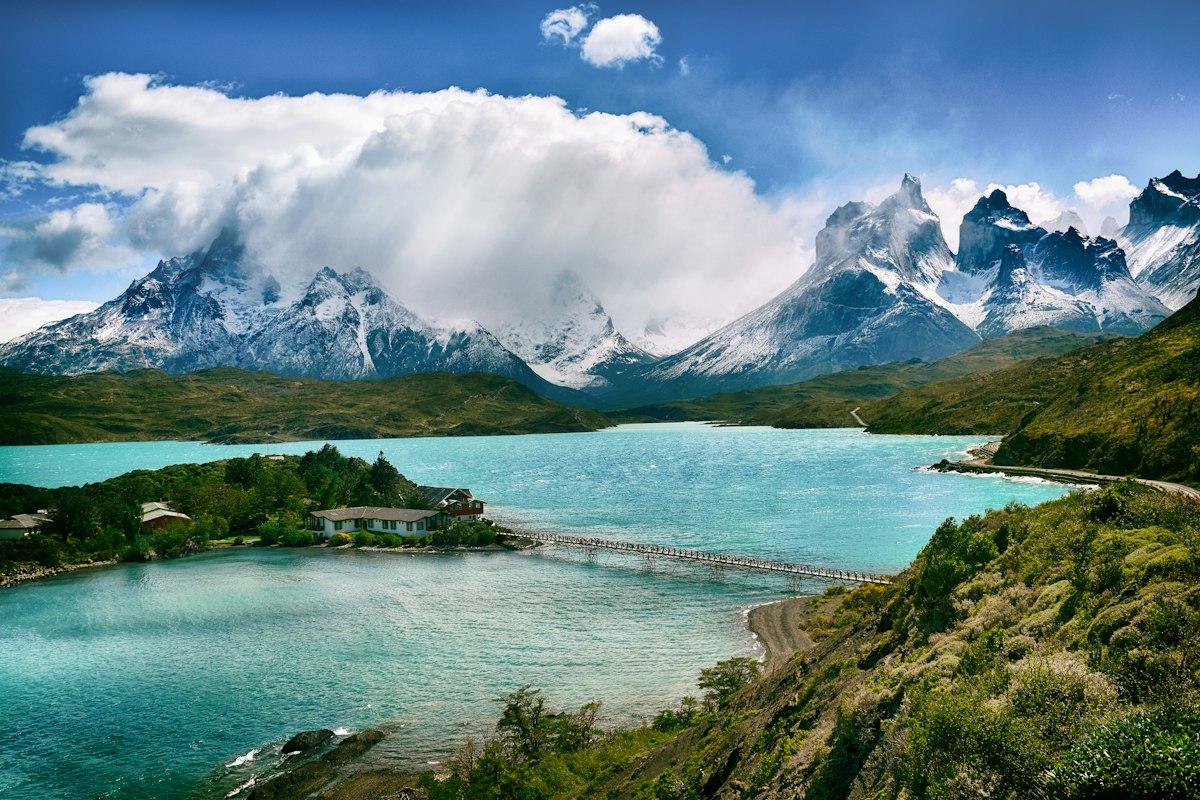
Morning. Take a full-day tour or drive into Torres del Paine National Park (about 2 hours from Puerto Natales). Stop at Laguna Amarga for the first view of the towers and at the Salto Grande waterfall.
Afternoon. Walk the easy trail to the Mirador Cuernos (about 1h30 return) for the black-tipped Cuernos del Paine, then see icebergs at Lago Grey.
Evening. Stay inside the park or return to Puerto Natales. In December, daylight lasts until about 22:00.
Wind in Patagonia can exceed 100 km/h; hold on to car doors and secure your hat.
Day 9: Hike to the Base of the Towers
Morning. Start before 7:00 from the Welcome Centre for the Base Torres hike: about 20 km return and 8-10 hours, with 900 metres of climbing, the last hour over steep boulders.
Afternoon. Reach the Mirador Las Torres, where the three granite towers rise above a green glacial lake. Rest at Refugio Chileno (food and drinks, cash and cards) on the way down.
Evening. Return to your lodge or Puerto Natales; a hot meal and a Patagonian calafate sour are earned.
Check the latest rules on the park website: some trails and refuges now need advance booking, especially from November to March.
Day 10: Glaciers, then home
Morning. Take a boat trip from Puerto Natales up the Última Esperanza Sound to the Balmaceda and Serrano glaciers (half day, about CLP$90,000-120,000), or rest if your legs ache.
Afternoon. Bus back to Punta Arenas and fly to Santiago.
Evening. If you stay a night in Santiago, eat a final pastel de choclo in Providencia.
Leave a free half-day before your long-haul flight in case a Patagonian flight is cancelled by wind.
Only have 7 days?
With 7 days, choose one region: 3 days in Santiago and Valparaíso plus 4 in either the Atacama or Patagonia. Doing both in a week means more time in airports than outside.
Got extra days?
Extra days fit the W Trek (4-5 days) in Torres del Paine, Chiloé island with its wooden churches, the lakes and volcanoes around Puerto Varas, or Easter Island (5 hours by air from Santiago).
Where to stay in Chile
| Budget | Area | Why | Typical double/night |
|---|---|---|---|
| Budget | Santiago Barrio Brasil / San Pedro hostels | Cheap dorms and doubles near the metro and the bus terminals. | CLP$30,000-50,000 |
| Mid-range | Santiago Providencia / Lastarria | Safe, walkable, close to the metro and restaurants. | CLP$70,000-120,000 |
| Mid-range | Puerto Natales | The gateway town for Torres del Paine, with tour pick-ups and supermarkets. | CLP$80,000-140,000 |
| Comfort | Atacama and Patagonia lodges | All-inclusive lodges with guided excursions, some inside the national park. | CLP$400,000-1,200,000 |
Getting around
Between regions, fly: LATAM, Sky and JetSMART link Santiago with Calama (2h), Punta Arenas (3h20) and, in summer, Puerto Natales; low-cost fares charge extra for checked bags. Long-distance buses are comfortable and punctual. In the Atacama and Torres del Paine, tours or a rental car (CLP$40,000-80,000 a day) are the practical options.
What to eat in Chile
Try empanadas de pino (beef, onion, olive and egg) for CLP$2,500-3,500, pastel de choclo (corn pie), completos (hot dogs piled with avocado) and caldillo de congrio, the conger eel soup Neruda wrote a poem about. In Patagonia, eat cordero al palo, spit-roasted lamb. Many restaurants offer a lunchtime menú del día for CLP$7,000-12,000. Drink pisco sour and carmenère.
Best time to visit
October to April for Patagonia, when days are long; December to February is peak season, with crowds and strong winds. The Atacama is good all year, though nights freeze from June to August and the 'Bolivian winter' rains in January-February sometimes close roads. Santiago is hot and dry in summer (30°C+).
Month-by-month weather for Chile →
What a day costs
| Budget | Mid-range | Comfort | |
|---|---|---|---|
| Bed (per person, sharing a double) | CLP$20,000 | CLP$50,000 | CLP$140,000 |
| Food & drink | CLP$20,000 | CLP$40,000 | CLP$80,000 |
| Sights & tickets | CLP$15,000 | CLP$40,000 | CLP$80,000 |
| Local transport | CLP$5,000 | CLP$15,000 | CLP$40,000 |
| Total per person, per day | about CLP$60,000 | about CLP$145,000 | about CLP$340,000 |
Approximate 2026 prices in Chilean pesos (about CLP$950 = US$1), not including domestic flights; foreign tourists who pay hotels in US dollars with a foreign card and passport are usually exempt from the 19% VAT.
Before you go
Common questions
Can I see the Atacama and Patagonia in one trip?
Yes, with at least 10 days and flights. Calama to Punta Arenas almost always connects via Santiago, so plan a full travel day. Allow three nights in each region for a spare weather day, especially in Patagonia, where wind closes trails and delays flights.
Do I need to book Torres del Paine in advance?
Yes. Park entry must be bought online before you arrive, and from November to March the campsites and refuges on the W Trek and O Circuit sell out months ahead. Day tours from Puerto Natales also fill up in January, so reserve a few days ahead.
Is Chile expensive?
It is one of the pricier countries in South America, closer to southern Europe than to Peru. Santiago is moderate, but Atacama tours and Patagonia are expensive. Save with the lunchtime menú del día, supermarket picnics, buses instead of transfers and domestic flights booked early.
How bad is the altitude in San Pedro de Atacama?
San Pedro itself is at 2,400 metres, which most people handle well, but tours reach 4,000-4,300 metres at the lagoons and El Tatio. Do the low Valle de la Luna first, drink plenty of water and save El Tatio for your third day. With a severe headache or breathlessness, go down.
How this guide was made
Compiled by TonyPlan from official tourism, transport and attraction sources and on-the-ground travel knowledge. Prices are approximate for 2026 and change with season; anything we could not confirm is marked as approximate.
Some links on this page are partner links. If you book through them TonyPlan may earn a commission; the price you pay is the same. How we make money.