Home › Cambodia › How many days
How many days in Cambodia? 8 days, Angkor to the pepper coast
By Tony Panopoulos · travel-agency planner in Greece · Updated
Most trips to Cambodia are built around Angkor, and rightly: the temple complex covers some 400 square kilometres and deserves three days. But give the country eight days and you also see the other half of the story. Battambang shows rural life and colonial shophouses, Phnom Penh confronts the Khmer Rouge years at Tuol Sleng and Choeung Ek, and the river town of Kampot ends the trip with pepper farms and a slow pace by the sea.
Short answer
Five days covers Angkor (three days) and Phnom Penh (two), linked by a 6-hour bus or a 45-minute flight. Eight days adds Battambang between them and the south coast at Kampot and Kep.
The 8-day plan, day by day
Day 1: Siem Reap: the Angkor Wat sunrise and Angkor Thom
Morning. Buy the Angkor Pass at the official ticket centre or online (about US$37 for one day, US$62 for three days valid within ten). Be at Angkor Wat by 5:15 for sunrise over the north pond, then walk the bas-relief galleries before the tour groups return from breakfast.
Afternoon. Ride on to Angkor Thom, the walled royal city, entering by the South Gate with its causeway of giants. Inside, the Bayon has 216 smiling stone faces, and the Terrace of the Elephants runs for 300 metres. Rest at your hotel through the heat from 12:00 to 15:00.
Evening. Watch sunset from Phnom Bakheng (visitor numbers are limited, so arrive by 16:30), then eat on Pub Street or in the quieter lanes near the Old Market (Psar Chas), where a plate of fried rice or amok costs US$3-6.
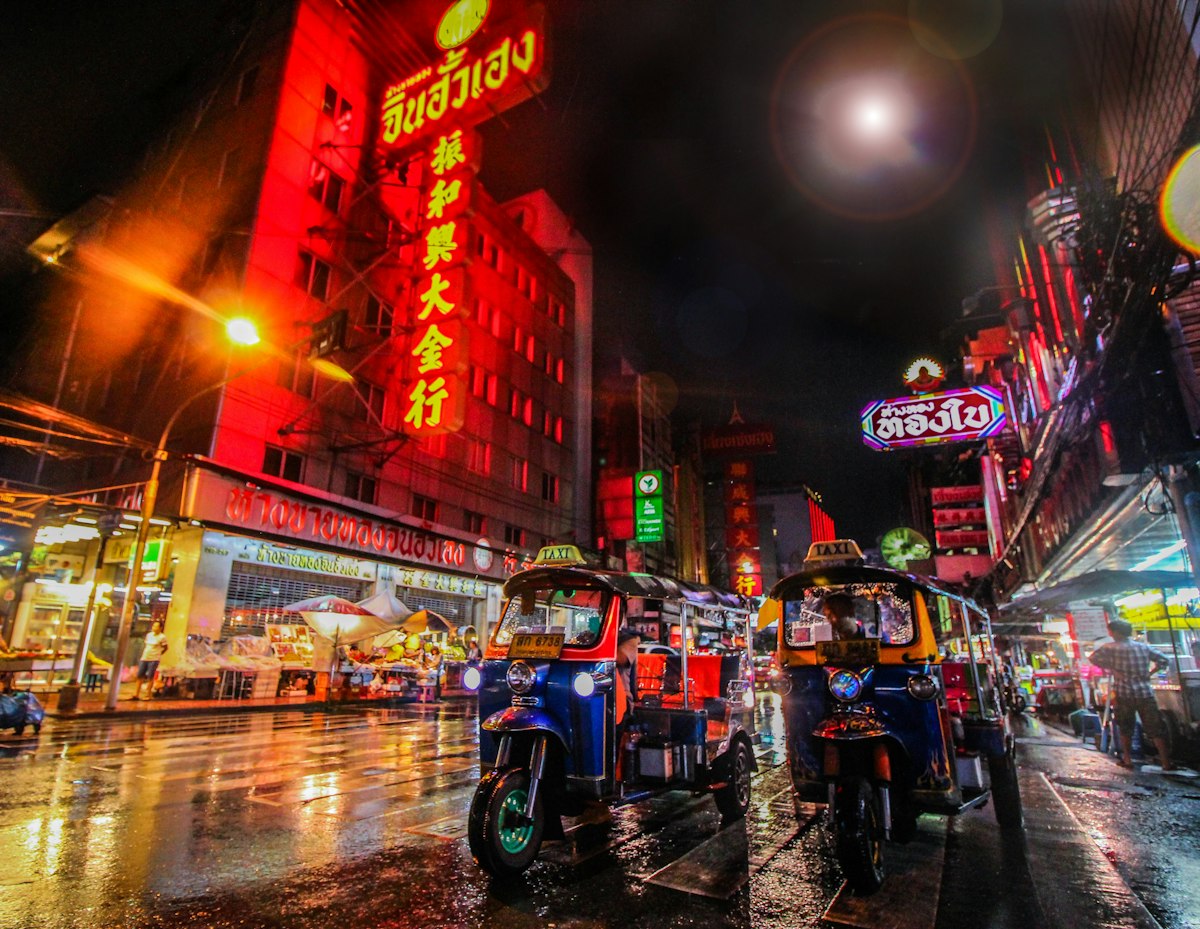
Hire a tuk-tuk for the day at about US$18-25 for the standard 'small circuit', or a car with a driver for about US$35-45; agree the route first.
Day 2: Angkor: Ta Prohm, Banteay Srei and the outer temples
Morning. Start at Ta Prohm at opening, the temple left half-swallowed by silk-cotton and strangler fig trees. Then drive about 40 minutes north to Banteay Srei, a small 10th-century temple in pink sandstone with the finest carving at Angkor.
Afternoon. On the way back, stop at Pre Rup and the long reservoir of Srah Srang, or at the Grand Circuit temples of Preah Khan and Neak Pean, built on an island in a dry pond.
Evening. See the Phare, the Cambodian Circus, where young performers from a social arts school in Battambang mix acrobatics with theatre (about US$20-40 per seat).
Dress for temples: shoulders and knees covered, or guards will stop you at the steep upper levels of Angkor Wat.
Day 3: Siem Reap: Beng Mealea or the Tonle Sap
Morning. Drive about 1.5 hours east to Beng Mealea (separate ticket, about US$5-10), a vast temple in collapsed blocks and jungle, explored on wooden walkways.
Afternoon. Return via the Roluos Group, the earliest Angkorian temples, or take a boat on the Tonle Sap, Southeast Asia's largest lake, to see the stilt village of Kampong Phluk (about US$20-30 per person).
Evening. Take a Khmer cookery class (about US$25-35).
Book Tonle Sap boats through your hotel; some at Chong Kneas push hard for donations.
Day 4: Battambang: the bamboo train and Phnom Sampeau
Morning. Take a minibus or bus from Siem Reap to Battambang, about 3-3.5 hours (US$8-12). In the wet season, from about August to December, a slow boat makes the trip across the lake and along the Sangker River in 6-8 hours.
Afternoon. Ride the bamboo train (norry), a platform on wheels that runs along a short length of track, now a tourist ride of about US$5-10. Then walk the French-era shophouses along the river and around the Psar Nat market, built in the 1930s.
Evening. Drive 25 minutes to Phnom Sampeau for the memorial in the Killing Caves and, at about 17:30, the stream of millions of bats leaving a cave in the cliff at dusk.
A tuk-tuk for the afternoon circuit (bamboo train, Phnom Sampeau and the Banan temple) costs about US$15-20.
Day 5: Phnom Penh: the Royal Palace and the riverfront
Morning. Take an early bus to Phnom Penh (about 5-6 hours, US$10-15).
Afternoon. Visit the Royal Palace (about US$10; closes at lunch and when the King hosts ceremonies) and its Silver Pagoda, whose floor is laid with 5,000 silver tiles. Next door, the National Museum (about US$10) holds the finest Angkorian sculpture outside the temples.
Evening. Walk Sisowath Quay along the Tonle Sap river at sunset, then take a one-hour boat cruise (about US$5-15) to where the Tonle Sap joins the Mekong.
Cover shoulders and knees for the Royal Palace; you can buy a T-shirt or sarong at the gate.
Day 6: Phnom Penh: Tuol Sleng, Choeung Ek and the markets
Morning. Visit the Tuol Sleng Genocide Museum (S-21), a school turned into a prison where about 15,000-20,000 people were held under the Khmer Rouge (about US$5, audio guide extra). Then ride 30-40 minutes south to the Choeung Ek memorial, the 'killing fields', with an audio guide in the ticket (about US$6).
Afternoon. Recover at the Russian Market (Psar Tuol Tom Poung) for silk, crafts and cheap lunch, or at the art deco Central Market (Psar Thmei).
Evening. Eat at a restaurant that trains young people from poor backgrounds, such as Romdeng, then a drink on one of the rooftop bars along the river.
Tuol Sleng and Choeung Ek are hard visits; do them on the same morning, and keep the afternoon light.
Day 7: Kampot: the river and the pepper farms
Morning. Take a bus or minibus to Kampot, about 3-3.5 hours (US$8-12), a sleepy riverside town of faded shophouses below the Bokor mountain.
Afternoon. Tour a Kampot pepper farm such as La Plantation (free tours with tastings), where the region's protected-origin black, red and white pepper grows on vines.
Evening. Take a sunset boat on the Preaek Tuek Chhu river (about US$5-10) to see the fireflies in the mangroves, then eat crab or fish amok in a riverfront restaurant.
Rent a scooter for about US$5-8 a day for the farms and Kep, or hire a tuk-tuk for about US$20-25.
Day 8: Kep and Bokor, then back to Phnom Penh
Morning. Ride 25 km to Kep for the crab market, where women haul crab traps out of the sea and cook them with fresh Kampot pepper (about US$5-10 a plate).
Afternoon. Either take a boat to Koh Tonsay (Rabbit Island, about 20-30 minutes) for a swim, or drive up Bokor National Park to the abandoned 1920s French hill station and its old church in the cloud.
Evening. Return to Phnom Penh (about 3.5-4 hours) for your flight. The new Techo International Airport south of the city replaced the old airport in 2025; leave extra time for the drive.
Allow at least 6 hours between the bus from Kep and an international flight.
Only have 5 days?
With 5 days, fly into Siem Reap, spend three days at Angkor (Days 1-3) and two in Phnom Penh (Days 5-6), linked by bus or a short flight. You lose Battambang and the coast.
Got extra days?
Extra days fit the islands of Koh Rong and Koh Rong Samloem, about 45 minutes by fast boat from Sihanoukville. Or go to Kratie for the Mekong's Irrawaddy dolphins.
Where to stay in Cambodia
| Budget | Area | Why | Typical double/night |
|---|---|---|---|
| Budget | Siem Reap Old Market, Battambang riverfront, Kampot old town | Guesthouses with pools from about US$15-30, close to food and transport. | US$15-35 |
| Mid-range | Siem Reap Wat Bo / riverside | Boutique villas with pools, 15 minutes by tuk-tuk from Angkor. | US$50-110 |
| Mid-range | Phnom Penh BKK1 / riverside | Leafy, safe, walkable streets with cafés, close to the palace. | US$50-100 |
| Comfort | Siem Reap resort hotels / Kep hillside villas | Colonial-style resorts near Angkor, or sea-view villas above Kep. | US$150-400 |
Getting around
Travel by bus or minibus (Giant Ibis, Mekong Express and others; tickets on 12Go or at hotels). Siem Reap-Battambang is about 3-3.5 hours, Battambang-Phnom Penh 5-6 hours, Phnom Penh-Kampot 3-3.5 hours. Domestic flights link Siem Reap and Phnom Penh in about 45 minutes. In towns, use PassApp or Grab for tuk-tuks (US$1-4 a ride). Siem Reap's new airport is about 50 km from the town, roughly 1 hour by shuttle bus or taxi.
What to eat in Cambodia
Khmer food is milder than Thai and built on rice, fish and fresh herbs. Try fish amok, a coconut curry steamed in banana leaves, lok lak (stir-fried beef with a lime and pepper dip), nom banh chok (rice noodles with green fish curry) for breakfast from street stalls, and bai sach chrouk, pork and rice, also for breakfast. A street meal costs US$2-4, a restaurant meal US$6-12. A local beer is about US$1-3.
Best time to visit
November to February is the cool dry season, with highs of 30-32°C and the best temple weather; it is also the busiest and most expensive. March to May is very hot, often 35-38°C. The rainy season, about June to October, brings afternoon downpours, green rice fields, fewer visitors and lower prices, and the Tonle Sap is at its highest in September-October.
Month-by-month weather for Cambodia →
What a day costs
| Budget | Mid-range | Comfort | |
|---|---|---|---|
| Bed (per person, sharing a double) | US$12 | US$35 | US$100 |
| Food & drink | US$12 | US$25 | US$50 |
| Sights & tickets | US$10 | US$20 | US$35 |
| Local transport | US$8 | US$15 | US$40 |
| Total per person, per day | about US$42 | about US$95 | about US$225 |
Approximate 2026 prices in US dollars, which are used everywhere alongside the Cambodian riel (small change is often given in riel); the Angkor pass is the single largest ticket cost.
Before you go
Common questions
How many days do I need for Angkor?
Three is ideal. One day covers Angkor Wat, Angkor Thom and Ta Prohm at a run, but the heat and the distances wear you out. With the three-day pass (valid on any three days within ten), you can add Banteay Srei and the Grand Circuit, return to Angkor Wat at a quieter hour, and rest at midday. Temple-lovers stay longer with the seven-day pass.
Do I need a visa for Cambodia?
Most visitors need one. You can apply in advance for an e-visa through the official Cambodian government site, or in many cases get a visa on arrival at the main airports and land borders, about US$30 plus a small fee. Your passport must be valid for at least six months. Avoid unofficial e-visa websites, which charge more.
Is Cambodia safe for tourists?
Generally, yes. The main risks are traffic, bag snatching from moving motorbikes in Phnom Penh, and scams around Tonle Sap boats and fake orphanages; do not visit orphanages. Landmines remain in remote countryside in the north-west, so stay on marked paths outside towns. Drink bottled or filtered water.
Should I pay in dollars or riel?
Both. US dollars are used for hotels, tours, tickets and restaurants, and ATMs dispense dollars. Riel (about 4,000 to the dollar) is used for change under US$1 and at markets. Bring clean, untorn dollar notes, as damaged ones are often refused. Cards work in larger hotels and restaurants, but cash rules elsewhere.
How this guide was made
Compiled by TonyPlan from official tourism, transport and attraction sources and on-the-ground travel knowledge. Prices are approximate for 2026 and change with season; anything we could not confirm is marked as approximate.
Some links on this page are partner links. If you book through them TonyPlan may earn a commission; the price you pay is the same. How we make money.