Home › Belgium › How many days
How many days in Belgium? 4 days: Brussels, Bruges, Ghent and Antwerp by train
By Tony Panopoulos · travel-agency planner in Greece · Updated
Belgium is small and has excellent trains: Bruges, Ghent and Antwerp are all within an hour of Brussels. Four days covers them with one base, or two: a day and a half in Brussels, a full day in Bruges, and a day split between Ghent and Antwerp. Each city has a medieval or Golden Age centre, Flemish masterpieces (Van Eyck, Memling, Rubens) and, everywhere, beer, chocolate, waffles and fries.
Short answer
Three days covers Brussels, Bruges and Ghent. The fourth adds Antwerp, or an overnight in Bruges to see it without day-trippers.
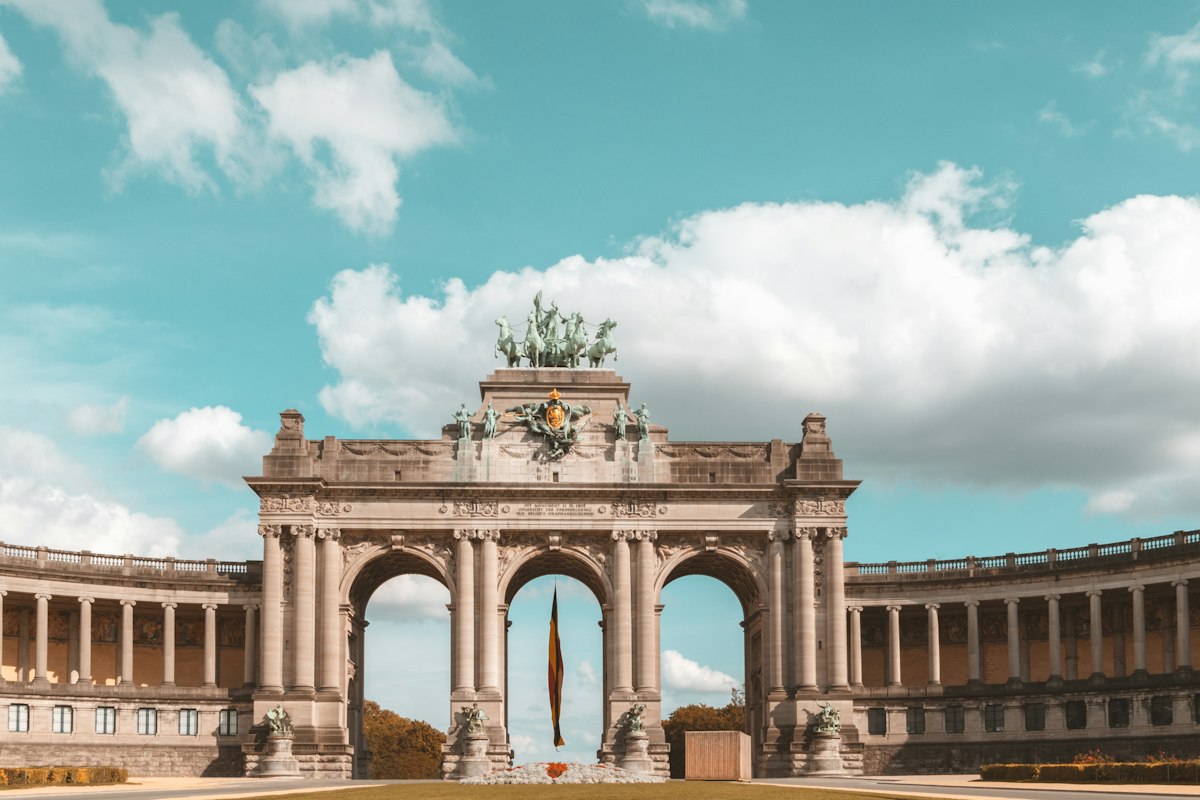
The 4-day plan, day by day
Day 1: Brussels: Grand-Place and the old centre
Morning. Start at the Grand-Place, the 17th-century guild-house square with the Gothic Town Hall (UNESCO). Walk through the glass-roofed Galeries Royales Saint-Hubert (1847), then see the tiny Manneken Pis statue, often in costume.
Afternoon. Visit the Magritte Museum (part of the Royal Museums of Fine Arts, about €10-15) on the Mont des Arts, then the antique and chocolate shops of the Sablon (Pierre Marcolini, Wittamer) and follow the Comic Book Route of Tintin and Lucky Luke murals.
Evening. Have moules-frites in the old centre (avoid the touts on the Rue des Bouchers) and a beer at Delirium Café, with more than 2,000 beers, or the art nouveau À la Mort Subite.
The Grand-Place is most beautiful at night when lit up, and every other August (even years) it is covered by a giant flower carpet.
Day 2: Bruges
Morning. Take the train to Bruges (about 1 hour). Climb the Belfry on the Markt (366 steps, about €15-18) for the view over the red roofs, then the Burg square with the Basilica of the Holy Blood.
Afternoon. Take a 30-minute canal boat (about €15), visit the Groeninge Museum for Jan van Eyck and Hans Memling, and walk to the quiet Begijnhof (béguinage) and the Minnewater lake.
Evening. Bruges empties after the day-trippers leave around 17:00: walk the lit canals, then a beer at De Halve Maan brewery or a small bar such as 't Brugs Beertje, before the train back or a night in town.
The Rozenhoedkaai is the classic photo spot of Bruges; go early in the morning for the reflections without crowds.
Day 3: Ghent
Morning. Take the train to Ghent (about 30-35 minutes from Brussels). In St Bavo's Cathedral, see the Ghent Altarpiece ('The Adoration of the Mystic Lamb') by the Van Eyck brothers, completed in 1432, with an augmented-reality visitor centre (about €16).
Afternoon. Visit Gravensteen, a 12th-century castle of the Counts of Flanders in the middle of the city (about €13), then walk the Graslei and Korenlei quays with guild houses reflected in the river.
Evening. Ghent is a student city with lively bars: dinner by the canals and a drink in the Patershol quarter. Return to Brussels, or stay overnight.
Ghent is less crowded than Bruges and just as beautiful; many travellers prefer it.
Day 4: Antwerp (and the Atomium)
Morning. Take the train to Antwerp (about 40-50 minutes) and arrive at Antwerp Central Station (1905), often called one of the world's most beautiful stations. Walk to the Cathedral of Our Lady, with four Rubens paintings.
Afternoon. Visit the Grote Markt, the Plantin-Moretus Museum (a UNESCO-listed Renaissance printing house) and the MAS museum, whose rooftop is free with a view of the port. Antwerp is also a diamond and fashion city.
Evening. Back in Brussels, visit the Atomium (about €16-18), the giant model of an iron crystal built for the 1958 World's Fair, lit at night.
Check whether the Rubens House has reopened after its renovation before planning around it.
Only have 3 days?
With 3 days, do Days 1, 2 and 3. You lose Antwerp and the Atomium.
Got extra days?
With more time, visit Leuven (20 minutes from Brussels), a university town with a famous town hall, the battlefield of Waterloo, or the World War I memorials of Ypres and the Menin Gate.
Where to stay in Belgium
| Budget | Area | Why | Typical double/night |
|---|---|---|---|
| Budget | Brussels: near Gare Centrale / Sainte-Catherine | Central and close to trains for day trips. | €100-160 |
| Mid-range | Brussels: around the Grand-Place | Walk to the old centre, the Sablon and Gare Centrale. | €150-250 |
| Mid-range | Bruges or Ghent old town | Stay one night to see the city at its quietest. | €140-240 |
| Comfort | Bruges canal-side hotels | Historic houses on the canals. | €250-500 |
Getting around
Use the trains: frequent, fast and cheap, with lower fares at weekends. Buy tickets in the SNCB/NMBS app. Brussels has a metro, trams and buses (one ticket covers all). Each of the old towns is walkable. From Brussels Airport, trains reach the city centre in about 20 minutes; a station supplement applies.
What to eat in Belgium
Belgium invented fries (frites), served in a paper cone with mayonnaise; Maison Antoine in Brussels is famous. Eat moules-frites (mussels and fries, best from September to April), carbonade flamande (beef stewed in beer), stoemp (mashed potatoes with vegetables) and waffles: the rectangular, light Brussels waffle or the sweet, chewy Liège waffle. Belgium has more than 1,000 beers, including Trappist beers brewed by monks; try a Kriek (cherry lambic). Buy chocolate from a chocolatier rather than tourist shops.
Best time to visit
May to September for long days and terraces, with highs of 19-23°C, though rain is possible any day. December brings Christmas markets in Brussels and Bruges. Winter is grey and cold (about 5-7°C) but quiet.
Month-by-month weather for Belgium →
What a day costs
| Budget | Mid-range | Comfort | |
|---|---|---|---|
| Bed (per person, sharing a double) | €55 | €100 | €220 |
| Food & drink | €30 | €55 | €110 |
| Sights & tickets | €15 | €35 | €60 |
| Trains & local transport | €10 | €20 | €40 |
| Total per person, per day | about €110 | about €210 | about €430 |
Approximate 2026 prices. Brussels, Bruges and Ghent charge a city tax per room or per person per night, depending on the city.
Before you go
Common questions
Should I base myself in Brussels or Bruges?
Brussels for train connections to all other cities; Bruges or Ghent for one or two atmospheric nights. Many travellers do both.
Bruges or Ghent?
Bruges is the more famous postcard town and very busy; Ghent is larger, livelier and less touristy. With time, see both: they are 25 minutes apart by train.
Is Brussels safe?
The centre is generally safe. Watch for pickpockets around the Grand-Place, Gare du Midi and on the metro, and be careful around some stations at night.
What is the best Belgian beer to try?
A Trappist such as Westmalle, Chimay or Rochefort, a Duvel, and a lambic or gueuze from the Brussels area. Belgian beers are often strong (8-10%).
Do I need a car?
No. Belgium's trains connect all the cities in this plan quickly and cheaply.
Can I visit Bruges and Ghent on the same day?
Yes: they are 25 minutes apart by train, so you can see Ghent in the morning and Bruges in the afternoon and evening. It is a full day, though; two separate days, or one night in either city, let you enjoy them properly.
How this guide was made
Written by hand, without AI, from experience planning Benelux trips. Prices are approximate for 2026; confirm on the official Visit Bruges, Visit Gent, Visit Brussels, Atomium and SNCB websites before booking.
Some links on this page are partner links. If you book through them TonyPlan may earn a commission; the price you pay is the same. How we make money.