Home › Medellin › Where to stay
Where to stay in Medellin
Medellin is nestled in a deep valley, with the city core split by the Medellin River and the metro system acting as its spine. Most visitors gravitate toward the south-central hills. Because topography dictates accessibility, choosing where you stay determines whether you spend your time walking to leafy cafes or relying heavily on Ubers to navigate the steep, congested slopes between neighborhoods. Plan to stay where you intend to spend your days.
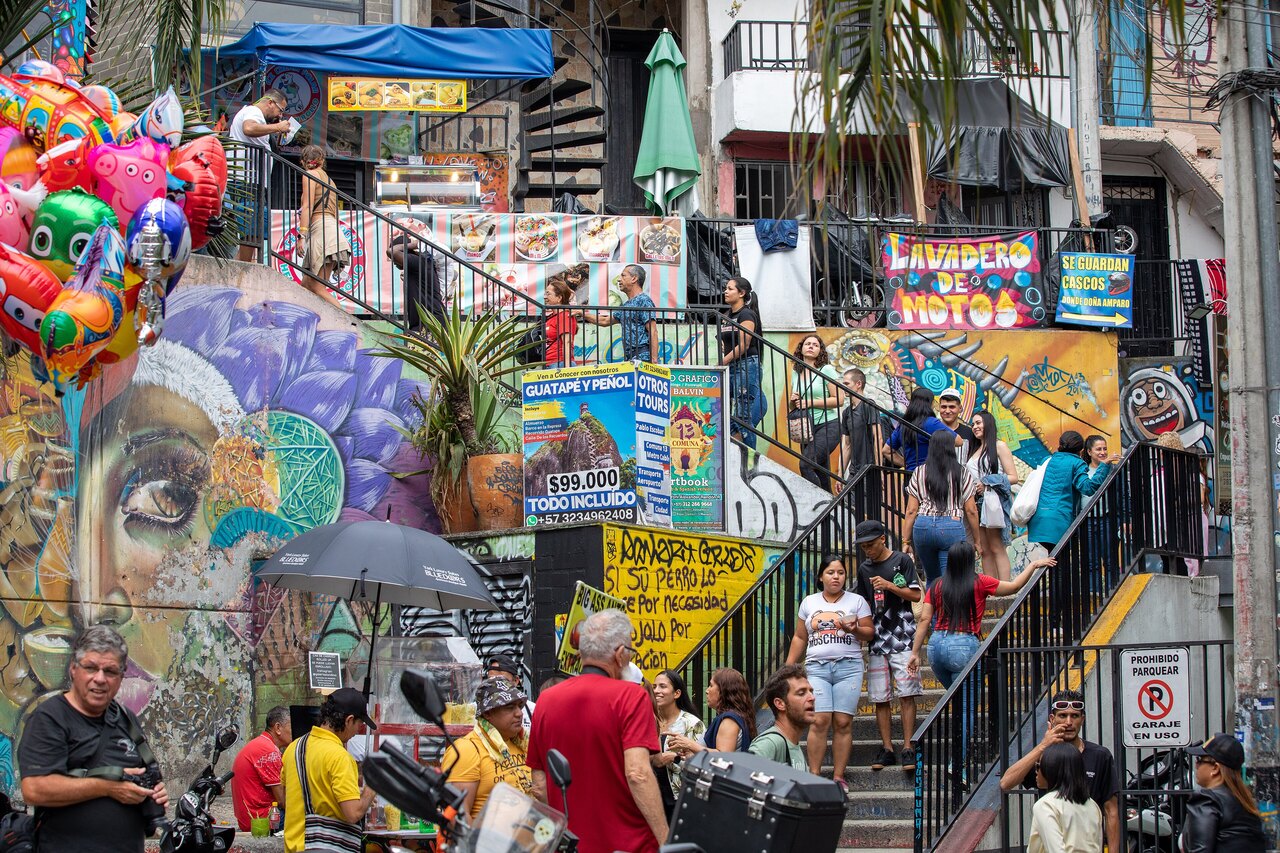
El Poblado
This is the city's tourism epicenter, characterized by dense vegetation and steep, winding streets. It feels polished, vibrant, and westernized. Everything is walkable within the lower sections, specifically around Provenza and Vía Primavera. You are steps away from high-end coffee shops and late-night bars, though the hills make for a serious workout on foot. It remains the most transit-connected base for foreigners.
Laureles
Laureles feels like a neighborhood rather than a transit hub. The grid layout makes it flat and highly walkable. You are constantly passing parks and local bakeries. The intersection of La 70 offers intense nightlife, while the residential pockets are quiet. It is centrally located enough to reach the stadium or the metro line within a fifteen-minute stroll from almost anywhere.
Envigado
Technically a separate municipality, Envigado acts as a seamless extension of the city. It features a historic central plaza that retains a traditional village atmosphere. It is exceptionally walkable, family-oriented, and less aggressive with street sellers. You get more space for your money here, and the access to local markets and authentic Colombian breakfast spots makes it feel like home, not a hotel.
Manila
Tucked below the main transit artery, Manila feels like a transitional zone. It is flatter than the rest of the hills, making it one of the few spots where you won't break a sweat walking to the Poblado metro station. It houses a mix of repurposed industrial buildings, independent hostels, and small design shops, offering a grounded experience just minutes from the primary action.
Buenos Aires
This neighborhood sits higher on the eastern slopes and offers incredible city views. It is not polished or tourist-focused, providing a gritty, authentic look at daily life. The Ayacucho tram line connects you directly to the metro system, making the rest of the city accessible despite the distance. It is quiet at night but lacks the immediate proximity to the standard western-style amenities.
Rent a car in Medellin
Compare rental cars from local and international companies, with free cancellation on most bookings.
Compare car rentals in MedellinOne thing to think about
Avoid booking accommodation directly on the main arterial roads like Avenida El Poblado or near the massive highway intersections. The non-stop traffic noise, heavy bus fumes, and continuous honking can make sleep impossible, even in high-end hotels. Distance matters here; a few blocks uphill from the metro station can turn a ten-minute walk into a grueling thirty-minute climb.
Once you have a bed
The things that sell out first in Medellin are the small-group tours and the skip-the-line tickets.
Top tours & activities in Medellin
Common questions
Is the metro system enough to get around the entire city?
The metro is the pride of Medellin and covers the north-south axis perfectly. However, it does not reach the higher slopes or the furthest pockets of the valley. You will likely use the metro for long distances and supplement it with the integrated cable cars, buses, or ride-sharing apps to cover the final mile to your doorstep.
Do I need to speak Spanish to navigate the neighborhoods comfortably?
In areas like El Poblado, English is widely spoken in service environments. In Laureles, Envigado, or Buenos Aires, a basic grasp of Spanish is necessary for menus, transit, and interacting with shopkeepers. Carrying a translation app helps, but learning basic polite phrases is considered standard courtesy and significantly improves the quality of your interactions with locals.
What is the best way to handle the hilly terrain on foot?
Accept that walking here is a workout. Stick to the grid-based neighborhoods like Laureles or the lower portions of Manila if you have mobility concerns. In steeper areas, use ride-sharing apps for uphill transit and walk downhill to save your knees and breath. Always check a topographical map before booking a place that looks close on paper.
Hotel links go to Booking.com. If you book through them TonyPlan earns a small commission — the price you pay is exactly the same.