Where to stay in Laos
Laos is structured around the Mekong River corridor, connecting rugged northern mountains to lush southern lowlands. Infrastructure is sparse, making location choice critical for minimizing long, grueling bus rides. Focus on hubs like Luang Prabang for culture, Vientiane for administrative ease, and Vang Vieng for outdoor pursuits. Choosing the right region determines whether you spend your days trekking, temple hopping, or navigating the logistical hurdles of Southeast Asian travel routes.
Luang Prabang Town Centre
The peninsula is a dense grid of preserved French colonial villas and golden-roofed wats. You can walk the entire historic core within twenty minutes, including the bustling Sisavangvong Road and the stairs leading up Mount Phousi. The atmosphere is quiet, deliberate, and dominated by boutique guesthouses rather than high-rise chains, offering a peaceful base for exploring local monasteries.
Vientiane City Centre
The capital feels like a slow-paced provincial town. The area near Setthathirath Road allows you to walk to the riverside night market and the Patuxai Victory Monument. While urban, it remains low-density, featuring wide boulevards and leafy garden cafes. It serves as a practical, walkable base for handling paperwork or catching international connections before heading into the wilder north.
Vang Vieng Riverside
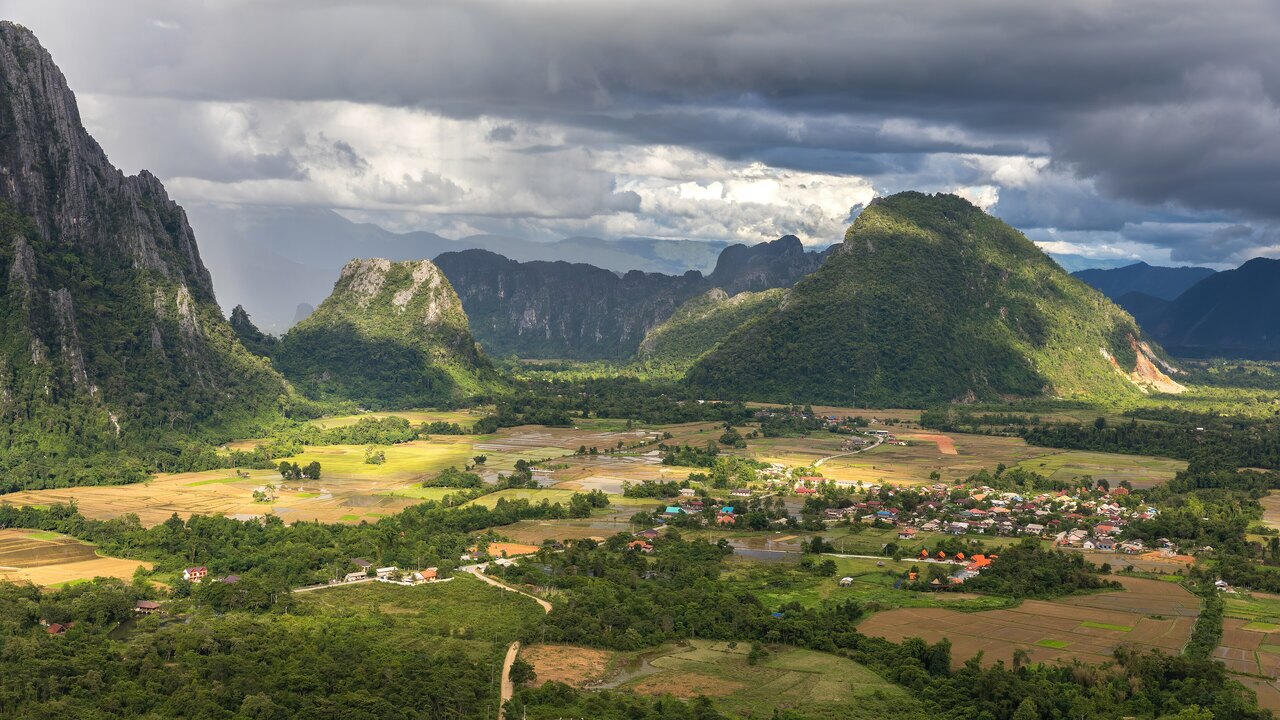
Concentrated along the Nam Song river, the area offers a compact strip of hostels and tour operators. Everything is walkable, from the bridge crossings to the local trekking trailheads. It trades colonial elegance for rustic, functional convenience, placing you minutes away from the main river landing docks and the primary dirt roads leading toward the Blue Lagoons.
Rent a car in Laos
Compare rental cars from local and international companies, with free cancellation on most bookings.
Compare car rentals in LaosOne thing to think about
Avoid booking accommodation near the primary bus stations in major hubs. These areas are often miles from the actual sightseeing districts, lack authentic dining options, and force a reliance on overpriced tuk-tuks or erratic shared transport just to reach the center.
Once you have a bed
The things that sell out first in Laos are the small-group tours and the skip-the-line tickets.
Top tours & activities in Laos
Common questions
Do I really need to fly between major cities?
Yes, if your time is limited. The road network in Laos is notoriously slow, characterized by winding mountain passes and frequent construction. A journey by bus that looks like 150 kilometers on a map can easily take eight to ten hours. Domestic flights save days of travel, keeping your itinerary functional and far less exhausting.
What is the best way to get around inside the towns?
Walking is the primary method in Luang Prabang and Vang Vieng. For Vientiane or longer distances, the 'Loca' app is the most reliable way to book taxis without haggling. Tuk-tuks are ubiquitous, but always agree on a price before hopping in, as meters are almost never used by private drivers.
Are ATMs widely available in these areas?
ATMs are plentiful in Luang Prabang, Vientiane, and Vang Vieng, though they often have low withdrawal limits and high transaction fees. Always carry a secondary card and some emergency USD or Thai Baht. In more remote villages beyond these three zones, cash is mandatory as digital payment infrastructure is virtually non-existent.
Hotel links go to Booking.com. If you book through them TonyPlan earns a small commission — the price you pay is exactly the same.