Where to stay in Dijon
Dijon is exceptionally compact, centered on a pedestrianized historic core framed by the Boulevards that replaced its ancient walls. To the north lies the grand 19th-century Haussmannian sector around Place Darcy; to the east, the quieter antique district; and to the south, the rail hub. Choosing where to stay comes down to balancing historic charm against luggage logistics, as cobblestones and restricted driving zones limit car access inside the central ring.
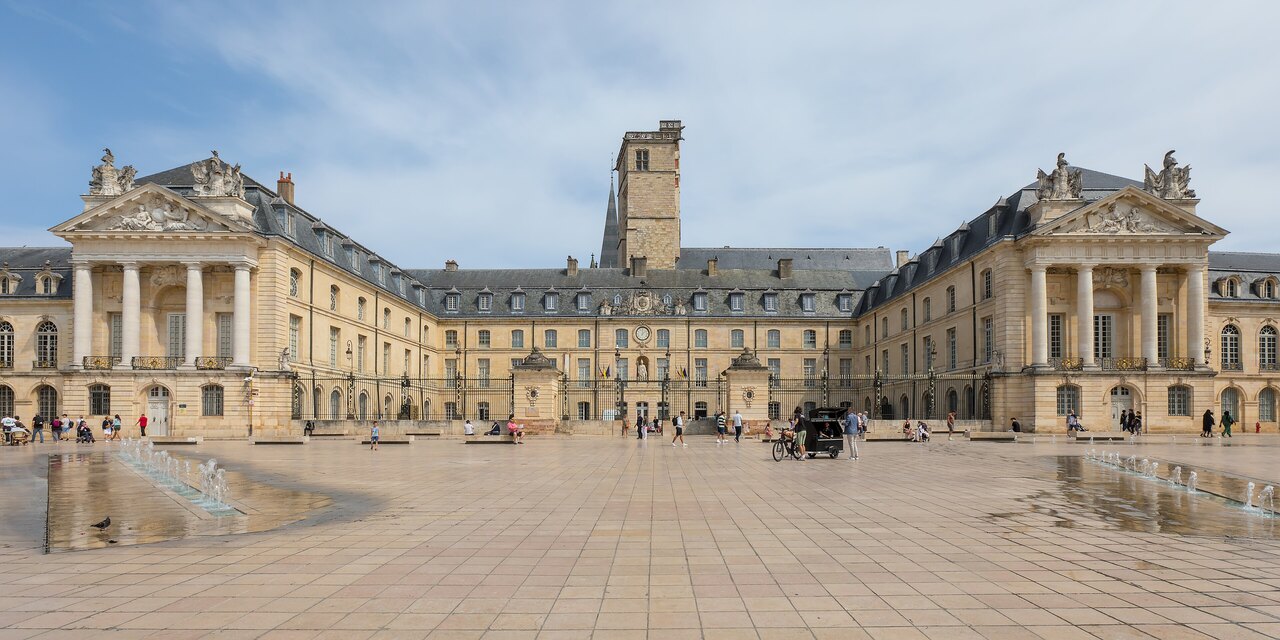
Historic Centre (Centre-Ville)
Stepping out here puts you among timber-framed medieval houses and grand stone mansions. You can walk to the Palais des Ducs de Bourgogne, the Musée des Beaux-Arts, and Rue Verrerie in under five minutes. It is lively, completely pedestrianized, and packed with wine bars, but early morning delivery trucks and street sweepers bounce noise off the narrow stone streets.
Place Darcy & Gare
Positioned between the main railway station and the grand entrance to the old town, this area offers straightforward convenience. It feels grander and more 19th-century than the medieval core. You can stroll through the Jardin Darcy or walk down Rue de la Liberté into the center within ten minutes, all while keeping smooth pavements for your suitcase.
Les Halles
Anchored by the covered iron market built in the 1870s, this pocket buzzes on market days (Tuesday, Thursday, Friday, Saturday). You are steps from bistro terraces, cheese affineurs, and Rue Bannelier. Everything in the center is walkable within ten minutes, though the neighborhood quietens down significantly on non-market evenings once the food stalls pack up.
Place de la République & Jean-Jaurès
Located just north and south of the inner ring road respectively, these areas offer modern business hotels and apartment rentals. They lack historic romanticism, but they sit right on the T1 and T2 tram lines. You can walk to the historic core in 12 to 15 minutes or hop on a tram to reach the train station in five.
One thing to think about
Avoid booking inside the fully pedestrianized historic core if you are driving a rental car. Navigating the narrow streets, bollards, and one-way systems is frustrating, and secure public parking structures like Parking Grangier or Dauphine are often several cobblestone blocks away from your hotel entrance.
Other places to stay in France: lastminute.com · Megabon · Center Parcs
Once you have a bed
The things that sell out first in Dijon are the small-group tours and the skip-the-line tickets.
Common questions
Do I need a car when staying in Dijon?
No. Dijon's historic center is entirely walkable, and the efficient tram network connects the station to surrounding districts. A car is only useful if you plan to explore the Route des Grands Crus wine region, but even then, local trains and regional buses connect to Beaune easily.
Which area is best for a quick one-night stopover?
Stay near Place Darcy. It sits directly between the Dijon-Ville train station and the historic pedestrian center. You can drop your bags in minutes, walk straight down Rue de la Liberté to see the main sights, and easily catch an early train or highway connection the next morning.
Where should wine travelers stay?
Stay in the southern part of the Centre-Ville or near the Gare. This gives you easy walking access to urban tasting rooms inside the city, while keeping you close to the TER train platform or the D974 road, which leads straight south into the Côte de Nuits vineyards.
Hotel links go to Booking.com.