Home › Beijing › Where to stay
Where to stay in Beijing
Beijing radiates outward from the Forbidden City through concentric ring roads. The inner core preserves historic hutongs, while the periphery hosts futuristic business hubs. Choosing your base depends entirely on your tolerance for transit; while the subway is world-class, distances are immense. Stay central to walk to ancient sites, or head to the northeast districts for modern comforts, nightlife, and convenient connections to the airport and suburban high-speed rail lines.
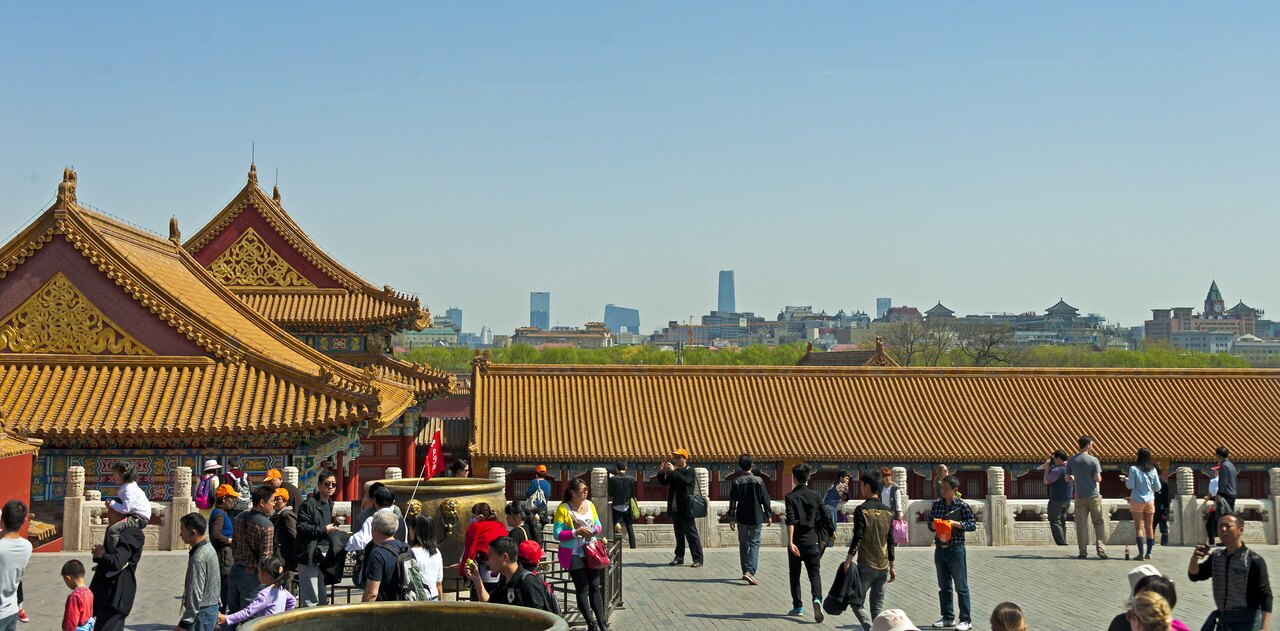
Dongcheng
This area puts you within walking distance of the Forbidden City, Jingshan Park, and the traditional maze of the Nanluoguxiang hutongs. It is dense, noisy, and perpetually busy with tourists, but offers the most authentic proximity to imperial history. You will spend your days navigating narrow alleyways filled with teahouses and local snack vendors, far removed from the city's glassy skyscrapers.
Sanlitun
Sanlitun is the epicenter of Beijing’s modern lifestyle. You can walk to the massive Taikoo Li shopping complex and countless bars, breweries, and global eateries. It feels like a contemporary metropolis, stripped of the grit found in older districts. The area is highly polished and serves as the primary hub for expatriates and trendy locals looking for premium entertainment options.
Chaoyang Park
Situated east of the frantic center, this district offers wide boulevards and easy access to one of the city's largest parks. It is far less chaotic than the hutong areas, providing a calm environment for morning jogs or afternoon walks. While you will rely on the subway or taxis to reach historical sites, the immediate surroundings are comfortable and reliably modern.
Gulou
Located around the Drum and Bell Towers, this area is a vibrant intersection of traditional architecture and indie music venues. It is immensely walkable, packed with vintage shops, craft beer bars, and small cafes. The vibe is significantly more laid-back than the Forbidden City’s vicinity, making it a social hub where you can easily strike up conversations with locals and fellow travelers.
CBD (Guomao)
The Central Business District is defined by verticality, featuring the CCTV Headquarters and the China Zun tower. It is a sterile, futuristic landscape designed for efficiency, with connected underground walkways linking massive office towers and high-end malls. While it lacks traditional character, it offers unmatched views of the city skyline and direct access to major transit lines for cross-city travel.
Rent a car in Beijing
Compare rental cars from local and international companies, with free cancellation on most bookings.
Compare car rentals in BeijingOne thing to think about
Avoid booking accommodation near the immediate vicinity of Wangfujing Street. While it is famous, it is an overpriced, crowded tourist trap filled with chain stores and generic food. It is noisy, lacks genuine local character, and traps you in a cycle of constant, aggressive street hawking every time you step outside your hotel.
Once you have a bed
The things that sell out first in Beijing are the small-group tours and the skip-the-line tickets.
Top tours & activities in Beijing
Common questions
Is the subway the best way to get around?
The Beijing subway is exceptionally efficient, affordable, and easy to navigate with English signage. It is almost always faster than taxis or ride-hailing apps, which often get stuck in the city's notorious gridlock. Use the Alipay or WeChat Pay transit mini-programs to generate a QR code for seamless scanning at every station gate.
Do I need to carry my passport daily?
Yes, you must carry your physical passport at all times in Beijing. Security checks are mandatory for entering major tourist sites, crossing certain public squares, and occasionally when using the subway or checking into hotels. A digital scan is rarely sufficient, and authorities strictly enforce identification protocols across the entire city for all foreign visitors.
What is the best way to handle local payments?
Cash and international credit cards are increasingly rare in daily transactions. Almost every merchant, from street vendors to upscale restaurants, relies on WeChat Pay or Alipay. Before arriving, ensure you have linked your international credit card to one of these apps. Carrying a small amount of cash is wise for emergencies, but electronic payment is non-negotiable.
Hotel links go to Booking.com. If you book through them TonyPlan earns a small commission — the price you pay is exactly the same.