Home › Hungary › How many days
How many days in Hungary? 7 days of Budapest, the Danube Bend, Eger and Lake Balaton
By Tony Panopoulos · travel-agency planner in Greece · Updated
Most trips to Hungary are a Budapest weekend, but the country is compact enough to see far more in a week: almost everything is within 2-2.5 hours of the capital by train. Give it seven days: three in Budapest, one on the Danube Bend, one in the baroque wine town of Eger, and two on Lake Balaton, the largest lake in Central Europe, with a swim in the warm thermal lake at Hévíz.
Short answer
Four days covers Budapest and a Danube Bend day trip. Seven adds the countryside: Eger's castle and cellars, and the peninsula of Tihany on Balaton.
The 7-day plan, day by day
Day 1: Buda Castle Hill
Morning. Cross the Széchenyi Chain Bridge and ride the Castle Hill funicular (about 4,000 Ft one way) or walk up in 15 minutes. Visit Matthias Church (about 3,000 Ft) and the Fisherman's Bastion, whose upper terraces charge a small fee by day.
Afternoon. See the Hungarian National Gallery in the Royal Palace, then walk down through the Várkert Bazár gardens to the river.
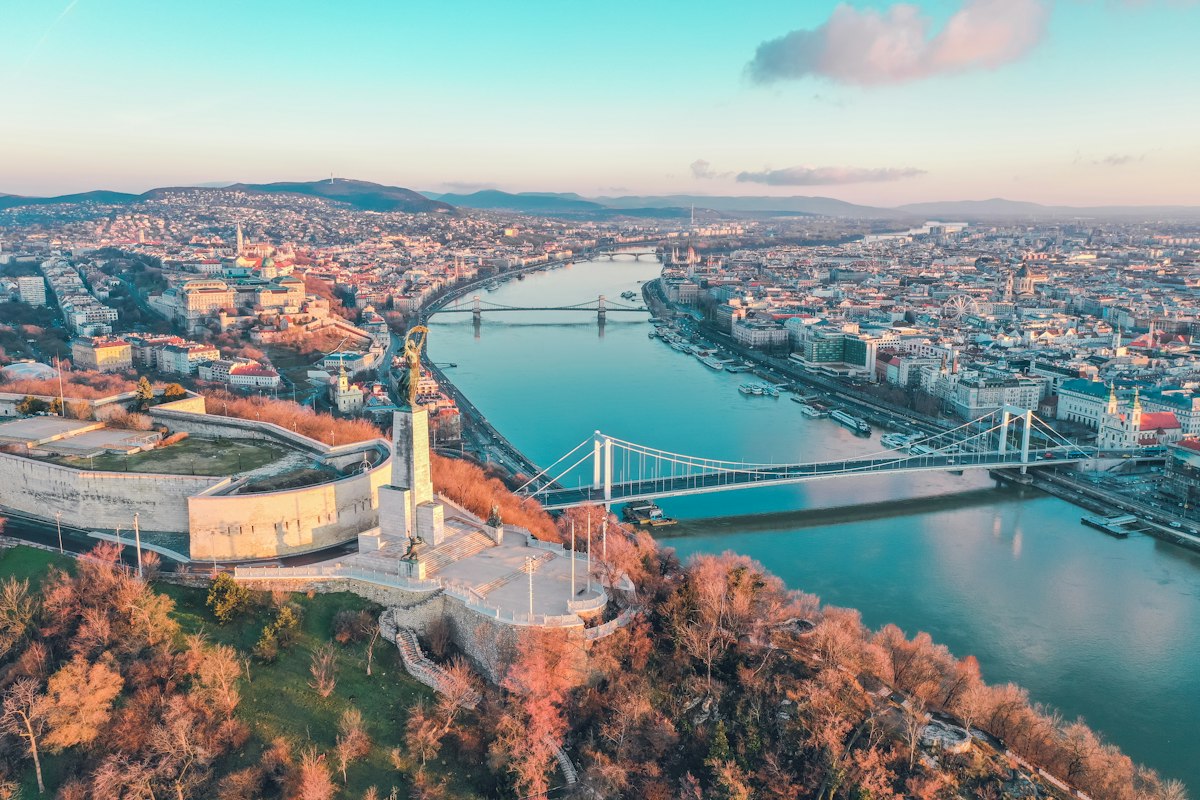
Evening. Climb Gellért Hill to the Liberty Statue for sunset over the bridges, about 30 minutes from the river, then eat in a Buda wine bar.
A 24-hour BKK travel card (about 2,500 Ft) covers metro, trams and buses; tram 2 along the Pest bank is a cheap sightseeing ride.
Day 2: Parliament, the Jewish Quarter and ruin bars
Morning. Tour the Hungarian Parliament (about 13,000 Ft for non-EU visitors, roughly half for EU citizens; book online), with the Holy Crown in its domed hall. Walk to the Shoes on the Danube Bank memorial, 5 minutes south.
Afternoon. Visit St Stephen's Basilica and climb to its dome, then the Dohány Street Synagogue, the largest in Europe, in the old Jewish Quarter.
Evening. Drink in Szimpla Kert, the first of the ruin bars set in derelict courtyards, then a river cruise to see the floodlit Parliament (about 5,000-8,000 Ft).
Parliament tours in English sell out days ahead in summer.
Day 3: Thermal baths and the market
Morning. Visit the Great Market Hall at the Liberty Bridge (closed Sundays) for paprika, salami and lángos upstairs. Then take metro line M1, the oldest on the European mainland, to Heroes' Square.
Afternoon. Spend 3 hours at the Széchenyi Baths in City Park (about 12,000-15,000 Ft), with outdoor pools at 27-38°C, where men play chess in the water.
Evening. Dinner on Andrássy Avenue or in a classic restaurant serving goulash and chicken paprikash (mains 4,000-7,000 Ft), or a performance at the restored Hungarian State Opera.
Bring flip-flops and a towel to the baths; renting them adds a lot to the price.
Day 4: The Danube Bend
Morning. Take the HÉV suburban train about 40 minutes to Szentendre, a painters' town of Serbian churches and cobbled lanes. Visit the Margit Kovács ceramics museum.
Afternoon. Continue by bus to Visegrád and climb to the citadel for the view of the river's great bend. Summer boats run on to Esztergom, whose basilica is the largest church in Hungary.
Evening. Return to Budapest by train from Esztergom, about 1h30, or by boat in summer.
Boat timetables on the Danube are seasonal and limited outside May to September; check MAHART schedules.
Day 5: Eger: castle and wine cellars
Morning. Take the train from Keleti station to Eger, about 2 hours (roughly 3,000-4,000 Ft). Visit Eger Castle (about 3,500 Ft), where the town held off the Ottoman army in 1552.
Afternoon. See the baroque Eger Basilica and the Lyceum, whose tower has a working camera obscura, then climb the 17th-century minaret, the northernmost in Europe.
Evening. Walk 20 minutes to the Szépasszony-völgy (Valley of the Beautiful Women), lined with small wine cellars. Taste Egri Bikavér (Bull's Blood) for about 300-500 Ft a glass.
Stay the night in Eger; the cellars are the evening's point. Trains back to Budapest leave every hour or so.
Day 6: Lake Balaton and Tihany
Morning. Return to Budapest and take a train from Déli or Kelenföld to Balatonfüred, about 2 hours. Walk the Tagore promenade.
Afternoon. Take a bus or a summer ferry to the Tihany peninsula. Climb to the Tihany Abbey, founded in 1055, and walk the trails past lavender fields to the inner lake.
Evening. Eat fried fogas (pikeperch) and lángos at a lakeside buffet. Swim at a strand; most charge 1,000-2,000 Ft.
Balaton is very shallow on the south shore and deeper on the north. The north is better for scenery.
Day 7: Hévíz thermal lake and Keszthely
Morning. Take a bus or train to Keszthely at the western tip of the lake, about 1h30 from Balatonfüred. Visit the Festetics Palace (about 5,000-6,000 Ft), one of Hungary's largest baroque palaces.
Afternoon. Bus 15 minutes to Hévíz and swim in its thermal lake, the largest swimmable natural thermal lake in the world, about 23-35°C all year (about 5,000-7,000 Ft for a few hours).
Evening. Return to Budapest by train, about 3 hours, or stay in Hévíz.
Bring a float or rent one; the lake is deep, and floating is the custom.
Only have 4 days?
With 4 days, do Budapest for three days and the Danube Bend on the fourth. Lake Balaton and Eger need a night each.
Got extra days?
Add Pécs, a southern city of Ottoman mosques and Roman tombs, about 2.5-3 hours by train; the Tokaj wine region; or the Hortobágy puszta, the great plain with its horsemen.
Where to stay in Hungary
| Budget | Area | Why | Typical double/night |
|---|---|---|---|
| Budget | Budapest District VII (Jewish Quarter) | Hostels and apartments in the nightlife quarter. | 15,000-30,000 Ft |
| Mid-range | Budapest District V (Belváros) | Walk to the Parliament, the Basilica and the river. | 35,000-65,000 Ft |
| Mid-range | Eger old town / Balatonfüred | Guesthouses near the cellars or the promenade. | 25,000-45,000 Ft |
| Comfort | Budapest riverside, Pest bank | Grand hotels facing the Chain Bridge and Castle Hill. | 80,000-180,000 Ft |
Getting around
In Budapest, a single ticket costs about 450 Ft and a 72-hour card about 5,500 Ft. Airport bus 100E runs to Deák tér in about 40 minutes (about 2,200 Ft). Outside Budapest, MÁV trains are cheap and frequent; buy tickets in the MÁV app. Volán buses fill gaps around Balaton. In summer, ferries cross Balaton between Tihany and Szántód in 10 minutes.
What to eat in Hungary
Hungarian food is built on paprika. Eat gulyás (goulash soup), paprikás csirke (chicken paprikash with dumplings), halászlé (fiery fisherman's soup), töltött káposzta (stuffed cabbage) and lángos, fried dough with sour cream and cheese, at markets. Desserts include Dobos torte, Esterházy cake and kürtőskalács chimney cake. Weekday lunch menus (napi menü) cost 2,500-4,000 Ft. Wines to try: Tokaji Aszú, Egri Bikavér, and whites from Balaton and Somló. Tipping is about 10-15%; check whether service is already on the bill.
Best time to visit
May to June and September are best at 20-27°C. July and August are hot (often 30-35°C) and Balaton is crowded with Hungarian holidaymakers. Christmas markets fill Vörösmarty Square in December. Winter is cold, near 0°C, but the thermal baths are at their best in the steam.
Month-by-month weather for Hungary →
What a day costs
| Budget | Mid-range | Comfort | |
|---|---|---|---|
| Bed (per person, sharing a double) | 12,000 Ft | 25,000 Ft | 55,000 Ft |
| Food & drink | 9,000 Ft | 16,000 Ft | 30,000 Ft |
| Sights & tickets | 5,000 Ft | 10,000 Ft | 16,000 Ft |
| Local transport | 2,500 Ft | 5,000 Ft | 12,000 Ft |
| Total per person, per day | about 28,500 Ft | about 56,000 Ft | about 113,000 Ft |
Approximate 2026 prices in Hungarian forints (Ft); many hotels quote in euros. Budapest charges a tourist tax of about 4% of the room price.
Before you go
Common questions
Should I pay in forints or euros?
Pay in forints. Many places accept euros, but at poor rates. Cards are widely accepted. When a card machine or ATM offers to charge you in your home currency, refuse and choose forints; the conversion is much worse. Use bank ATMs rather than the Euronet machines, which add high fees.
Which thermal bath is best in Budapest?
Széchenyi is the biggest and most famous, with yellow neo-baroque buildings and outdoor pools. Rudas has a 16th-century Ottoman dome and a rooftop pool over the Danube. Lukács is quieter and used by locals. Check which baths are open, as some historic baths close for renovation for long periods.
Is Lake Balaton worth it outside summer?
Yes for walking, wine and Tihany, which is pleasant in spring and autumn. Many beach strands, restaurants and ferries close or reduce services from October to April, so it is quieter. Hévíz thermal lake stays open all year and is warm even in winter.
Is Budapest safe?
Yes, by European standards. Watch for pickpockets on trams 4 and 6 and in crowded spots, use licensed taxis or the Bolt app, and check bar prices in tourist areas. Never accept invitations from strangers to bars, a known scam where the bill is huge.
How this guide was made
Compiled by TonyPlan from official tourism, transport and attraction sources and on-the-ground travel knowledge. Prices are approximate for 2026 and change with season; anything we could not confirm is marked as approximate.
Some links on this page are partner links. If you book through them TonyPlan may earn a commission; the price you pay is the same. How we make money.