Home › Corsica › How many days
How many days in Corsica? 6 days, west coast to Bonifacio by car
By Tony Panopoulos · travel-agency planner in Greece · Updated
Corsica looks small on a map, about 180 km long, but its roads twist through mountains and a 100 km drive can take 2.5 hours. Give it six days and a rental car, and follow one loop: the granite west coast from Ajaccio to Calvi, the mountain interior around Corte, and the far south of Bonifacio and Porto-Vecchio. Drive in the morning, swim in the afternoon, and never plan more than three hours at the wheel in a day.
Short answer
Four days covers Ajaccio, the Piana cliffs and Porto, then a long drive south to Bonifacio and the Palombaggia beaches. Six days add Calvi, the Scandola boat trip and a full mountain day in the Restonica valley.
The 6-day plan, day by day
Day 1: Ajaccio and the Sanguinaires
Morning. Start in Ajaccio, where most flights and ferries arrive. Walk the old town around Place Foch and the morning market on Boulevard du Roi Jérôme (most days except Monday) for figatellu sausage, brocciu cheese and chestnut bread. The Maison Bonaparte, Napoleon's birthplace, takes about an hour (around €7).
Afternoon. Visit the Palais Fesch, which holds one of France's largest collections of Italian paintings outside the Louvre (about €8). Then pick up your rental car and drive 12 km along the Route des Sanguinaires to the beaches at Capo di Feno or the small coves below the road.
Evening. Stay at Pointe de la Parata for sunset over the red Îles Sanguinaires; the walk to the Genoese tower takes 20 minutes from the car park. Dinner back in Ajaccio on the old port: grilled fish costs €22-30.
Book a rental car months ahead for July and August. Small cars are better: many village streets and mountain roads are one lane with a cliff on one side.
Day 2: Calanques de Piana and Porto
Morning. Drive north to Piana (about 1h45 from Ajaccio via Cargèse). The road D81 runs straight through the Calanques de Piana, red granite towers that drop 300 metres to the sea, part of a UNESCO site. Park at the Tête de Chien and walk the 'Château Fort' trail, about 1 hour return.
Afternoon. Continue 12 km down to Porto, a small harbour village under a Genoese tower. Take a boat from Porto (about 3 hours, €50-65) to the Scandola nature reserve and the fishing village of Girolata, which has no road access; boats run from April to October.
Evening. Watch sunset from the Porto tower rocks and eat at one of the harbour restaurants; a Corsican menu with veal and olives (veau aux olives) costs €25-35.
Drive the Piana road early or late: tour coaches squeeze through the rocks from 10:00 to 17:00 and traffic stops completely when two meet.
Day 3: The Balagne coast to Calvi
Morning. Take the coastal D81 north to Calvi (about 2h30, 80 km of bends). Stop at the Col de la Croix for the view over the Gulf of Girolata. In Calvi, walk up into the Citadel, built by the Genoese, with ramparts above the bay.
Afternoon. Swim at Calvi's 4 km sandy beach, lined with pine trees, or drive 20 minutes inland to the hill villages of the Balagne: Sant'Antonino, one of the oldest villages on the island, and Pigna, home to craftsmen and instrument makers.
Evening. Dinner on the Quai Landry in Calvi below the citadel. Corsican wines from the Calvi appellation are around €25-35 a bottle in restaurants.
The small Tramway de la Balagne runs along the coast from Calvi to L'Île-Rousse in summer, stopping at beaches; it is an easy day without the car.
Day 4: Corte and the Restonica valley
Morning. Drive to Corte (about 1h30 from Calvi via Ponte Leccia), the historic capital of independent Corsica under Pasquale Paoli in the 1750s. Climb to the citadel and the Musée de la Corse (about €5-6), which explains island life, shepherding and language.
Afternoon. Drive 15 km up the narrow Restonica gorge to the Bergeries de Grotelle car park (paid in summer, about €5-8). Hike to Lac de Melo (about 1 hour up, steep in places with chains and ladders) and on to Lac de Capitello (another 45 minutes), glacial lakes at around 1,900 metres.
Evening. Back in Corte, the university town has cheap bars on Cours Paoli. Try charcuterie boards and Pietra, the chestnut beer brewed on the island, about €5-6 a glass.
In July and August the Restonica road is sometimes closed to cars from mid-morning with a shuttle bus instead; arrive before 8:30 or check at the Corte tourist office.
Day 5: Bavella needles and Bonifacio
Morning. Drive south through Aléria and Solenzara to the Col de Bavella (about 2h30 from Corte), where the jagged pink Aiguilles de Bavella rise above pine forest at 1,218 metres. The marked walk to the Trou de la Bombe, a hole through the rock, takes about 1h30 return.
Afternoon. Continue to Bonifacio (about 1h30), the southern town built on white limestone cliffs 70 metres above the sea. Take a 1-hour boat trip (about €20-25) from the marina past the cliffs, the grottoes and the Escalier du Roi d'Aragon, 187 steps cut into the cliff.
Evening. Walk the haute ville on the clifftop at sunset, along the Bosco to the Cimetière Marin, then eat in the upper town. On clear days you see Sardinia, 12 km away.
Bonifacio car parks fill by 10:00 in summer. Park at the marina and walk up the Montée Rastello, about 15 minutes.
Day 6: Lavezzi islands and Palombaggia
Morning. Take a boat from Bonifacio to the Îles Lavezzi (about €40-50 return), a granite nature reserve with clear water and small sandy coves; bring water and food, there is nothing on the island.
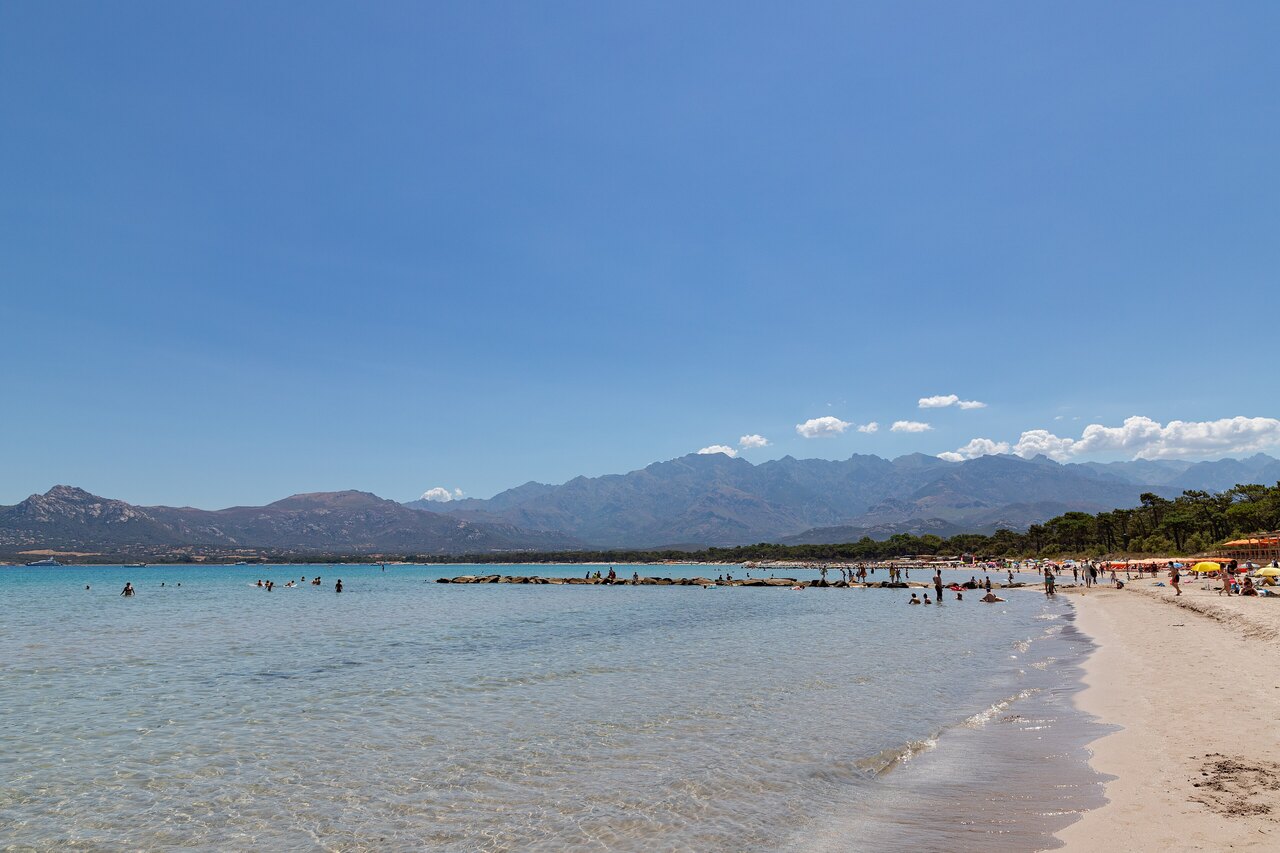
Afternoon. Drive 30 minutes north to the beaches near Porto-Vecchio: Palombaggia, with umbrella pines and red rocks, and Santa Giulia, a shallow lagoon good for children. Beach car parks cost about €5-10 a day in summer.
Evening. Dinner in the old town of Porto-Vecchio, inside its Genoese walls; the salt marshes below the town turn pink at dusk. Figari airport is 25 minutes away for the flight home.
Arrive at Palombaggia before 10:00 in July and August, or go in late afternoon when the day crowds leave.
Only have 4 days?
With 4 days, do Ajaccio and Piana on Days 1-2, then drive south (about 3 hours) for Bonifacio and Palombaggia. You lose Calvi, Corte and the mountain lakes.
Got extra days?
With more time, walk a section of the GR20, the long-distance mountain trail, or add Cap Corse and Bastia: the 120 km loop around the cape, with the wine village of Patrimonio and the beaches of the Désert des Agriates, takes a full day.
Where to stay in Corsica
| Budget | Area | Why | Typical double/night |
|---|---|---|---|
| Budget | Corte / campsites | Cheapest rooms on the island, and well-run campsites along the coast from about €25 a pitch. | €70-110 |
| Mid-range | Ajaccio old town | Airport, ferries and car hire, with restaurants within walking distance. | €110-180 |
| Mid-range | Porto / Calvi | Two bases for the west coast, the Scandola boats and the Balagne villages. | €100-190 |
| Comfort | Bonifacio / Porto-Vecchio | Cliff-view hotels and beach resorts near Palombaggia. | €250-600 |
Getting around
You need a car. Corsica has airports at Ajaccio, Bastia, Calvi and Figari, and ferries from Marseille, Toulon, Nice (about 5-12 hours), Livorno and Genoa. Rental cars cost about €40-80 a day in shoulder season and much more in August. The narrow-gauge Chemins de fer de la Corse runs from Ajaccio to Corte and Bastia (about 3h45 for the whole line, roughly €20-25) with a branch to Calvi; it is a scenic ride but too slow to tour the island. Buses between towns run once or twice a day. Expect average road speeds of 40-50 km/h.
What to eat in Corsica
Corsican food is mountain food. Try charcuterie: figatellu (liver sausage, winter only), lonzu and coppa. Brocciu, a fresh sheep or goat cheese, goes into omelettes, cannelloni and the cheesecake fiadone. Inland, order civet de sanglier (wild boar stew) or veal with olives; on the coast, grilled fish and lobster spaghetti (about €40-60). Chestnut flour makes polenta (pulenda) and cakes. A Corsican set menu (menu corse) costs €25-35. Local drinks: Pietra chestnut beer, Patrimonio and Sartène wines, and Cap Corse aperitif. Many village restaurants open only from April to October.
Best time to visit
May-June and September are best: sea warm enough to swim (20-24°C), highs of 22-28°C and open restaurants. July and August are hot (around 30°C), crowded and expensive, with ferry and car prices at their peak. Hiking the high mountains is best from mid-June to September, when the snow has gone. Many hotels and boat trips close from November to March.
Month-by-month weather for Corsica →
What a day costs
| Budget | Mid-range | Comfort | |
|---|---|---|---|
| Bed (per person, sharing a double) | €45 | €75 | €170 |
| Food & drink | €30 | €50 | €90 |
| Sights & tickets | €10 | €30 | €60 |
| Local transport | €25 | €40 | €60 |
| Total per person, per day | about €110 | about €195 | about €380 |
Approximate 2026 prices in euros for June or September; transport means half a rental car plus fuel. Corsican towns add a tourist tax of about €0.50-3 per person per night.
Before you go
Common questions
Can I visit Corsica without a car?
Partly. The train links Ajaccio, Corte, Bastia and Calvi, and buses connect the main towns once or twice a day, but the Calanques de Piana, Bavella and most beaches are hard to reach. Without a car, pick two bases, such as Ajaccio and Calvi, and use boat trips and the Balagne coastal train. For a round-the-island trip, rent a car.
Is it better to take the ferry or fly?
Fly if you plan to rent a car on the island: flights from Paris, Nice and Marseille take 1-1.5 hours. Take the ferry if you bring your own car, which can be cheaper for families than a summer rental. Overnight ferries from Marseille and Toulon save a hotel night; Nice to Calvi or Bastia is about 5-6 hours.
How hard is the GR20?
It is one of the toughest long-distance trails in Europe: about 180 km with roughly 12,000 metres of climbing, usually done in 15 days. Some sections use chains on bare rock. For a taste without the commitment, walk a single stage from Vizzavona or Bavella, or hike to the Restonica lakes.
Do people speak French or Corsican?
Everyone speaks French, and Corsican, close to Tuscan Italian, is heard in villages and on bilingual road signs. English is spoken in hotels and most tourist restaurants. A few words of French help in the mountains, and greeting with 'bonjour' before asking anything matters.
How this guide was made
Compiled by TonyPlan from official tourism, transport and attraction sources and on-the-ground travel knowledge. Prices are approximate for 2026 and change with season; anything we could not confirm is marked as approximate.