Home › Cartagena › How many days
How many days in Cartagena? 4 days of the walled city, Getsemaní and the Rosario Islands
By Tony Panopoulos · travel-agency planner in Greece · Updated
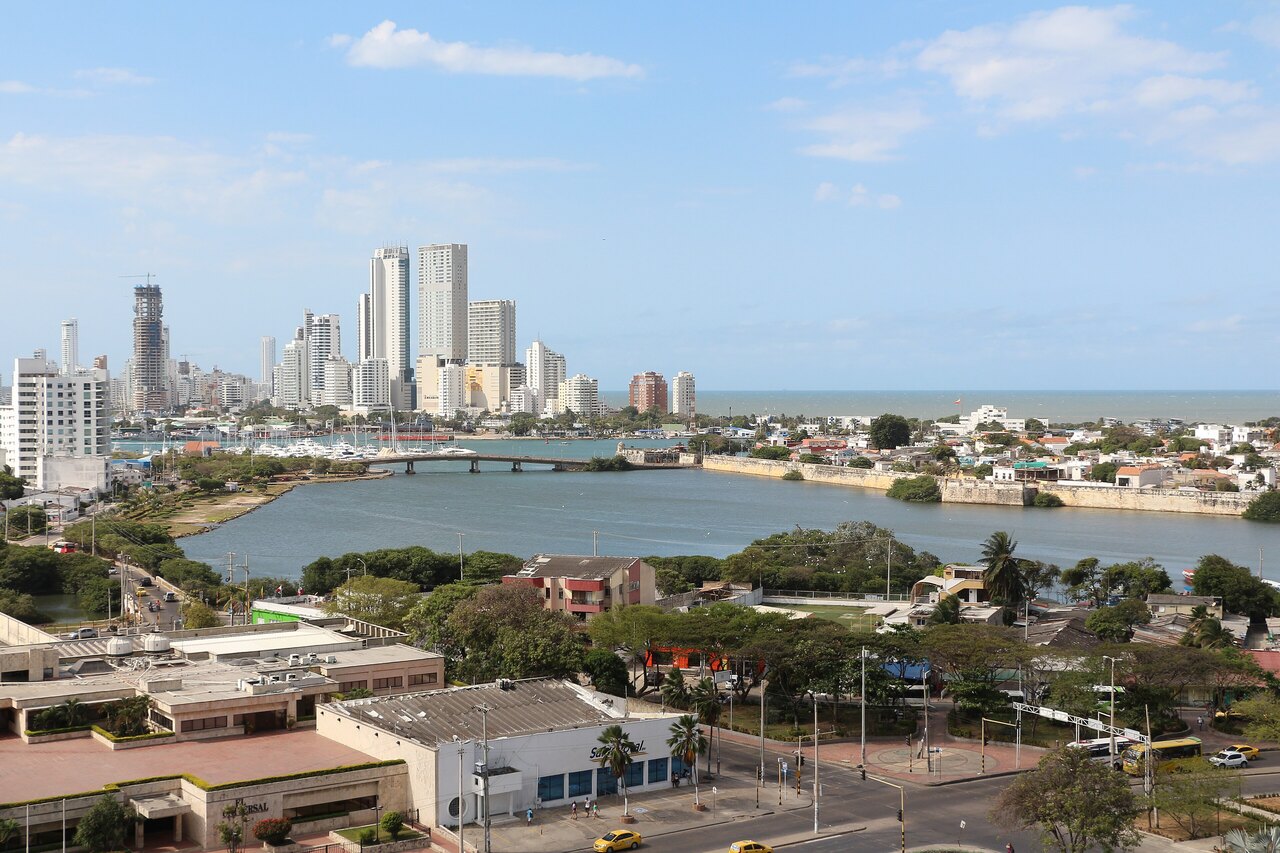
Cartagena de Indias, on Colombia's Caribbean coast, is one of the best-preserved colonial cities in the Americas: a walled old city (UNESCO) of flower-covered balconies, plazas and churches, guarded by the huge Castillo San Felipe de Barajas. Four days covers the old town, the street art and nightlife of Getsemaní, the fortress and the views from La Popa, and a boat day to the Rosario Islands, with time for the mud volcano or the beaches. It is hot all year: plan sightseeing early and late.
Short answer
Three days covers the walled city, Getsemaní, the fortress and the Rosario Islands. The fourth adds the mud volcano or a beach day.
The 4-day plan, day by day
Day 1: The walled city
Morning. Enter through the Torre del Reloj (clock tower) into the Plaza de los Coches, then walk to the Plaza de Bolívar, the Palace of the Inquisition (museum), the Cathedral and the Church of San Pedro Claver, dedicated to the saint who helped enslaved Africans.
Afternoon. Walk the streets of San Diego and Santo Domingo, with colourful houses and the Gertrudis sculpture by Fernando Botero. Visit the Gold Museum (Museo del Oro Zenú, free).
Evening. Walk on top of the city walls at sunset, especially at Café del Mar on the Baluarte de Santo Domingo, then have dinner in a colonial courtyard.
Street vendors are persistent; a polite 'no, gracias' works.
Day 2: Getsemaní, San Felipe and La Popa
Morning. Visit the Castillo San Felipe de Barajas (about 30,000-35,000 pesos), the largest Spanish fortress in the Americas, with tunnels designed to carry sound. Go early to avoid the heat.
Afternoon. Take a taxi up to the Convento de la Popa, a 17th-century monastery on the highest hill, for the view over the city and the bay. Then explore Getsemaní, the former working-class district, now full of street art, umbrellas over the streets and lively plazas.
Evening. Join locals in the Plaza de la Trinidad in Getsemaní, then dance salsa at Café Havana.
Getsemaní's street art tours are often 'free' (tip-based) and explain the district's history.
Day 3: The Rosario Islands
Morning. Take a boat from the Muelle de la Bodeguita to the Rosario Islands National Park (about 1 hour), a group of coral islands with clear water. Many tours stop at an island beach club for the day.
Afternoon. Snorkel on the reef, visit the open-water aquarium on Isla San Martín de Pajarales, and stop at Playa Blanca on Barú, a white-sand beach.
Evening. Return to Cartagena (about 16:00-17:00) and have dinner of fresh fish with coconut rice.
Choose a reputable boat operator with life jackets and confirm what the price includes (park fee, port tax, lunch).
Day 4: Mud volcano or Bocagrande
Morning. Take a tour to the Totumo mud volcano (about 1 hour), a small volcano filled with warm mud where you float, then wash off in the lagoon with the help of local women.
Afternoon. Relax at the beaches of Bocagrande or La Boquilla, or visit the Naval Museum and Las Bóvedas, former storerooms in the walls now full of craft shops.
Evening. Have a final dinner in the old city or Getsemaní, then take a horse-drawn carriage around the walls.
Tip the people who help at the mud volcano (massage, washing and photos are paid separately).
Only have 3 days?
With 3 days, do Days 1, 2 and 3.
Got extra days?
With more time, visit Santa Marta and the Tayrona National Park (about 4-5 hours), the colonial town of Mompox, or fly to Medellín or the Coffee Region.
Where to stay in Cartagena
| Budget | Area | Why | Typical double/night |
|---|---|---|---|
| Budget | Getsemaní hostels | Cheap, lively, walking distance. | 100,000-200,000 pesos |
| Mid-range | Getsemaní boutique hotels | Colonial houses with pools, street life. | 300,000-600,000 pesos |
| Mid-range | Walled city | Colonial charm, plazas. | 400,000-800,000 pesos |
| Comfort | Luxury hotels in the walled city | Restored convents and mansions. | 1,200,000-3,000,000 pesos |
Getting around
Walk the old city and Getsemaní. Taxis are cheap (agree the fare first or use apps like Uber or DiDi, used informally). Rafael Núñez Airport is about 15 minutes from the old city. Boats leave for the Rosario Islands from the Muelle de la Bodeguita.
What to eat in Cartagena
Try arepa de huevo (fried corn bread with egg), posta negra cartagenera (beef in a dark sweet sauce), fried fish with coconut rice and patacones (fried plantain), ceviche, and tropical juices (lulo, maracuyá). Sweets are sold at the Portal de los Dulces. A street snack costs 3,000-8,000 pesos; a restaurant dinner 60,000-150,000 pesos.
Best time to visit
December to April is the dry season, with breezes, about 30-32°C. It is hot and humid all year; October and November are the wettest. Christmas, New Year and Easter are the busiest and most expensive.
Month-by-month weather for Cartagena →
What a day costs
| Budget | Mid-range | Comfort | |
|---|---|---|---|
| Bed (per person, sharing a double) | 60,000 | 200,000 | 700,000 |
| Food & drink | 50,000 | 120,000 | 300,000 |
| Sights & tours | 30,000 | 120,000 | 350,000 |
| Transport | 10,000 | 30,000 | 100,000 |
| Total per person, per day | about 150,000 | about 470,000 | about 1,450,000 |
Approximate 2026 prices in Colombian pesos. Boat tours charge a national park fee and a port tax, often not included in the advertised price.
Before you go
Common questions
Is Cartagena safe?
The tourist areas are generally safe and policed. Take care at night outside the main areas, use registered taxis, and keep phones out of sight in crowds.
Do I need a visa for Colombia?
Many nationalities, including EU, UK and US citizens, can enter without a visa for up to 90 days. Complete the Check-MIG form before arrival.
Are the Rosario Islands worth it?
Yes for the clear water and snorkelling. Choose the tour carefully: some are overcrowded, and Playa Blanca can be very busy.
Is Cartagena good for families?
Yes: the fortress, the walls, carriage rides, the aquarium and calm island beaches.
How hot is Cartagena?
About 30-32°C all year with high humidity. Plan outdoor visits early or late and rest at midday.
Can I swim at the city beaches?
Yes, at Bocagrande and La Boquilla, but the water is not clear. The best beaches are on the islands.
What is Getsemaní like now?
A lively, colourful district with street art, bars and hostels; some residents have been displaced by tourism, so support local businesses.
Do people speak English?
In hotels and tourist businesses, yes; elsewhere, Spanish helps a lot.
How do I get to Santa Marta and Tayrona?
By bus or shuttle (about 4-5 hours) or a short flight. Tayrona closes for a few weeks each year to recover; check the dates.
What should I pack?
Light clothes, a hat, sunscreen, mosquito repellent and comfortable sandals. Some restaurants expect smart casual dress at dinner.
Is a walking tour worth it?
Yes: free (tip-based) and paid tours of the walled city and Getsemaní explain the history of the port, the slave trade, the pirates and the fortifications, and show hidden courtyards you might miss alone.
How this guide was made
Written by hand, without AI, from experience planning Colombia trips. Prices are approximate for 2026; confirm on the official Colombia Travel, Parques Nacionales and Migración Colombia websites before booking.
Some links on this page are partner links. If you book through them TonyPlan may earn a commission; the price you pay is the same. How we make money.