Home › Cape Town › How many days
How many days in Cape Town? 5 days: Table Mountain, the peninsula and the Winelands
By Tony Panopoulos · travel-agency planner in Greece · Updated
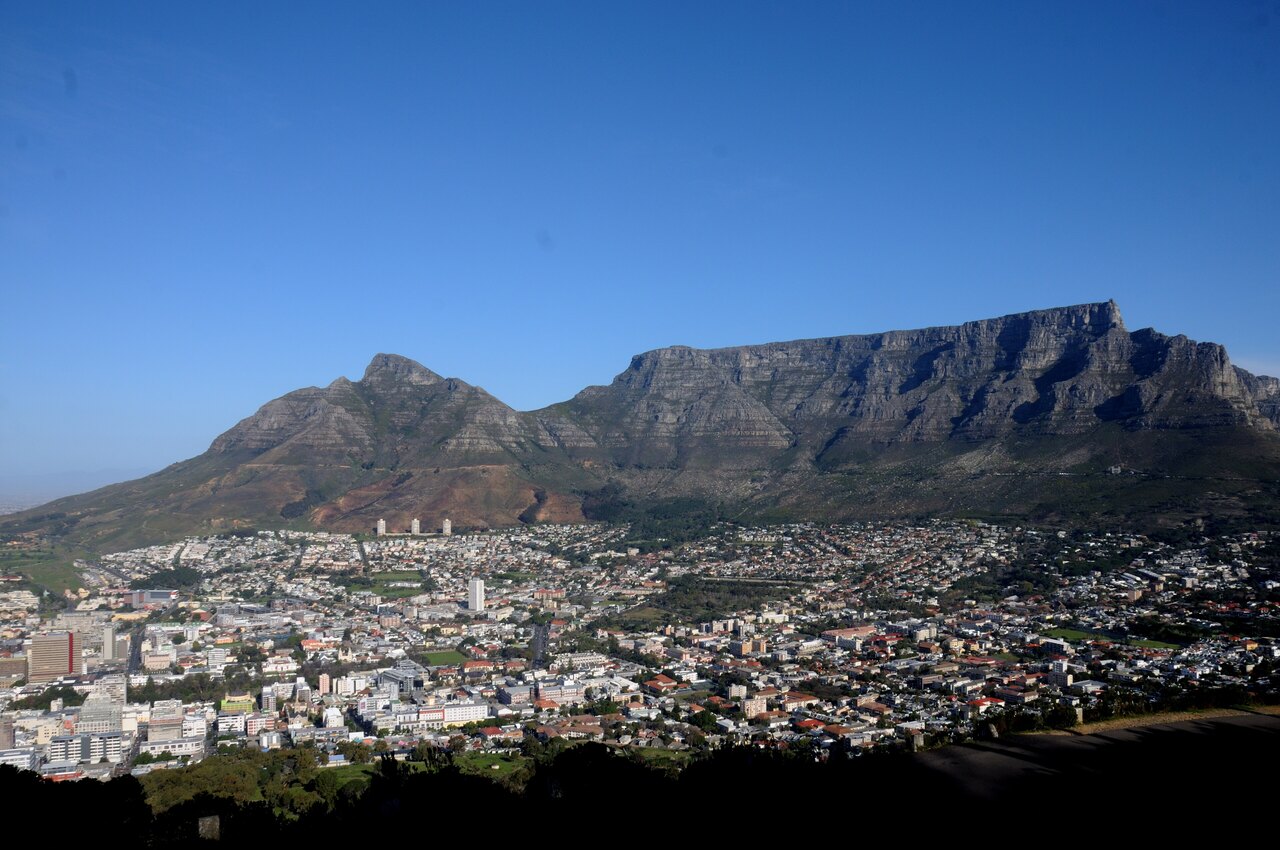
Cape Town packs mountains, two oceans, penguins and world-class wine into one hour's drive. Five days fits it well: one for Table Mountain and the city, one for Robben Island and the waterfront, one for the Cape Peninsula down to Cape Point, one for Kirstenbosch and the beaches, and one in the Winelands of Stellenbosch and Franschhoek. Keep your plan flexible: the cable car closes when the south-easterly wind, the 'Cape Doctor', blows, so go up on the first clear, calm day.
Short answer
Three days covers Table Mountain, the Cape Peninsula and the Winelands. Five days adds Robben Island, Kirstenbosch and time for the weather.
The 5-day plan, day by day
Day 1: Table Mountain and the city
Morning. Take the Table Mountain Aerial Cableway (about R 450-500 return; the cabin rotates as it climbs) on the first clear morning, or hike up Platteklip Gorge (about 2-3 hours, steep). On top, the walks around the plateau take 30-60 minutes.
Afternoon. Walk through the Company's Garden, the District Six Museum, which tells the story of the forced removals under apartheid, and the colourful houses of Bo-Kaap, the historic Cape Malay quarter, with the Bo-Kaap Museum.
Evening. Drive up Signal Hill for sunset over the Atlantic, then dinner on Bree Street or Kloof Street, the city's restaurant strips.
Check the cableway's status online before going up: it closes in strong wind or cloud ('the tablecloth'). If closed, swap with another day.
Day 2: Robben Island and the V&A Waterfront
Morning. Take the ferry from the Nelson Mandela Gateway at the V&A Waterfront to Robben Island (about R 600; the tour takes about 3.5 hours), where Nelson Mandela was imprisoned for 18 years. Former political prisoners guide the visit of the prison. Book well ahead: tours sell out and are cancelled in rough seas.
Afternoon. Visit Zeitz MOCAA, the museum of contemporary African art in a converted grain silo, and the Watershed crafts market at the waterfront.
Evening. Dinner at the Waterfront or in Green Point, then a drink with a view of the mountain lit at night.
Early-morning ferries are the most likely to run; afternoon seas are often rougher.
Day 3: The Cape Peninsula
Morning. Drive south along the Atlantic coast through Camps Bay and over Chapman's Peak Drive (a toll road cut into the cliffs, sometimes closed after rockfalls) to the Cape of Good Hope section of Table Mountain National Park. Walk up to the old lighthouse at Cape Point or take the funicular (park fee about R 400+ for foreigners).
Afternoon. Drive up the False Bay side to Boulders Beach near Simon's Town (about R 190-220), home to a colony of some 3,000 African penguins, then to Kalk Bay's harbour and antique shops.
Evening. Fish and chips at Kalky's in Kalk Bay harbour, or dinner at Muizenberg with its painted beach huts, then drive back (about 45 minutes).
Do the drive clockwise (Chapman's Peak in the morning, False Bay in the afternoon) for the best light and lighter traffic.
Day 4: Kirstenbosch and the beaches
Morning. Hike Lion's Head for sunrise (about 1.5 hours up, with chains in places) or go straight to Kirstenbosch National Botanical Garden (about R 220 for foreigners), on the eastern slopes of Table Mountain, with the Boomslang treetop walkway and fynbos, including proteas.
Afternoon. Relax at Clifton (four sheltered beaches) or Camps Bay. The Atlantic water is cold (12-15°C) even in summer.
Evening. On summer Sundays, Kirstenbosch holds sunset concerts on its lawns. Otherwise, sunset drinks in Camps Bay.
Never hike alone, start early, and tell someone your route. Weather changes fast on the mountain.
Day 5: The Winelands
Morning. Drive about 45-60 minutes to Stellenbosch, a university town of Cape Dutch buildings and oak-lined streets, and visit a wine estate or two (tastings about R 100-250).
Afternoon. Continue to Franschhoek, founded by French Huguenots in 1688, and take the Franschhoek Wine Tram, a hop-on hop-off tour of estates, or have lunch at one of its well-known restaurants.
Evening. Return to Cape Town with a designated driver or tour: drink-driving rules are strict.
The Pinotage grape is South Africa's own cross of Pinot Noir and Cinsault; Chenin Blanc is the most planted white.
Only have 3 days?
With 3 days, do Day 1, Day 3 and Day 5. You lose Robben Island and Kirstenbosch.
Got extra days?
From June to November, drive 1.5-2 hours to Hermanus for land-based whale watching (southern right whales). Further, the Garden Route starts about 4-5 hours east.
Where to stay in Cape Town
| Budget | Area | Why | Typical double/night |
|---|---|---|---|
| Budget | City Bowl (Gardens, Tamboerskloof) | Guesthouses near Kloof Street, central. | R 900-1,500 |
| Mid-range | V&A Waterfront / De Waterkant | Safe, walkable, restaurants, Robben Island ferry. | R 2,000-3,800 |
| Mid-range | Sea Point / Green Point | Promenade along the Atlantic, good value. | R 1,500-3,000 |
| Comfort | Camps Bay / Clifton | Beachfront hotels and villas below the Twelve Apostles. | R 5,000-15,000 |
Getting around
Use Uber or Bolt in the city; for the peninsula and the Winelands, rent a car (driving is on the left) or take tours. The MyCiTi buses link the airport, the centre, the Waterfront and the Atlantic seaboard. The airport is about 20-30 minutes from the centre. Do not leave anything visible in a parked car.
What to eat in Cape Town
Cape Town is one of the best and best-value food cities in the world. Try a braai (barbecue), bobotie (spiced minced meat baked with an egg custard), Cape Malay curry and samoosas in Bo-Kaap, the giant gatsby sandwich, biltong (dried meat) and koeksisters (syrupy plaited doughnuts). Fresh fish such as snoek and kingklip is everywhere. Restaurant meals cost R 200-500 per person; top restaurants are a fraction of the price of their European equivalents. Tip 10-15%.
Best time to visit
November to March is summer, with highs of 26-28°C, dry weather and strong south-easterly winds. March to May is calmer and warm, often the best time. Winter (June to August) is cool and rainy but green, with whales along the coast. Spring (September to October) brings wildflowers on the West Coast.
Month-by-month weather for Cape Town →
What a day costs
| Budget | Mid-range | Comfort | |
|---|---|---|---|
| Bed (per person, sharing a double) | R 500 | R 1,400 | R 4,000 |
| Food & drink | R 350 | R 800 | R 2,000 |
| Sights & activities | R 300 | R 700 | R 1,500 |
| Transport (car share, Uber) | R 250 | R 500 | R 1,200 |
| Total per person, per day | about R 1,400 | about R 3,400 | about R 8,700 |
Approximate 2026 prices in South African rand (about R 20 to €1). National park conservation fees are higher for foreigners.
Before you go
Common questions
Is Cape Town safe for tourists?
The main tourist areas are reasonably safe by day, but crime is high. Use Uber at night, do not walk alone in quiet areas after dark, hike in groups, and keep valuables out of sight, including in cars.
Should I take the cable car or hike Table Mountain?
Hike up Platteklip Gorge if you are fit and the weather is good, and take the cable car down. Otherwise take the cable car both ways.
Can I swim in Cape Town?
Yes, but the Atlantic beaches (Clifton, Camps Bay) are cold. The False Bay side (Muizenberg, Boulders) is a few degrees warmer.
Is the Wild Card worth it?
For several visits to Table Mountain National Park sites (Cape Point, Boulders) and other parks across South Africa, the Wild Card can save money on a longer trip.
Do I need a car?
Not in the city. For the peninsula and the Winelands, a car or a tour is much easier than public transport.
How this guide was made
Written by hand, without AI, from experience planning South Africa trips. Prices are approximate for 2026 in rand; confirm on the official Table Mountain Cableway, Robben Island Museum, SANParks and Kirstenbosch websites before booking.
Some links on this page are partner links. If you book through them TonyPlan may earn a commission; the price you pay is the same. How we make money.