Home › Bolivia › How many days
How many days in Bolivia? 8 days from La Paz to the Uyuni salt flat
By Tony Panopoulos · travel-agency planner in Greece · Updated
Bolivia is high, cheap and large, and the altitude sets the pace. Give it eight days for the classic loop: La Paz at 3,640 metres, Lake Titicaca, the Salar de Uyuni, the mining city of Potosí and the white colonial capital Sucre.
Short answer
Six days covers La Paz, Titicaca and a one-day Uyuni tour in a rush. Eight days gives time to acclimatise and to end in Sucre, which at 2,800 metres is the easiest place to recover.
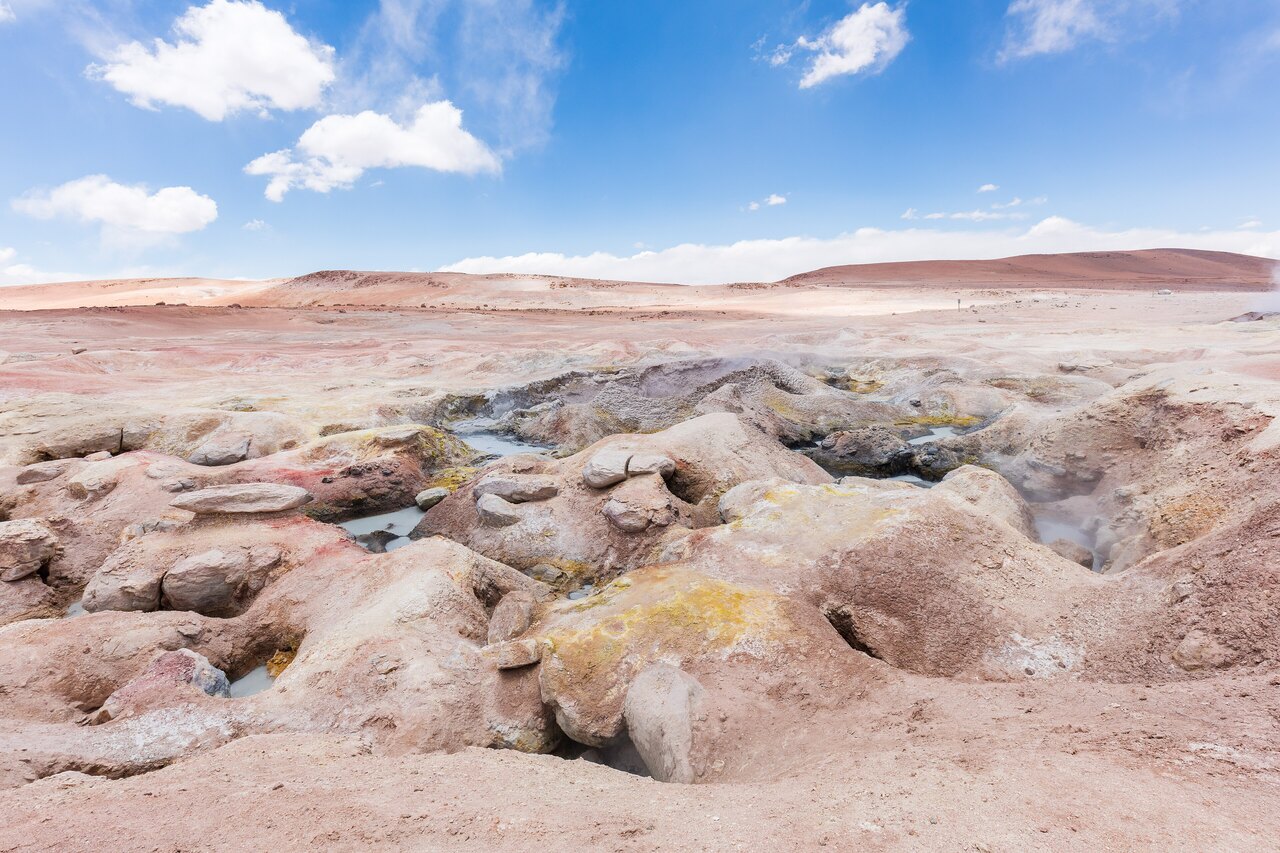
The 8-day plan, day by day
Day 1: La Paz by cable car
Morning. Arrive at El Alto airport (4,060 m) and take it slow. Ride the Mi Teleférico cable cars, the world's largest urban network, for about Bs 3-5 a ride; the Red and Yellow lines give huge views over the bowl of the city to Illimani.
Afternoon. Walk to Plaza Murillo, with the cathedral and the presidential palace. A block away is Calle Jaén, the best-preserved colonial street, with four small museums on one ticket of roughly Bs 20.
Evening. Browse the Witches' Market on Calle Linares for llama foetuses and amulets. Afterwards, eat salteñas or a set dinner of Bs 25-40 near Calle Sagárnaga.
Try coca tea (mate de coca) for the altitude, avoid alcohol the first night, and walk uphill slowly.
Day 2: Tiwanaku and Valle de la Luna
Morning. Join a tour or take a minibus about 1.5-2 hours to Tiwanaku, the ruins of a civilisation older than the Incas. See the Gate of the Sun and the Akapana pyramid; foreigners pay about Bs 100 including two museums.
Afternoon. Back in the city, take a taxi 30 minutes south to Valle de la Luna, a maze of eroded clay spires. A 45-minute trail loops through it (about Bs 15).
Evening. Have dinner in Sopocachi, the residential area with cafés and bars. On Sundays, the Cholitas wrestling in El Alto is an afternoon show (about Bs 50-100 with transport).
Tiwanaku is at 3,850 m and has almost no shade; bring a hat, sunscreen and water.
Day 3: Copacabana on Lake Titicaca
Morning. Take a tourist bus from La Paz to Copacabana, about 3.5-4 hours for Bs 30-60. At the Tiquina strait, passengers cross in a small launch for a few bolivianos while the bus goes over on a raft.
Afternoon. Visit the white Basilica of Our Lady of Copacabana and watch the blessing of decorated cars outside. Then climb Cerro Calvario (30-40 minutes) above the bay.
Evening. Eat fresh trucha (lake trout) at the beachfront stalls for Bs 35-50. The sunset over the lake is best seen from the shore by the boat jetty.
Copacabana sits at 3,840 m; the climb to Calvario is short but steep, so stop often.
Day 4: Isla del Sol, then the night bus south
Morning. Take the 8:30 boat (about 1.5 hours, Bs 30-40 return) to Isla del Sol, sacred to the Incas. Land at Yumani in the south, climb the Inca staircase and walk to the Pilkokaina ruins.
Afternoon. Return to Copacabana by mid-afternoon. The bus back to La Paz arrives around 19:00.
Evening. Board an overnight bus to Uyuni, about 10 hours for Bs 150-250 on a semi-cama or cama seat with companies like Todo Turismo. Alternatively, fly next morning in about 1 hour.
The northern half of the island has been closed to visitors for long periods because of a dispute between communities; check locally before planning a full-island hike.
Day 5: Salar de Uyuni
Morning. Arrive in Uyuni at dawn and join a day tour (about Bs 250-400 in a shared 4x4). The first stop is the Cementerio de Trenes, rusting steam engines 3 km from town, then the salt-working village of Colchani.
Afternoon. Drive onto the Salar, more than 10,000 km² of salt, for perspective photos and lunch. Then visit Isla Incahuasi, an island of giant cacti (entry about Bs 30).
Evening. Stay for sunset on the salt; in the wet season (January-March) the flooded crust turns into a mirror. Sleep in a salt hotel or in Uyuni town.
The 3-day tour to the coloured lagoons and flamingos (Laguna Colorada, entry to the Eduardo Avaroa reserve about Bs 150) needs two extra days and can end in Chile.
Day 6: Potosí, the silver mountain
Morning. Take the bus from Uyuni to Potosí, about 4 hours for Bs 40-60, through high Andean plains. At 4,090 m, Potosí is one of the highest cities in the world.
Afternoon. Tour the Casa Nacional de la Moneda, the colonial mint (guided visits only, about Bs 50, plus a photo fee). It tells how Cerro Rico's silver financed the Spanish empire.
Evening. Walk around Plaza 10 de Noviembre and the carved stone façade of the church of San Lorenzo. Nights are cold at this height, often near freezing, so dress warmly.
Mine tours inside Cerro Rico (about Bs 150) are working mines with dust and heat; skip them if you are claustrophobic or have breathing problems.
Day 7: Down to Sucre
Morning. Do the Cerro Rico tour early if you choose to. Then take the shared taxi or bus to Sucre, about 3 hours and Bs 30-60, dropping 1,200 metres to a softer climate.
Afternoon. Visit the Casa de la Libertad on Plaza 25 de Mayo, where Bolivia's independence was signed in 1825 (about Bs 15-20). Then climb to the white rooftop of the San Felipe Neri convent.
Evening. Climb to La Recoleta viewpoint for sunset over the white city. Afterwards, have dinner on the plaza, where a three-course meal costs Bs 50-90.
Sucre is a good place to stay longer and take cheap Spanish lessons, about Bs 60-80 an hour.
Day 8: Dinosaur tracks and markets
Morning. Take the dinosaur bus 20 minutes to Parque Cretácico (about Bs 30). It looks onto a limestone wall at Cal Orck'o with more than 5,000 dinosaur footprints.
Afternoon. Browse the Mercado Central for fruit juices and chicken soup at Bs 10-20. Then see Jalq'a and Tarabuco weaving at the ASUR textile museum.
Evening. Fly from Sucre to La Paz or Santa Cruz (about 45 minutes) to connect home. If you can stay longer, Sunday's Tarabuco market is 1.5 hours away.
Sucre's airport is 30 km outside town; leave 45 minutes for the taxi (about Bs 70-100).
Only have 6 days?
With 6 days, drop Isla del Sol and Sucre: La Paz (2 days), overnight bus to Uyuni, a salt flat day tour, then fly back from Uyuni to La Paz.
Got extra days?
Add the 3-day Uyuni tour to the lagoons and geysers, a Death Road mountain-bike ride from La Paz (about Bs 600-900), or fly to Rurrenabaque for Madidi jungle and the pampas.
Where to stay in Bolivia
| Budget | Area | Why | Typical double/night |
|---|---|---|---|
| Budget | Rosario / Sagárnaga (La Paz) | Hostels and guesthouses by the Witches' Market and the bus agencies. | Bs 120-250 |
| Mid-range | Sopocachi (La Paz) | Calmer, safer streets with cafés, close to the Red and Yellow cable cars. | Bs 350-650 |
| Mid-range | Historic centre (Sucre) | Colonial houses with patios, two blocks from Plaza 25 de Mayo. | Bs 300-550 |
| Comfort | Salt hotels on the Salar edge (Uyuni) | Built of salt blocks, heated rooms and sunrise on the flat. | Bs 900-2,000 |
Getting around
Long distances go by bus: tourist companies such as Todo Turismo cost more but are safer and warmer at night. Domestic flights (BoA, the state airline) save a night bus: La Paz to Uyuni or Sucre takes about 1 hour for Bs 500-900. In La Paz, use the Mi Teleférico cable cars and radio taxis (Bs 15-30 across the centre). Road blockades (bloqueos) are common; keep a spare day.
What to eat in Bolivia
Breakfast is the salteña, a baked pastry with juicy stew, eaten before 11:00 for Bs 6-10. Lunch is the main meal: the almuerzo set menu costs Bs 20-35 in markets. Try sopa de maní (peanut soup), pique a lo macho (beef, sausage and chips for sharing) and api (hot purple-corn drink) with buñuelos. The local beers are Paceña and Huari, and singani grape spirit goes into a chuflay.
Best time to visit
The dry season, May to October, has clear skies, cold nights (below -10°C at Uyuni) and the best roads. January to March is the wet season: the Salar becomes a mirror but some routes close and the north floods. Carnival in Oruro (February or March) is one of South America's great festivals.
Month-by-month weather for Bolivia →
What a day costs
| Budget | Mid-range | Comfort | |
|---|---|---|---|
| Bed (per person, sharing a double) | Bs 70 | Bs 220 | Bs 600 |
| Food & drink | Bs 70 | Bs 150 | Bs 300 |
| Sights & tickets | Bs 50 | Bs 150 | Bs 350 |
| Local transport | Bs 30 | Bs 90 | Bs 300 |
| Total per person, per day | about Bs 220 | about Bs 610 | about Bs 1,550 |
Approximate 2026 prices in bolivianos; the exchange rate has been volatile and foreign cards may get a poor rate, so bring US dollars in clean notes to exchange at casas de cambio.
Before you go
Common questions
How bad is the altitude?
La Paz, Uyuni and Potosí are all above 3,600 metres, and most people get headaches or short breath at first. Go slowly, drink a lot of water, avoid alcohol early on and ask a doctor about acetazolamide. Ending lower, in Sucre, helps.
One-day or three-day Uyuni tour?
The one-day tour covers the salt flat, the train cemetery and Incahuasi island, which is what most people picture. The three-day tour adds the red and green lagoons, flamingos, geysers and hot springs, with basic and very cold lodgings. Choose three days if you have time and good warm clothes.
Is it easy to cross from Peru?
Yes. The usual route is Puno to Copacabana by bus via the Kasani border, about 3 hours, then on to La Paz. Many travellers combine Cusco and Machu Picchu with Bolivia in two weeks. Check whether your nationality needs a Bolivian visa before arriving.
Can I pay by card?
Rarely outside better hotels and La Paz restaurants. Carry cash in bolivianos for buses, markets, park fees and tours, and some US dollars as backup. ATMs in Uyuni and Copacabana sometimes run out at weekends, so withdraw enough in La Paz first.
How this guide was made
Compiled by TonyPlan from official tourism, transport and attraction sources and on-the-ground travel knowledge. Prices are approximate for 2026 and change with season; anything we could not confirm is marked as approximate.
Some links on this page are partner links. If you book through them TonyPlan may earn a commission; the price you pay is the same. How we make money.