Home › Trieste › Where to stay
Where to stay in Trieste
Trieste clings to a narrow strip of land where the limestone Karst plateau plunges into the Adriatic. The city is clearly divided by its layout: the grand 18th-century grid of Borgo Teresiano sits flat by the canal, the medieval heart of Cittavecchia sprawls up the castle hill, and leafy Habsburg neighborhoods stretch east towards Slovenian hills. Your choice of base entirely dictates whether you wake up to the sound of lapping water or climbing steep, cobbled hills.
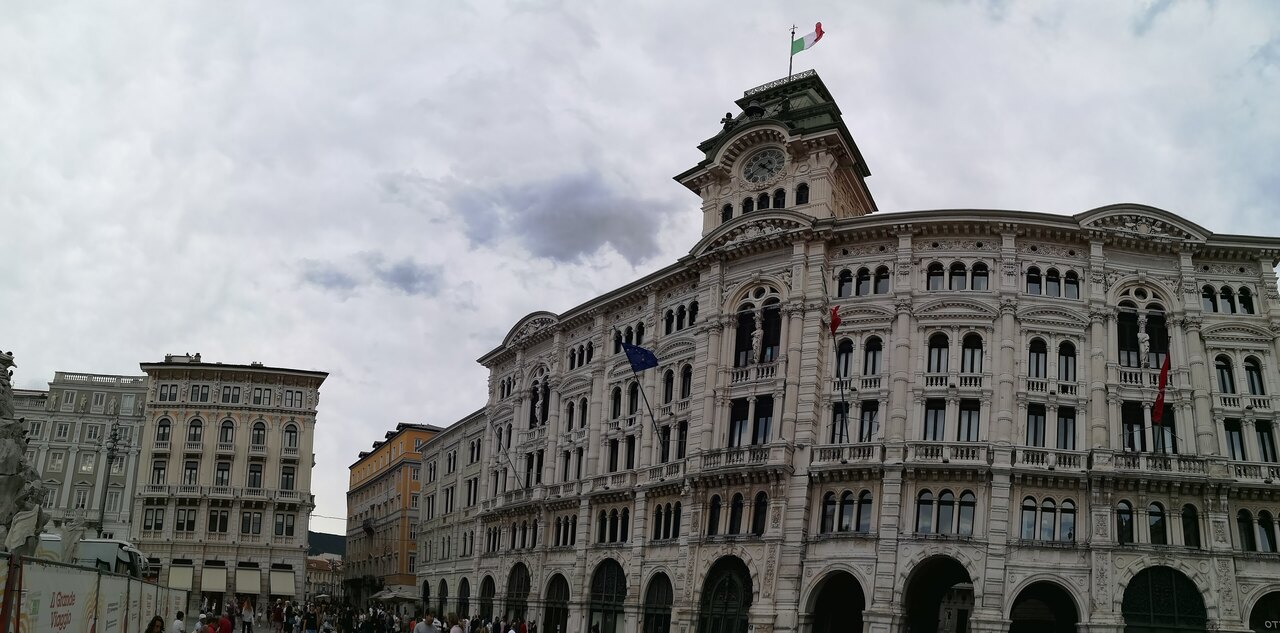
Borgo Teresiano
Built under Empress Maria Theresa, this grid-patterned quarter feels like a miniature, less frantic Venice. It is entirely flat, making it exceptionally walkable. You can easily stroll to the Neoclassical Sant'Antonio Taumaturgo church, the busy pedestrian artery of Via San Nicolò, and the central railway station within ten minutes. Canal-side cafes dominate the morning routine.
Cittavecchia
This is Trieste's oldest quarter, climbing the lower slopes of San Giusto hill. Expect winding, narrow medieval streets that contrast sharply with the grand Habsburg expanses below. You are a short, steep walk from the Roman Theatre, the Cathedral of San Giusto at the summit, and Piazza Unità d'Italia. It is quiet at night and strictly pedestrianized.
Barcola
Stretching northwest along the coastal Viale Miramare, Barcola is Trieste's seaside neighborhood. It feels like a relaxed coastal village integrated into the city. The main draw is the lungomare—a continuous stretch of pine-shaded concrete and grass where locals sunbathe. You can walk along the water all the way to the iconic Castello di Miramare, though reaching the city center requires a short bus ride.
One thing to think about
Think twice about booking hotels directly on the main thoroughfares edging the port, such as Corso Cavour or Viale Miramare. While transit access is good, heavy freight traffic heading to the docks creates relentless, low-frequency engine noise starting before dawn, ruining any chance of sleep with an open window.
Other places to stay in Italy: lastminute.com · UNA Italian Hospitality · Megabon
Once you have a bed
The things that sell out first in Trieste are the small-group tours and the skip-the-line tickets.
Common questions
Do I need a car when staying in Trieste?
No, a car is a liability in Trieste. The historic center, Borgo Teresiano, and Cittavecchia are almost entirely pedestrianized with strict limited-traffic zones. The city is compact and highly walkable, and an efficient municipal bus network handles the uphill climbs and coastal runs to Miramare with ease.
Which area is best for food and evening aperitivo?
Borgo Teresiano and the grid around Piazza Unità d'Italia offer the highest concentration of traditional osterias and historic cafes. Streets like Via San Nicolò and the canalside banks buzz every evening with locals enjoying a spritz or local Teran wine paired with fresh seafood.
Is Trieste too windy for a comfortable stay?
Trieste is famous for the Bora, a fierce, cold katabatic wind that periodically blasts down from the plateau. While it can disrupt ferries and walking in winter, modern neighborhoods handle it easily. If you visit between autumn and spring, just pack a windproof jacket.
Hotel links go to Booking.com.