Home › Stuttgart › Where to stay
Where to stay in Stuttgart
Stuttgart sits in a steep, vine-draped valley basin, meaning neighbourhoods vary dramatically by altitude. The flat central valley keeps you close to transit and commerce, while the surrounding hills offer leafy, upscale residential streets with sweeping valley views. Choosing where to sleep depends entirely on whether you want urban walkability right outside your door or a quieter, scenic hillside retreat above the city's bustling core.
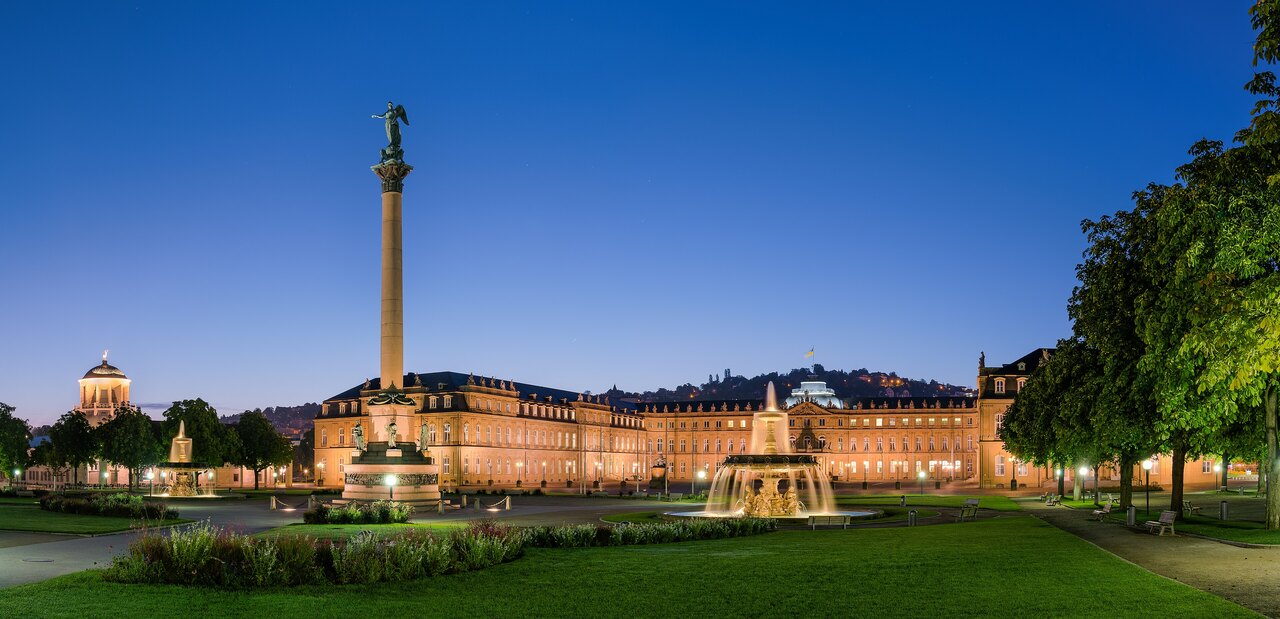
Mitte
Mitte is the dense, commercial heart of Stuttgart, anchored by the grand Schlossplatz and the pedestrianised Königstraße shopping mile. It feels energetic and practical rather than historic, packed with contemporary architecture and beer halls. From here, you can easily walk to the Kunstmuseum, the New Palace, and the central train station within ten minutes.
West
Stuttgart West is defined by its stunning 19th-century Gründerzeit architecture, independent galleries, and thriving café culture along Schwabstraße. It has a lively, unpretentious residential energy where you can easily walk to local bakeries, small parks like Bismarckplatz, and trendy bars without dealing with heavy tourist crowds.
Bad Cannstatt
Located on the banks of the Neckar River, Bad Cannstatt is Stuttgart’s oldest district, featuring historic half-timbered houses and mineral springs. It feels distinct from the city centre, offering a working-class charm and green spaces like the Kurpark. You can comfortably walk to the Wilhelma zoo and the Mercedes-Benz Arena.
Degerloch
Perched high on the southern ridge, Degerloch feels worlds away from the busy valley floor, surrounded by forests and sloping vineyards. It centres around a quiet village square with traditional Swabian taverns and offers direct access to the Fernsehturm television tower. The historic Zahnradbahn rack railway connects you down to the city centre.
Killesberg
Killesberg is an affluent northern hillside neighbourhood famous for its post-war modernist architecture and the sprawling Killesbergpark. It feels calm, affluent, and exceptionally green, offering walking trails, sculpture gardens, and panoramic viewpoints. You can walk to the Weissenhof Estate, a UNESCO-listed housing development designed by modernist masters.
One thing to think about
Think twice about booking hotels directly on or immediately adjacent to Arnulf-Klett-Platz outside the central station. While transport is convenient, the ongoing construction and heavy nocturnal tram traffic create persistent noise and a chaotic urban environment that lacks the charm of the city's residential quarters.
Other places to stay in Germany: lastminute.com · Megabon
Once you have a bed
The things that sell out first in Stuttgart are the small-group tours and the skip-the-line tickets.
Common questions
Is it easy to get around Stuttgart without a car?
Yes, Stuttgart has an exceptionally efficient public transit network consisting of U-Bahn light rail, S-Bahn trains, and buses that cover the steep valley and surrounding hills seamlessly. Walking is ideal within the flat Mitte and West districts, but public transit is essential for reaching hillside neighbourhoods and outlying museums.
Which area is best for experiencing Stuttgart's wine culture?
Uhlbach and the slopes around Bad Cannstatt are the best areas for wine lovers, as vineyards literally press against the edges of the streets. You can easily walk along the Weinwanderweg vineyard trail and visit local taverns known as Besenwirtschaften, which serve regional wines directly from the producers.
Is Stuttgart a good destination for families?
Stuttgart is fantastic for families, particularly if you stay near Rosensteinpark or Bad Cannstatt. The city offers the Wilhelma zoo and botanical gardens, the hands-on children's museum, and vast public parks with excellent playgrounds, all connected safely by stroller-friendly public transport.
Hotel links go to Booking.com.