Where to stay in Nerja
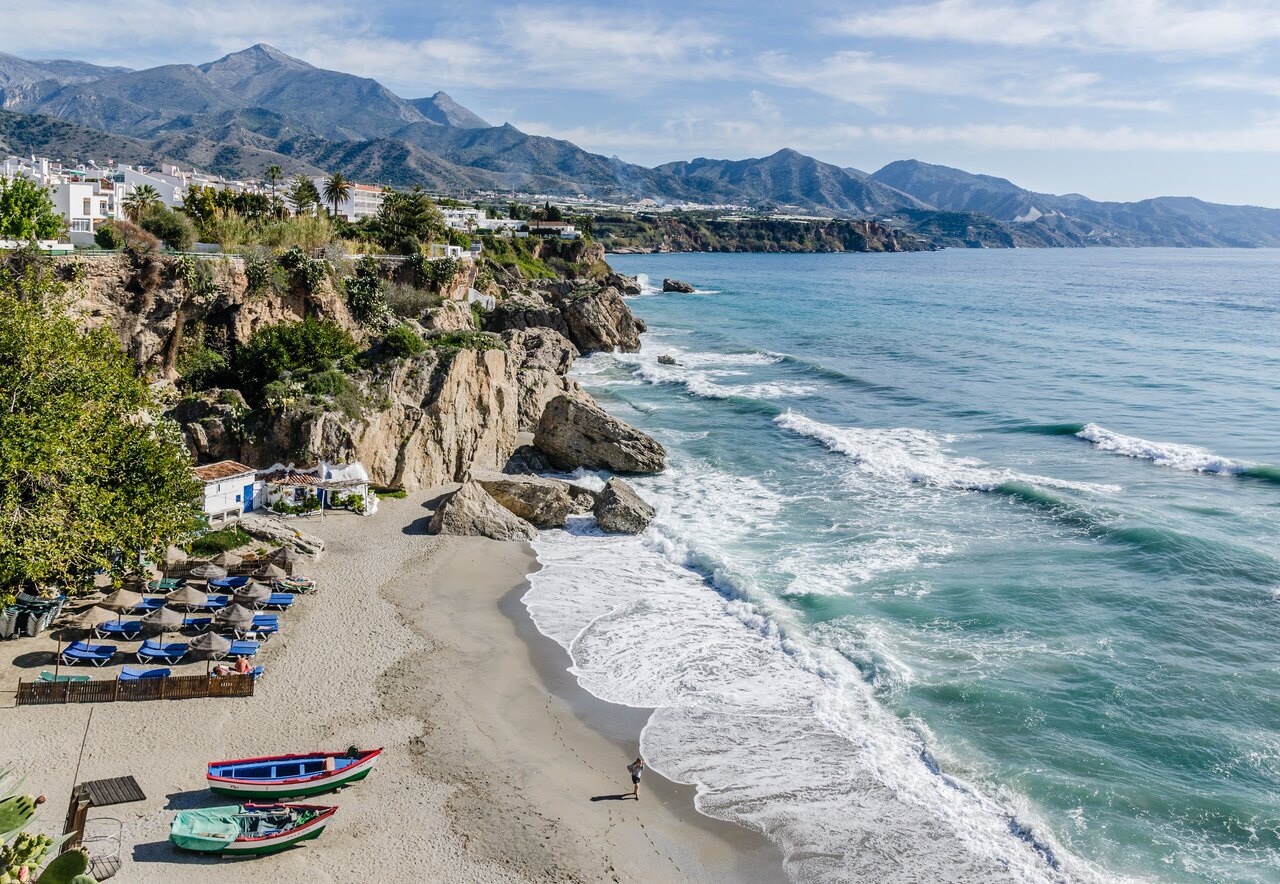
Nerja clings to the rocky coastline of the Axarquía region, structured around its high-altitude cliffside viewpoints. Most activity funnels toward the central Balcón de Europa, which dictates the town's geography. Staying inland puts you in quiet, steep residential pockets, while choosing a seafront location guarantees immediate access to the series of sandy coves. Consider your tolerance for walking up sharp inclines, as the entire town is defined by its dramatic vertical transition from beach to mountain base.
Balcón de Europa and Old Town
This is the pulsing heart of Nerja. The streets are a labyrinth of whitewashed facades and terracotta roofs, entirely pedestrianized and bustling. You are steps away from the famous viewing platform at Balcón de Europa and the adjacent Calahonda beach. Everything you need is walkable here, including high-density tapas bars on Calle Pintada and retail shops along Calle Carretas.
Burriana Beach Area
The terrain slopes downward toward the Mediterranean here, meaning you spend your time at sea level. The vibe is resort-focused and sun-drenched, dominated by the long stretch of sand and the line of seafood chiringuitos. It is about a fifteen-minute walk up the steep hill to the town center, making it better for those committed to a sea-centric schedule.
Capistrano
One thing to think about
Avoid booking accommodation located directly on the main roads leading into town if you are a light sleeper. The intense local traffic, combined with the echoing acoustics of narrow streets and late-night nightlife, can create significant noise pollution. Verify your distance from the busy N-340 road to ensure a quiet night.
Other places to stay in Spain: lastminute.com · Megabon
Once you have a bed
The things that sell out first in Nerja are the small-group tours and the skip-the-line tickets.
Common questions
Do I need a rental car to get around Nerja?
You do not need a car if you stay within the town center or Burriana Beach, as Nerja is highly walkable. However, if you plan to visit the Nerja Caves or neighboring villages like Frigiliana, local buses are efficient, though a car provides far more flexibility for regional day trips.
Are the beaches in Nerja sandy or pebbly?
The beaches are primarily coarse, dark sand mixed with pebbles. While they are visually striking and clean, they are not the soft, white sand beaches found elsewhere in Spain. Wearing water shoes or bringing a comfortable mat is recommended for those with sensitive feet who want to enjoy the coves.
When is the best time to visit for swimming?
June through September offers the most reliable water temperatures. While the sun shines year-round, the Mediterranean can be brisk in the spring months. If your primary goal is swimming, avoid November through March, when the town is quieter and the water temperature drops significantly, making it less suitable for casual beach days.
Hotel links go to Booking.com.