How many days do you need in Etosha?
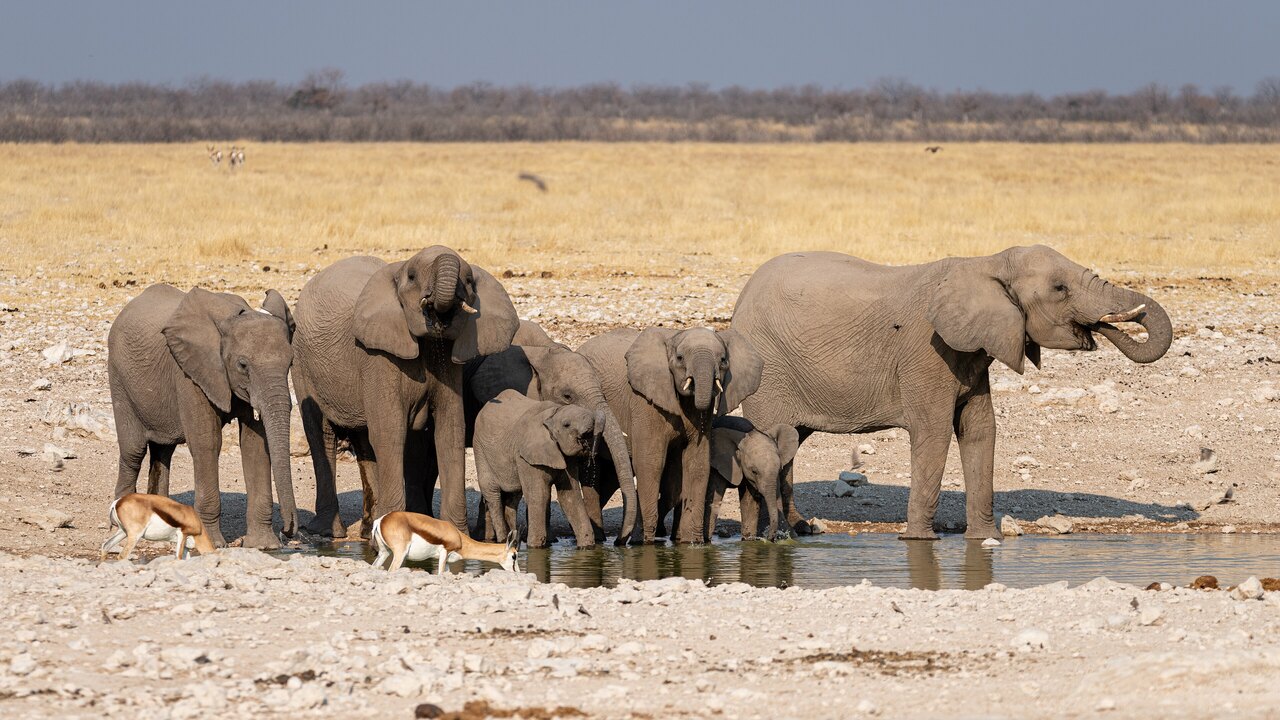
Four days is ideal to experience Etosha's vastness. Two days limits you to the southern Anderson Gate area, while four allows driving across to Namutoni in the east. This pace ensures time at the Okaukuejo and Halali waterholes, where high concentrations of rhino, elephant, and lion congregate during the dry season, maximizing wildlife viewing opportunities.
Short answer
2 days
Concentrate on the southern section near Okaukuejo. You will reliably spot elephants, giraffes, and zebras at the floodlit waterhole. Focus on driving the gravel loops around the Etosha Pan edge. This itinerary is intense, relying on early morning and late afternoon game drives to catch predators moving between cover and water.
You give up: You sacrifice the eastern salt pans, Namutoni Fort, and the quieter, more remote wilderness areas where leopards are frequently spotted.
4 days
Cross the park from west to east. Spend nights at Okaukuejo, Halali, and Namutoni. This pace allows for slow, deliberate game viewing along the edge of the Etosha Pan. You can explore the Fisher’s Pan area and spend hours waiting at various waterholes, significantly increasing your chances of seeing elusive black rhinos.
You give up: You skip the northern Damaraland regions like Twyfelfontein or the Himba villages, which require additional travel time outside the park boundaries.
6 days
Combine deep park exploration with buffer time. Spend three days traversing Etosha, then use the remaining time to visit the Onguma Private Reserve. This allows for immersive night drives and guided bush walks, providing a different perspective than self-drive park roads. It removes the pressure of the park's strict gate closing times.
You give up: You lose the ability to visit other distant Namibian landmarks like Sossusvlei or the Skeleton Coast, as travel distances in Namibia are significant.
If you can stay longer
Extra days allow for a guided day trip to the Onguma Private Reserve or the Otjikoto Lake. You gain the flexibility to handle vehicle trouble or weather delays. More time lets you move slowly, observing complex animal behaviors at waterholes rather than rushing between transit points to hit gate deadlines.
Lock in the dates
Common questions
When is the best time to visit?
The dry season, from June to October, is best. Vegetation is sparse and animals congregate around permanent waterholes, making them significantly easier to spot. During these months, the weather is cool and dry, reducing the risk of malaria and making long hours inside your vehicle much more comfortable.
Do I need a 4x4 vehicle?
While park roads are gravel, a standard sedan can manage during the dry season if driven carefully. However, a 4x4 provides better ground clearance and visibility. If you plan to travel outside the park to reach remote lodges or campsites, a 4x4 is highly recommended to handle deep sand or rocks.
Can I drive myself in the park?
Yes, self-drive is the standard way to explore Etosha. You must stay on marked roads and remain inside your vehicle at all times, except in designated fenced camps. Always carry extra water, a detailed map, and ensure your fuel tank is full before entering, as petrol stations inside are unreliable.