Marrakech Food Guide: What to Eat & Where to Find It
Why Marrakech Is a Food Lover's Dream
Marrakech is one of the world's great eating cities. The Moroccan capital blends Berber, Arab, Andalusian, and sub-Saharan influences into a cuisine that is bold, aromatic, and deeply satisfying. Whether you are squeezing through the souks at lunchtime or sitting down to a slow-cooked dinner in a candlelit riad, every meal here tells a story. This guide walks you through exactly what to eat, where to find it, and how to make the most of every bite.
Essential Dishes You Must Try
Before you explore the city, get familiar with the dishes that define Marrakchi cooking. These are not optional extras — they are the whole point of the trip.
- Tagine: A slow-cooked stew made in a conical clay pot. Look for lamb with prunes and almonds, or chicken with preserved lemon and olives. The meat should fall apart at the touch of a fork.
- Couscous: Friday is the traditional day for couscous in Morocco. Head to a local restaurant rather than a tourist trap and you will be served a mountain of hand-rolled semolina topped with seven vegetables and tender braised meat.
- Pastilla: One of Morocco's most surprising dishes. A flaky warqa pastry filled with spiced pigeon or chicken, toasted almonds, and a dusting of cinnamon and sugar. Sweet, savoury, and completely addictive.
- Harira: A thick, tomato-based soup loaded with lentils, chickpeas, herbs, and a squeeze of lemon. It is the dish Moroccans break the fast with during Ramadan and it costs almost nothing from a street vendor.
- Mechoui: Whole slow-roasted lamb, sold by the kilo from dedicated mechoui stalls in the medina. Season it yourself with cumin and salt and eat it with your hands.
- B'ssara: A creamy fava bean soup drizzled with olive oil and sprinkled with cumin and paprika. The best breakfast in Marrakech, and it costs less than one euro.
Where to Eat in Marrakech
Djemaa el-Fna: The World's Greatest Food Square
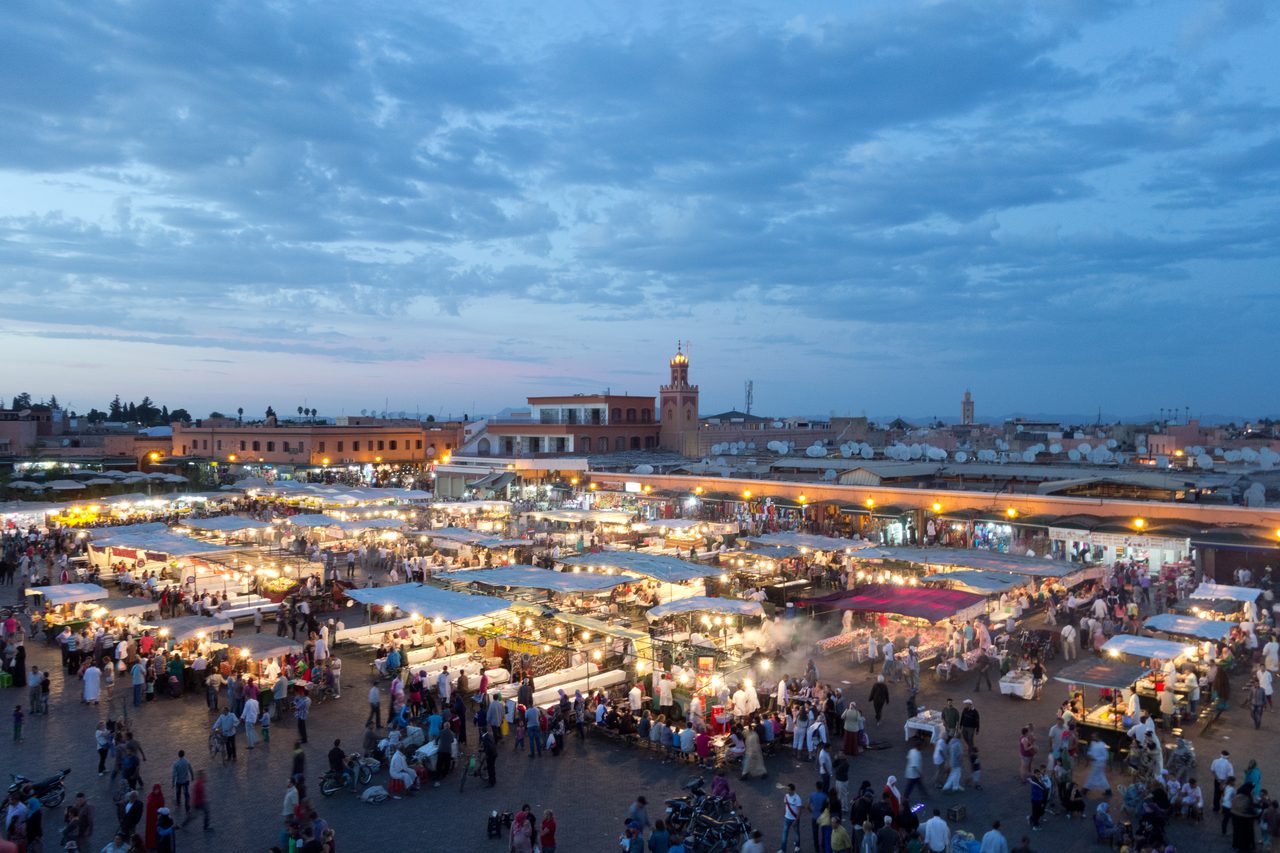
As night falls, the vast central square of Djemaa el-Fna transforms into an open-air restaurant serving hundreds of people. Rows of numbered stalls fire up grills loaded with merguez sausages, lamb chops, kefta kebabs, and whole sheep's heads. Walk the length of the square first to compare menus, ignore the touts, and sit at whichever stall has the most locals eating. Stall 14 and Stall 32 have long been praised for their freshness and value. Always check prices before you order.
Rue Bab Agnaou and the Southern Medina
This street, just off Djemaa el-Fna, is lined with small cafes serving b'ssara in the morning and harira throughout the day. It is entirely local and entirely affordable. Follow it deeper into the medina for mechoui stalls where butchers carve roasted lamb to order from dawn until it sells out, usually by early afternoon.
The Mellah Market
The old Jewish quarter of Marrakech is home to a covered market where spice sellers, olive vendors, and dried fruit merchants crowd together in a riot of colour and scent. Buy a bag of mixed olives, some preserved lemons, and a handful of medjool dates for a perfect medina picnic.
Hidden Riad Restaurants
Some of the best cooking in Marrakech happens behind unmarked wooden doors. Riads like Dar Yacout, Le Tobsil, and Nomad offer set menus that move through traditional courses in elegant surroundings. Book at least two days in advance. These are the places for a long, special dinner rather than a quick lunch.
What to Drink
Moroccan mint tea, or atay, is the social glue of the country. It is served sweet, strong, and poured from a great height to create a frothy top. Refusing a glass is considered impolite. Fresh-squeezed orange juice from the carts in Djemaa el-Fna is outstanding and costs almost nothing. Marrakech is predominantly a dry city in its traditional areas, though some licensed restaurants and riad hotels do serve wine and beer.
Practical Tips for Eating Well
- Eat where locals eat. If a restaurant has a menu only in English and French with photographs, keep walking.
- Lunch is the main meal of the day. Many of the best traditional restaurants only offer their full menu at midday.
- Avoid the sit-down restaurants immediately surrounding Djemaa el-Fna. The quality rarely matches the price for tourists.
- Street food is generally safe if it is cooked fresh and served hot. Trust your eyes and your nose.
Plan Your Marrakech Food Trip with Tony AI
A food trip to Marrakech rewards careful planning. Knowing which neighbourhoods to explore at which time of day, which riads to book ahead, and how to build an itinerary around the city's rhythms makes the difference between a good trip and an unforgettable one. You can plan every detail of your Marrakech adventure, including restaurant recommendations tailored to your tastes and budget, at tonyplan.com, where Tony AI builds personalised travel itineraries in minutes.
Marrakech will feed you well. All you have to do is show up hungry and curious.
Plan your Marrakech trip with Tony →